
Types of labels serve different jobs: they identify a product, communicate approved information, support scanning or travel with an order. Start with the task, the surface and the handling conditions. Then agree on artwork, format and print details with the supplier. Validate barcode linework and quiet zones against GS1 international barcode standards, and reference FINAT label performance guidelines for adhesive shear strength.
Define the job before choosing a label
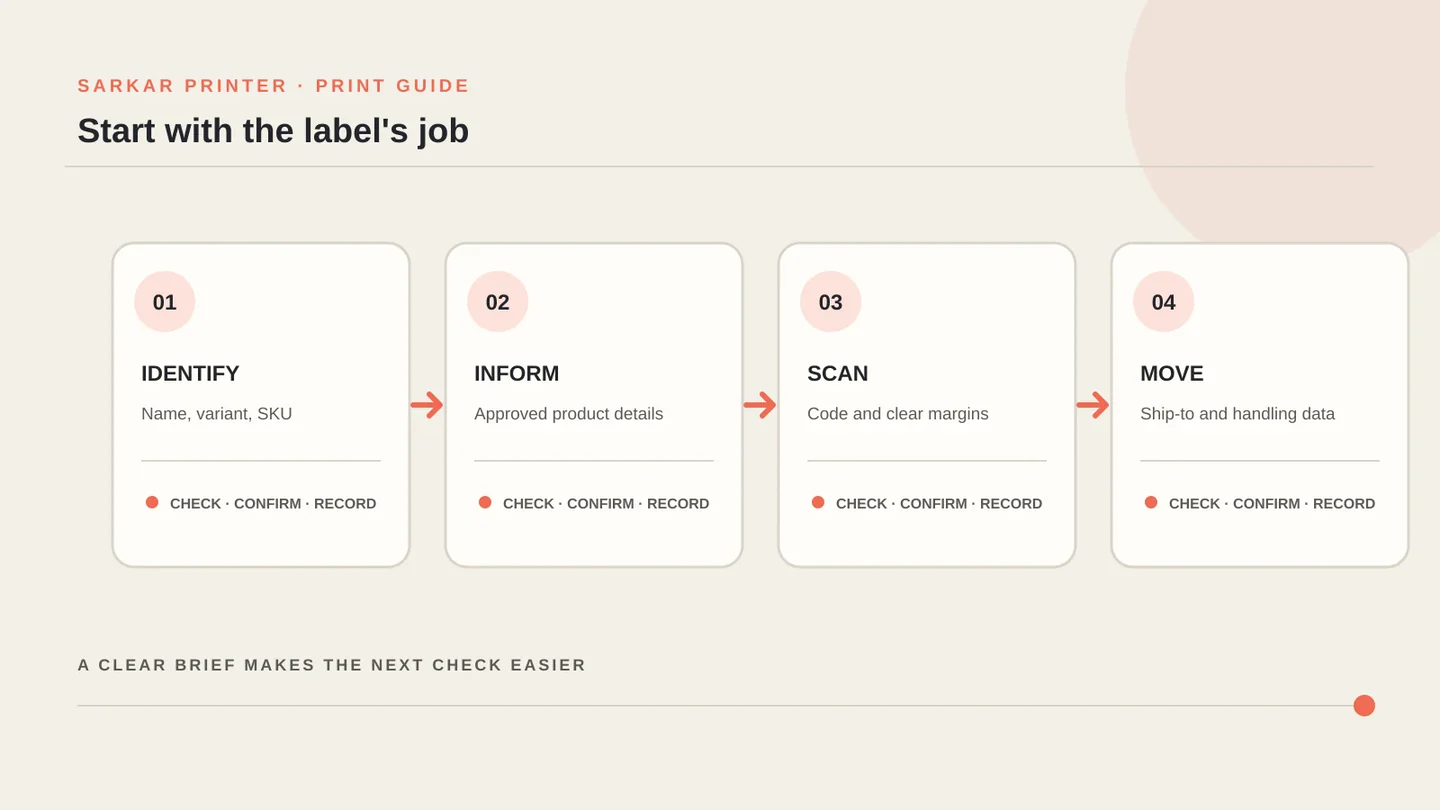
List what the label must help someone do. A front-facing product label may carry a brand and variant. A back label may hold approved product details. A barcode label helps identify an item in a scanning workflow, while a shipping label connects a parcel to its destination.
Some labels communicate a warning, seal a closure or add a removable promotion. These uses need different information and placements. Confirm which details are mandatory with the responsible brand, compliance or logistics team; do not copy requirements from another product or market.
Match the format to the product and workflow
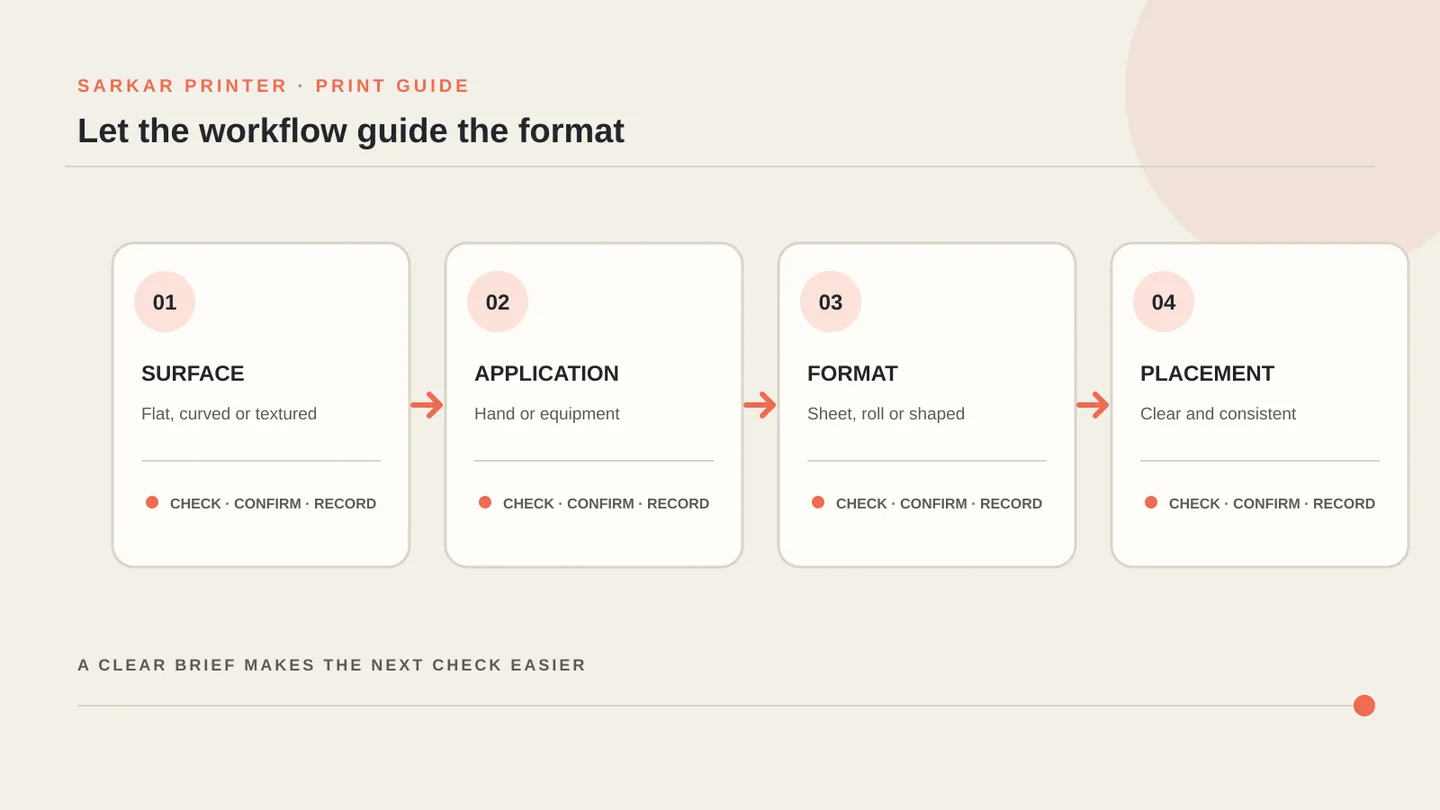
Consider how the label will reach the product and who will apply it. A hand-applied short run may use a different format from a line that feeds labels automatically. The product shape also matters: a flat carton, curved bottle and fabric tag each present a different printable area.
Discuss label size, shape, placement and application with the printer or packaging team. For roll-versus-sheet decisions, use the sheet labels versus roll labels guide. If the label wraps around a container, compare the layout with bottle label planning before releasing artwork.
Organise information for quick reading
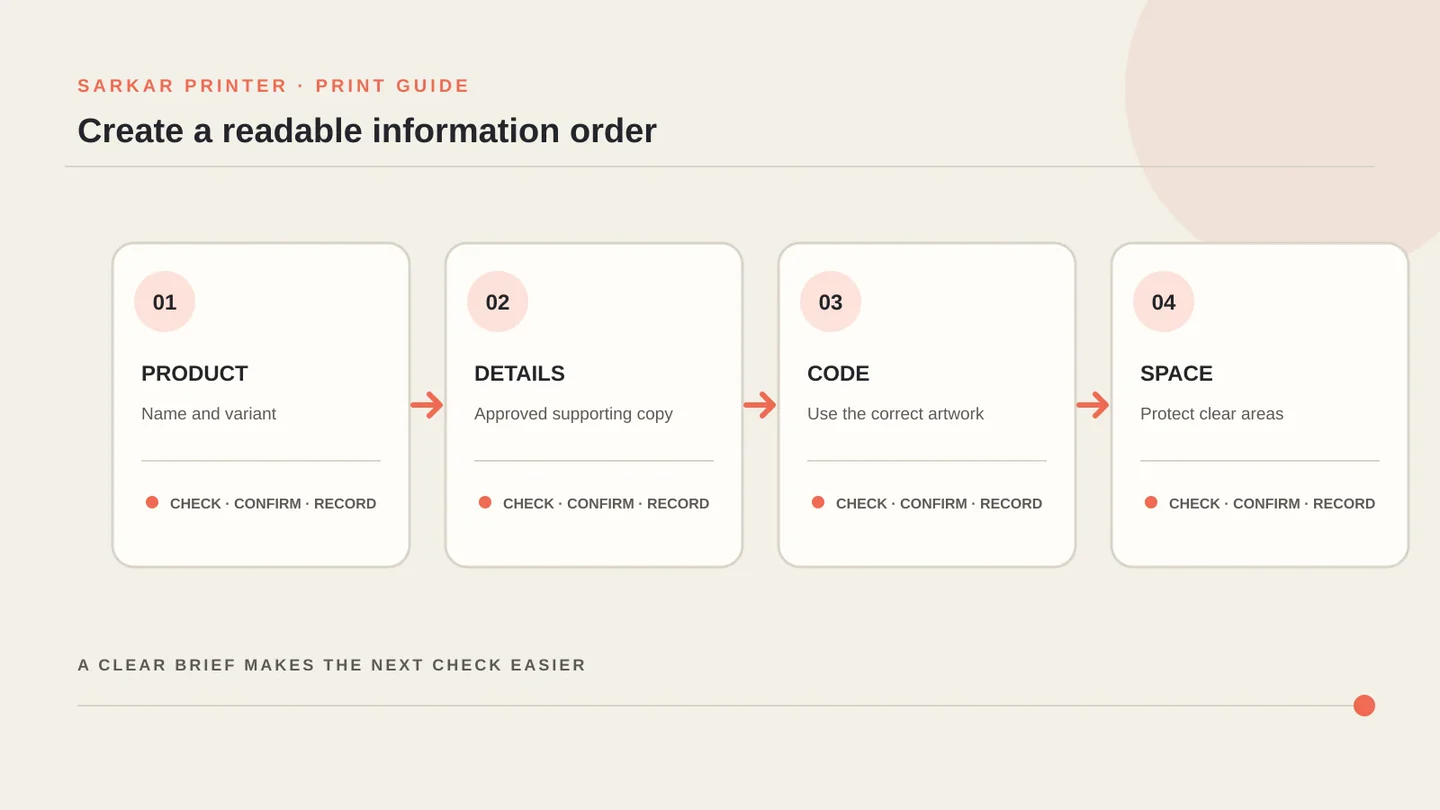
Give the product name and variant a clear visual priority. Keep supporting details grouped and use type size, contrast and spacing to make the label easy to scan at its actual size. Leave room for variable details when different flavours, sizes or batches share a common design.
Treat barcodes and QR codes as functional artwork. Use the specifications for the code and scanning application, preserve the required clear area, and test the final print on the intended surface. Review barcode artwork checks and prepare QR codes for print before you approve a proof.
Check the sample, artwork and approved version
Before production, confirm the finished size, orientation, adhesive or material specification, colour references and application notes. Ask whether the label needs to resist moisture, rubbing or refrigeration, and select a suitable construction with the supplier rather than assuming one stock will suit every use.
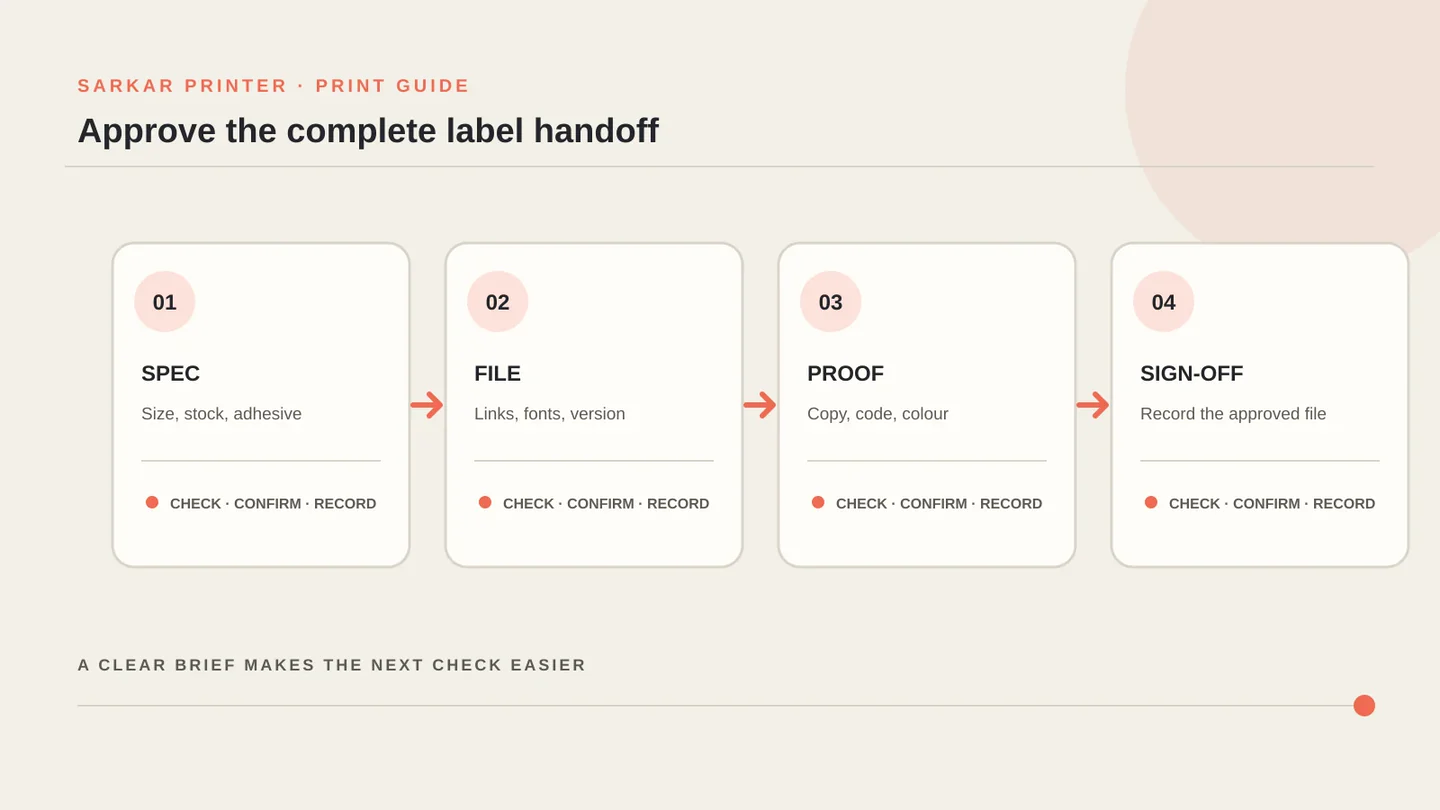
Review the proof at the final size. Check names, variant, code, copy, crop and placement, then record who approved the version. The product label file checklist helps organise the handoff, and the tamper-evident label guide covers seals that need a visible opening indication.
Product label planning reference
Use this table to prepare a label brief; confirm technical specifications for the actual job.
| Label job | Typical information | Confirm before artwork |
|---|---|---|
| Product identity | Brand, name, variant or SKU | Reading order and printable area |
| Product details | Approved instructions or attributes | Who approves copy and market-specific requirements |
| Retail scanning | Barcode and human-readable details | Application specification, contrast and clear area |
| Shipping | Destination and handling data | Data source, variable fields and application workflow |
| Seal or promotion | Tamper cue or campaign message | Removal behaviour, placement and campaign end date |
CONTINUE THE PRINT PLAN
Build a label brief that is ready for print.
Share the product, label size, application method and approved artwork with our team.
Frequently asked questions
What are the main types of product labels?
Common label jobs include product identification, information, barcodes, shipping, tamper indication and promotional messaging. The right choice depends on the product and workflow.
How do I choose a label format?
Start with the product surface, application method, label size, run quantity and variable-data needs. Ask the supplier to confirm the format and material for the job.
Can a shipping label also serve as a product label?
It can carry overlapping details in some workflows, but shipping and product labels have different audiences and data. Keep each job clear and follow the relevant system requirements.
What should I send with label artwork?
Send the approved copy, final dimensions, dieline or placement guide if provided, image assets, colour references, code artwork and the required delivery date.