
Carton packaging design works best when the structure and message develop together. A panel map helps the team decide what shoppers should notice first, where supporting details belong and what the printer must preserve around folds and cuts. Confirm the final specification with the supplier before releasing artwork. Standardize structural folding codes against the FEFCO International Fibreboard Case Code and source substrates via FSC chain-of-custody standards.
Map the carton panels before writing copy
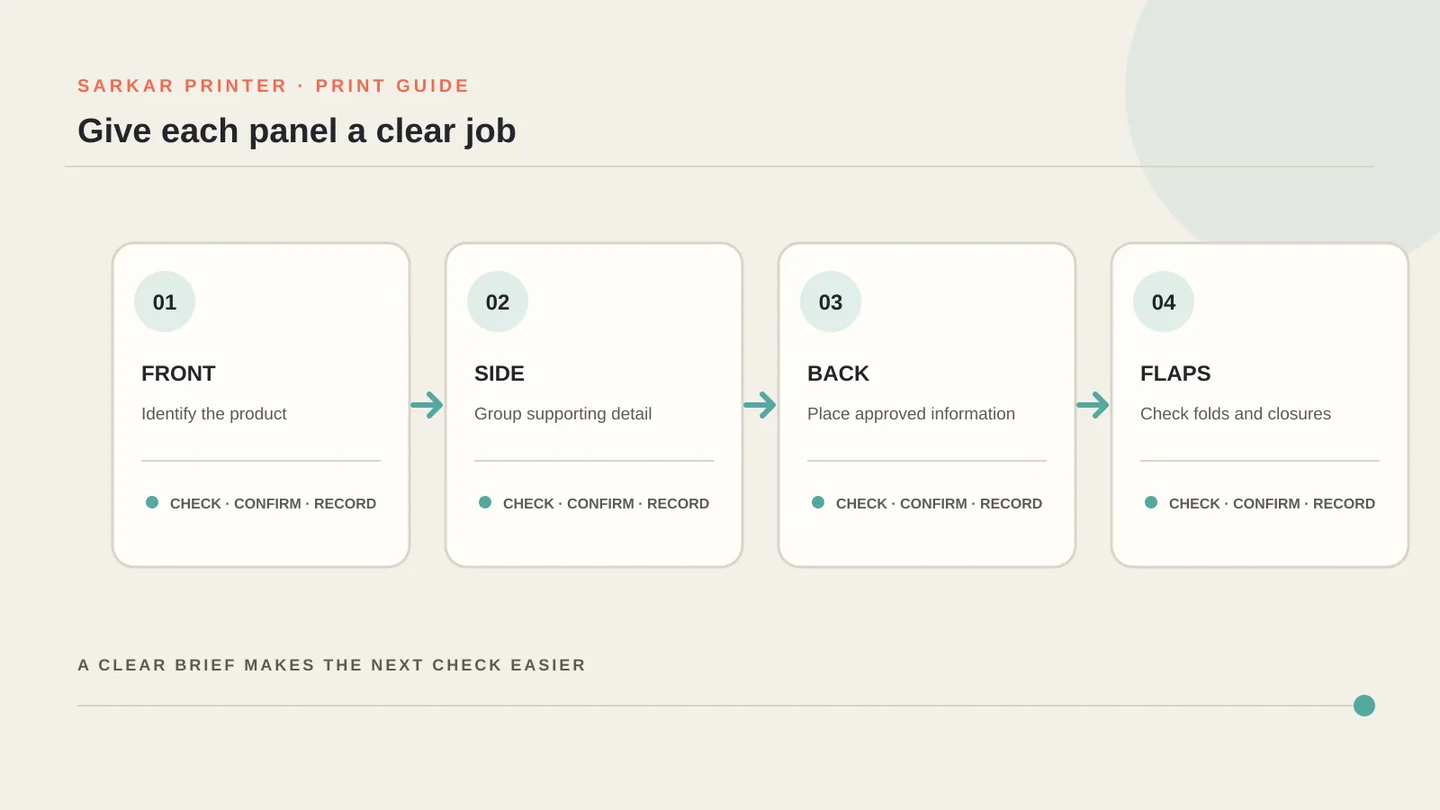
Start from the current dieline, then label each visible panel: front, sides, back, top, bottom, flaps and glue area. The exact shape depends on the carton structure. Do not assume every panel will remain visible after the carton is folded, stocked or placed beside another item.
Assign each panel a job before the designer places text. The front can lead with product identity; a side panel can group supporting details; the back can hold longer approved copy. Keep mandatory or market-specific content with the person responsible for reviewing it.
Build a reading order people can follow
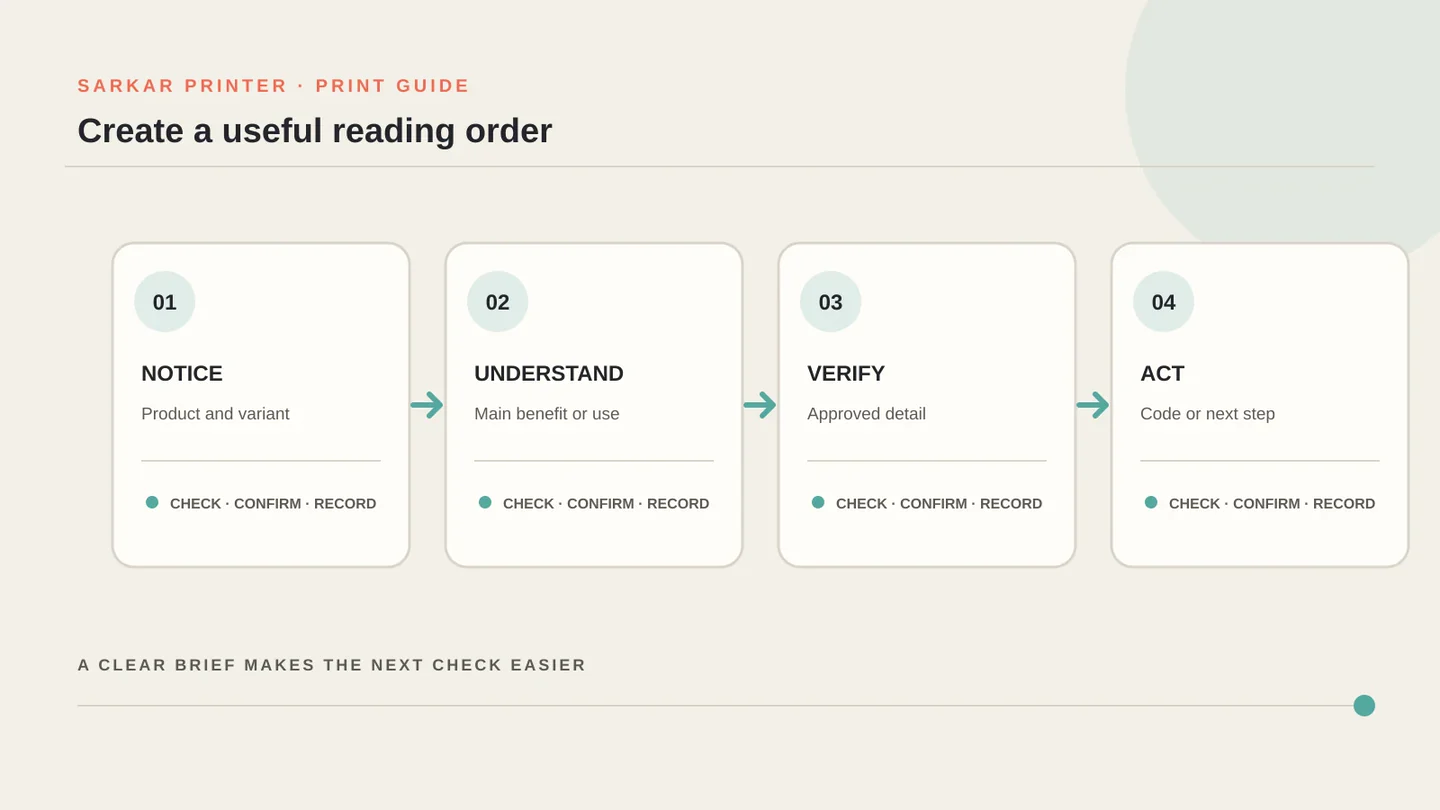
Use size, contrast and spacing to guide attention from the product name to the next useful detail. Keep variant names visually distinct so a team can review multiple versions without searching through every panel. Avoid making decorative elements compete with the information the customer needs first.
Check the layout at the carton’s real finished size. A type size that looks comfortable on a desktop screen may feel cramped when printed on a small pack. Use a folded mock-up or supplier proof to inspect the reading sequence from more than one angle.
Coordinate artwork with the production dieline
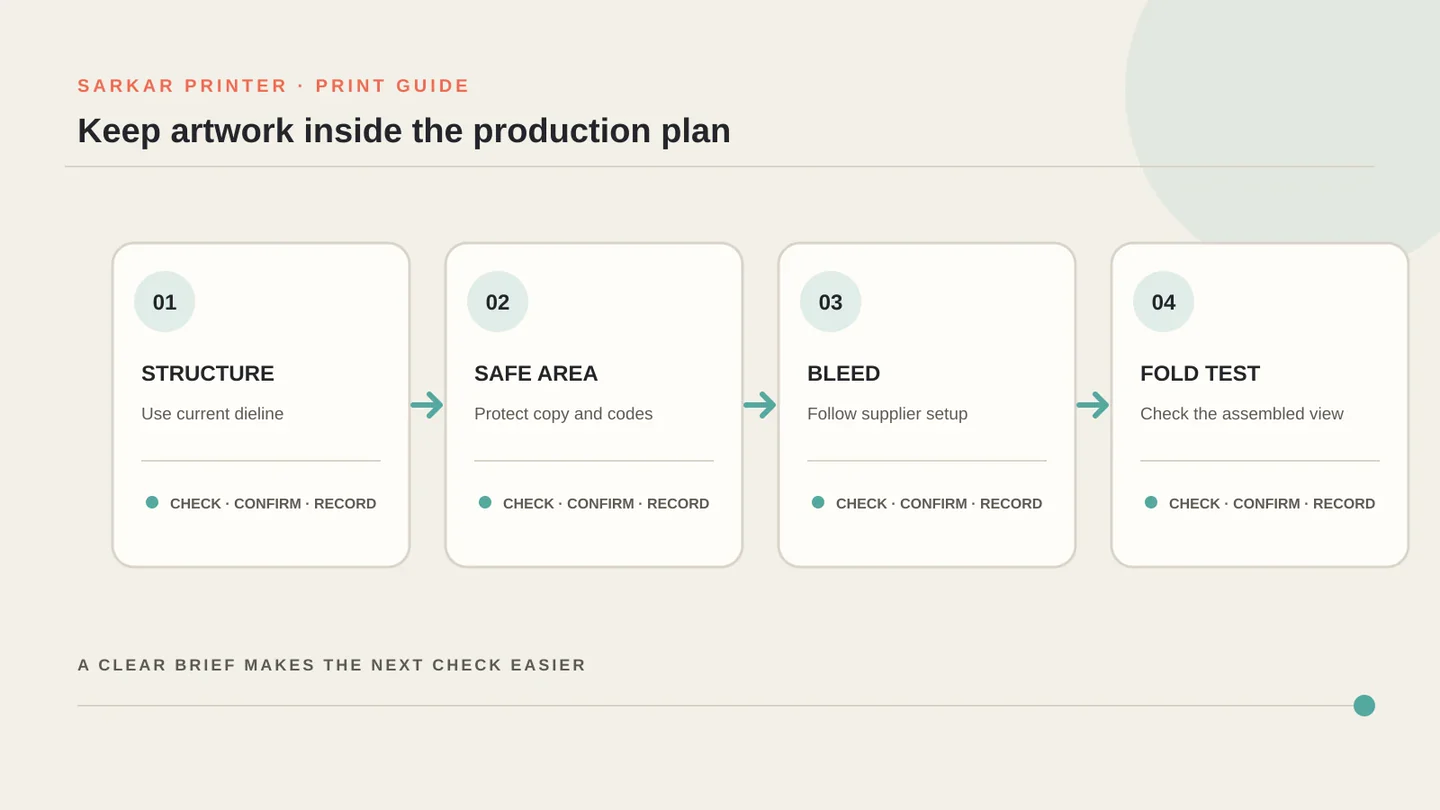
Ask for the production dieline for the selected structure and material. It should show the areas used for cuts, folds and glue. Keep the dieline on a separate non-printing layer if the supplier requests one, and follow the supplier’s bleed and safe-area instructions.
Avoid placing small text, codes or critical artwork across a crease or trim boundary. Review the folding-carton dieline guide for structural questions. If the carton includes a product label or barcode, coordinate its placement with the product label planning guide.
Proof the carton and every product variant
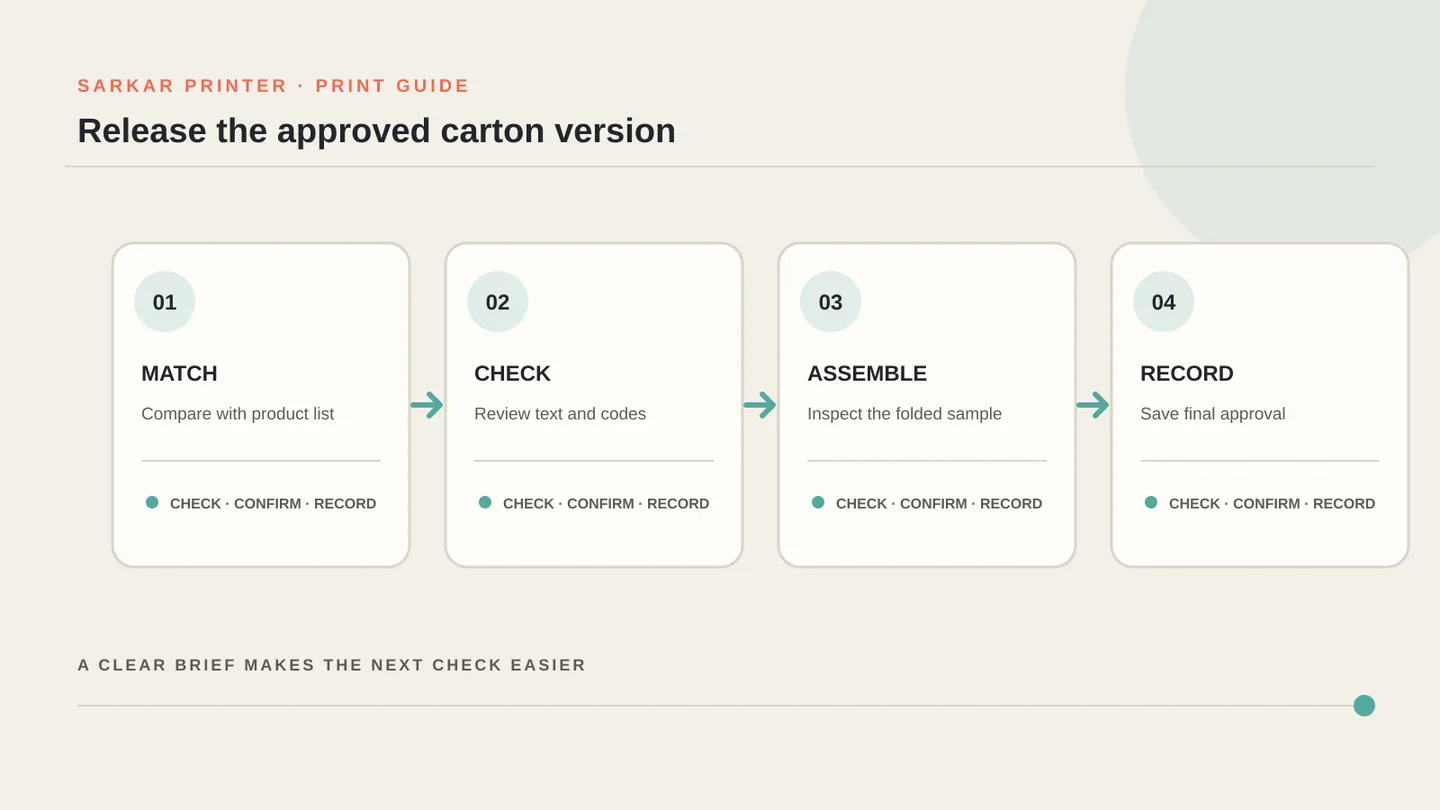
Review one version at a time against the approved product list. Check names, size or flavour, artwork links, copy, codes, colour references and panel sequence. When versions share a template, compare the changing fields side by side and keep a record of the final approved files.
A proof helps the team review content and placement; an assembled sample can show how the design sits on the real structure. For products with several variants, use the multi-SKU artwork guide and packaging sample approval steps to keep approvals organised.
Carton panel planning reference
Use the panel map as a discussion aid; the production dieline determines the final geometry.
| Panel or area | Possible role | Print review |
|---|---|---|
| Front | Product identity and lead message | Check hierarchy at final size |
| Side panel | Supporting product information | Review line breaks and available space |
| Back panel | Longer approved details or instructions | Confirm copy owner and version |
| Top and bottom | Closure, brand or production details | Check visibility after folding |
| Fold and glue areas | Structural assembly | Keep critical content clear as specified |
CONTINUE THE PRINT PLAN
Turn the panel map into a clear print handoff.
Share the carton format, dieline and approved artwork with the packaging team.
Frequently asked questions
What is carton packaging design?
It is the planning of the carton structure, panel layout, visual hierarchy and print artwork for a specific product and production brief.
Why does carton artwork need a dieline?
The dieline shows the structure and the areas used for cuts and folds. It helps the designer place artwork in relation to the finished carton.
What should go on the front panel?
The front panel often leads with product identity and the most important approved message. The exact information depends on the product and the team’s requirements.
How do I proof a carton design?
Check copy, version, panel sequence, placement, codes, folds and finish notes on the proof. Review an assembled sample when the structure or handling needs a physical check.