
The packaging printing industry brings design, material, print and finishing decisions into one production plan. A clear brief helps each person work from the same version and keeps the finished pack aligned with its purpose. The exact route depends on the format, material, quantity and supplier equipment. Verify package surface aesthetics using the Pantone Matching System and ensure raw stock conforms to FSC certified paperboard standards.
Start with a useful packaging brief
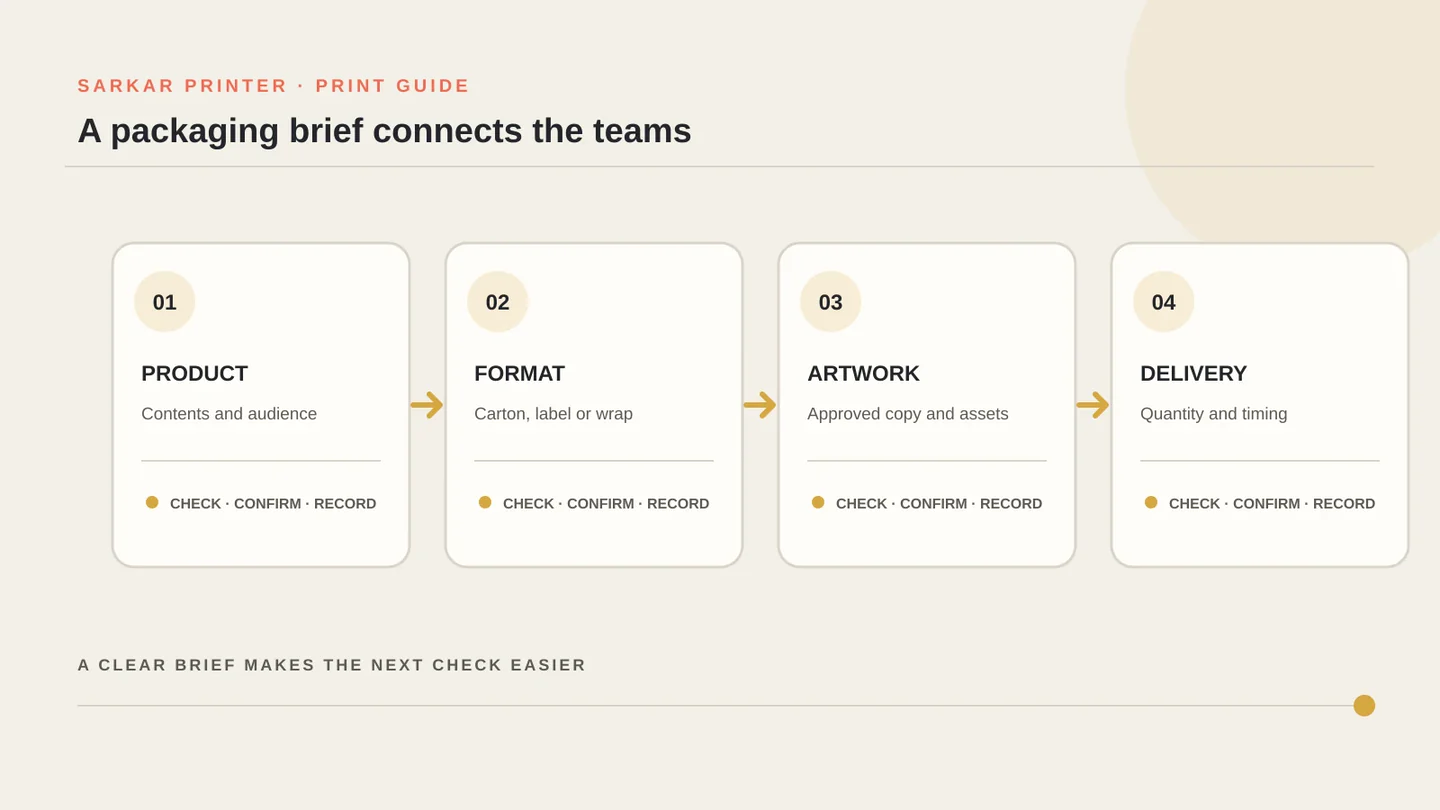
Describe the product, audience, pack format, quantity and delivery date. Add the approved brand assets, copy, colours, required codes and any handling or distribution notes. If the pack carries market-specific information, have the responsible team approve it before print.
Share a sample or reference when the structure is unfamiliar. Explain what must stay the same and what can change. A practical brief gives the printer a basis for discussing dimensions, stock, print method and finish instead of guessing from a flat picture.
Align structure and artwork before prepress
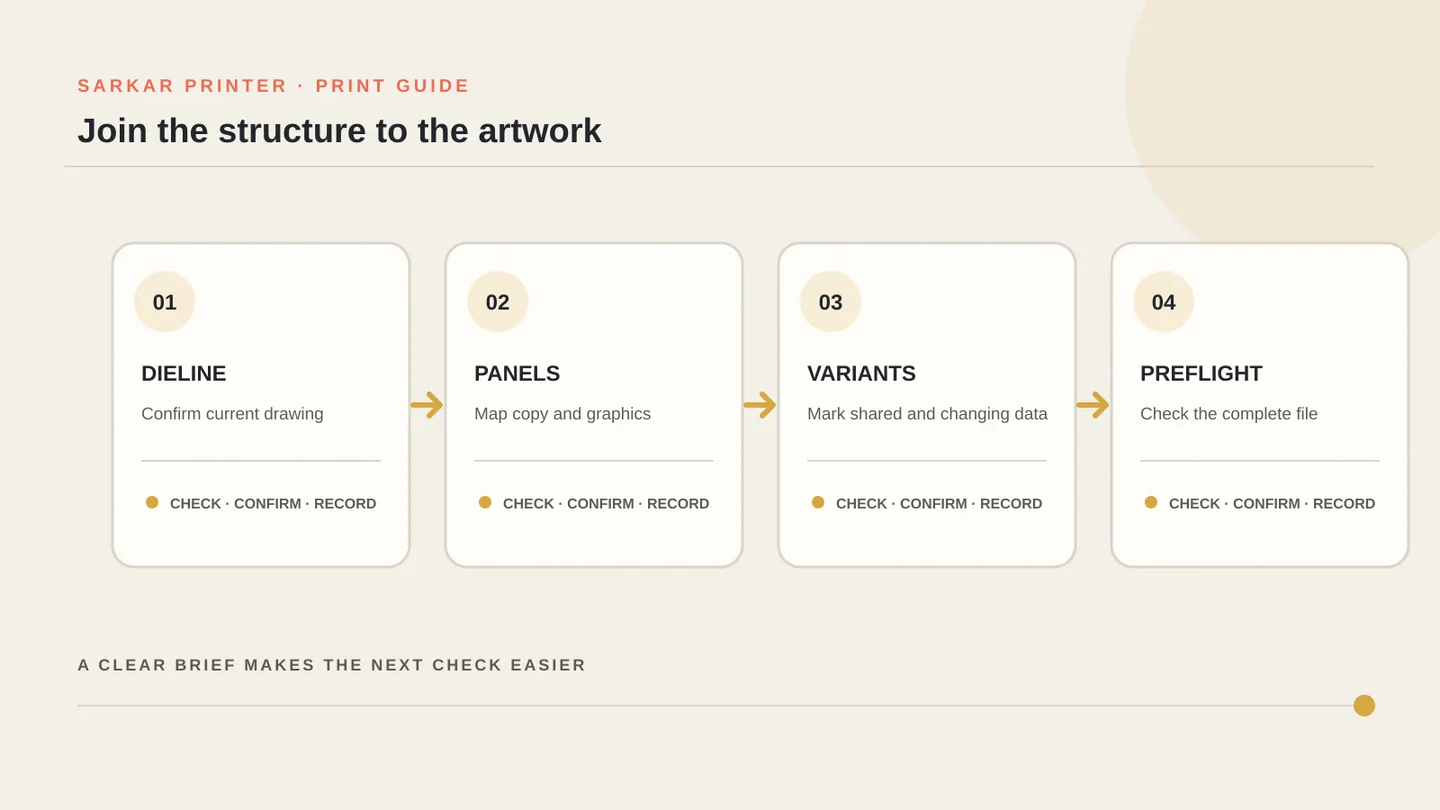
The print file needs the correct structural drawing for the chosen pack. Ask the supplier for the current dieline and clarify cut lines, folds, glue areas, safe zones and bleed. Do not build final artwork on a sample template that may not match the production structure.
Map the front, side, back and inside panels before placing copy. If the packaging uses several product variants, mark shared and variable elements clearly. Our folding-carton dieline guide and panel-planning article help teams prepare that handoff.
Prepare prepress, press and finishing checks
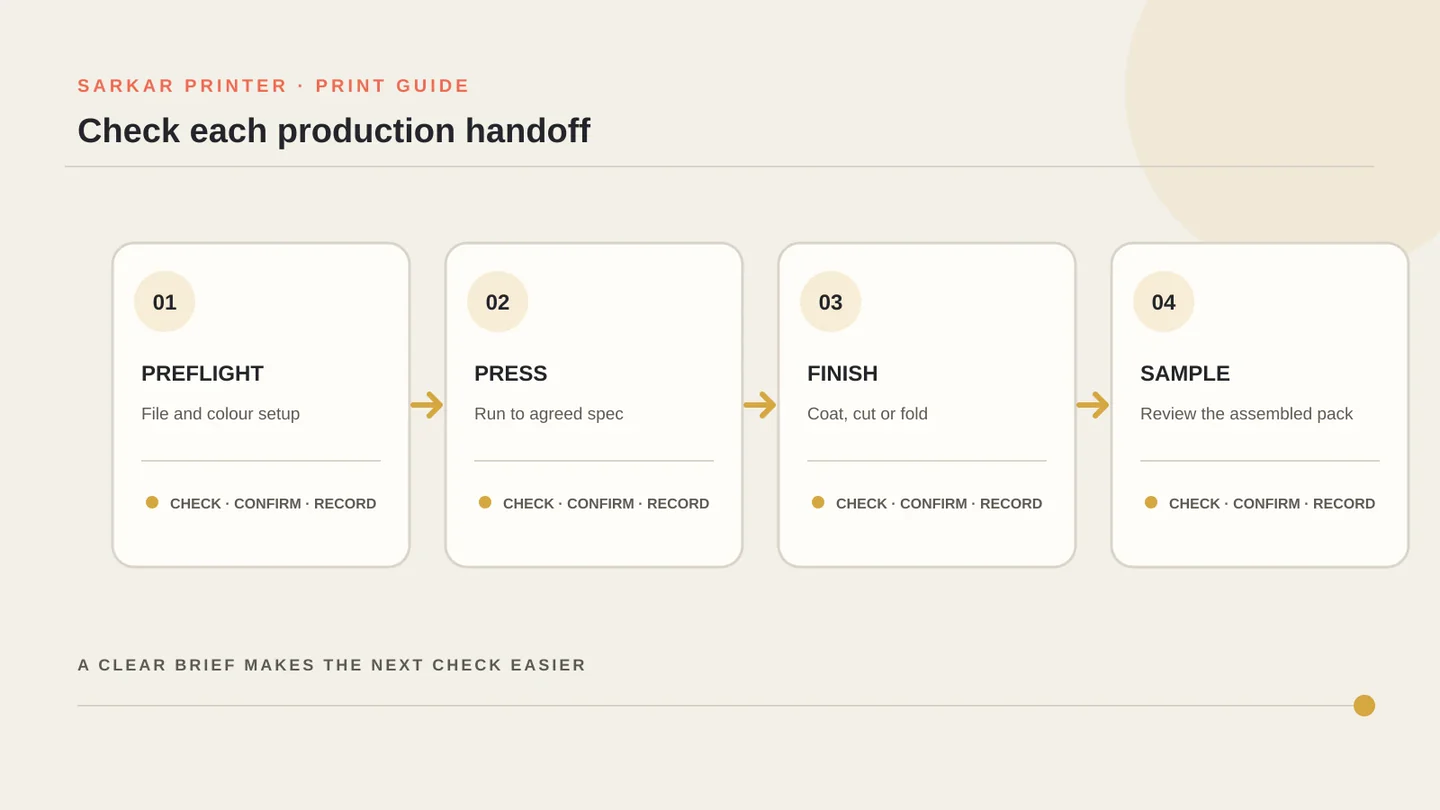
Prepress checks the supplied file against the agreed print specification. Confirm the requested colour setup, image assets, fonts, overprints, spot colours and output format with the production team. A proof helps reviewers check content and layout; it does not replace a conversation about stock, finish or final appearance.
The press route and finishing steps depend on the job. Print may be followed by coating or lamination, cutting, creasing, folding, gluing or another agreed operation. Ask which stages apply to this pack, what the supplier will inspect and whether a sample is available before the full run.
Approve the pack and release the correct version
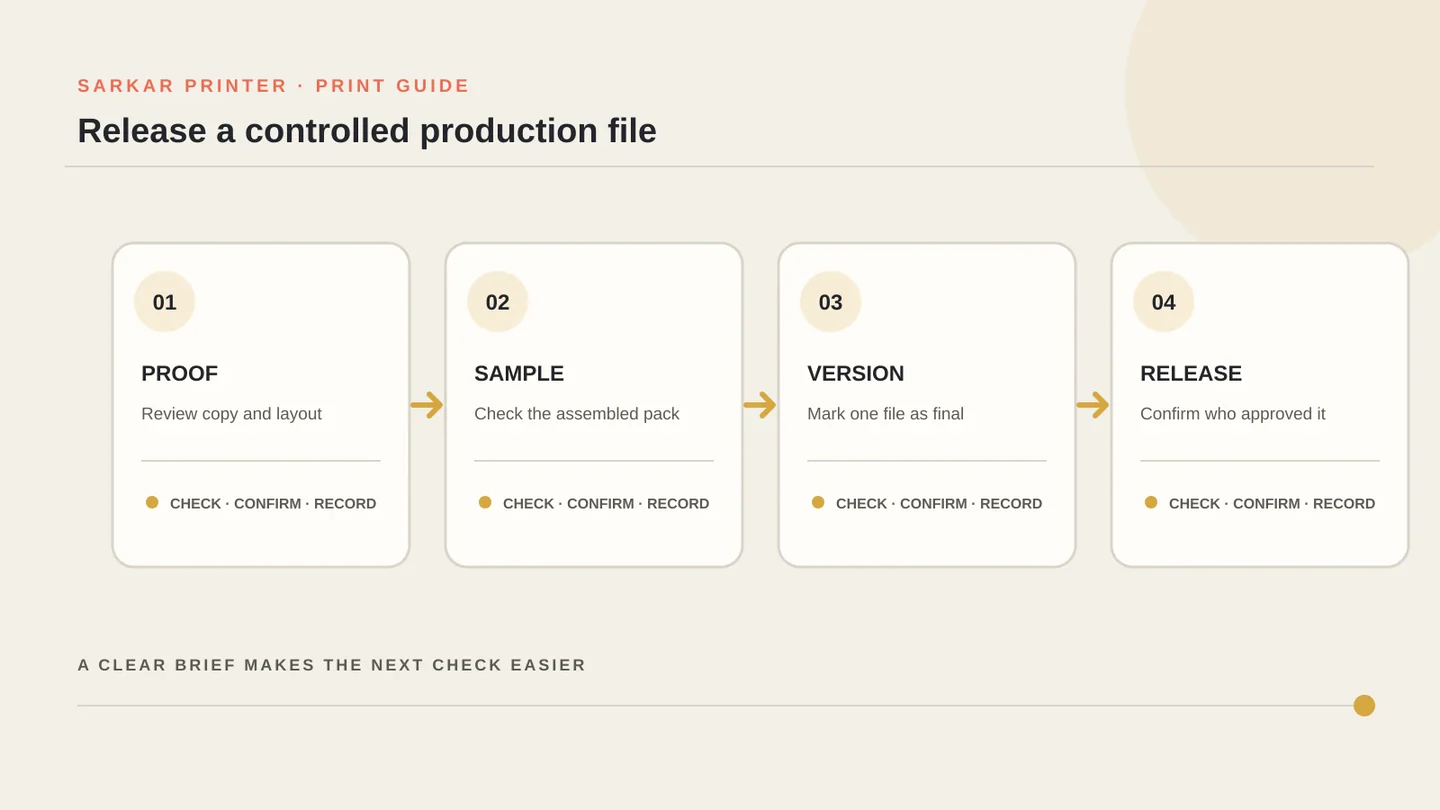
Review the proof and assembled sample against the approved brief. Check wording, variant, panel sequence, crop, colour intent, cut and fold behaviour, and finish notes. If a barcode or QR code appears, confirm it matches the approved source and scanning requirements.
Record the final version name, approval owner and date. Keep older artwork clearly marked as superseded so the production team does not reopen an earlier file. For more detailed checks, see the packaging sample approval process and first packaging print order guide.
Packaging print production map
A simple production map; the supplier confirms which stages apply to each format.
| Stage | What the team aligns | Useful checkpoint |
|---|---|---|
| Brief | Product, format, quantity and delivery | Confirm requirements and approved copy |
| Structure | Dieline, panels and material | Review fit, folds and printable area |
| Prepress | Files, colour and output settings | Resolve missing assets and version questions |
| Print and finish | Press route and finishing operations | Agree on proof and inspection points |
| Release | Sample, sign-off and delivery plan | Record final file and approval owner |
CONTINUE THE PRINT PLAN
Connect your packaging plan to a print brief.
Tell us the product, pack type, quantity and finish you are considering.
Frequently asked questions
What does the packaging printing industry include?
It includes the planning and production steps that turn packaging artwork and material specifications into printed and finished packs. The exact route varies by pack format and supplier.
What should a packaging print brief include?
Include product and audience, format, dimensions or dieline, quantity, approved copy and assets, material preference, finish, delivery date and any handling requirements.
Does a proof guarantee the final pack will look identical?
A proof helps reviewers check content and layout, but appearance can vary with material and production conditions. Agree on the proof type and the checks it supports.
When should a team review a physical sample?
Review a sample when the structure, material, fold, finish, fit or handling needs a hands-on check. Confirm the timing and scope with the supplier.