
Using an authoritative paper coating selection guide protects printed ink films. In addition, it enhances visual tactile appeal for brand packaging. According to standardized Fogra PSO process standards , surface finishing directly governs ink trap density, scuff resistance, and light reflectance. Consequently, understanding mechanical differences between aqueous sealers, thermal laminates, and UV coatings ensures flawless press delivery.
For high-volume manufacturing facilities across Rajasthan, post-press surface finishing is both an aesthetic necessity and a functional requirement. Without adequate protective barrier coatings, high-speed automated folding cartons suffer rub damage during interstate transit. Therefore, integrating inline coating units during the primary offset press run significantly lowers project turnaround times and rejects.
Whether you produce cosmetic cartons, corporate brochures, or retail packaging sleeves, choosing the right coating chemistry is vital. When establishing print specifications, this practical paper coating selection guide prevents finishing defects. Furthermore, it elevates brand presentation.
Paper Coating Architecture & Decision Mind Map
- 1. Inline Press Finishes Aqueous Coatings: Water-based emulsion sealers (Gloss, Satin, Soft-Touch, and Matte).
- Oil-Based Machine Varnishes: Economical resin varnishes applied through standard ink ducts.
- UV Cured Liquid Coatings: Photopolymer resins cured instantly under ultraviolet radiation.
- 2. Offline Thermal Barrier Films BOPP Lamination: High-barrier polypropylene films for extreme rub resistance.
- PET Thermal Films: Rigid barrier protection for luxury rigid boxes.
- 3. Structural Substrate Interaction Absorption dynamics on coated Art Paper versus porous Woodfree stock.
- Compatibility with our comprehensive paper gsm selection guide benchmarks.
- Post-coating foil stamping, embossing, and folding crease durability.
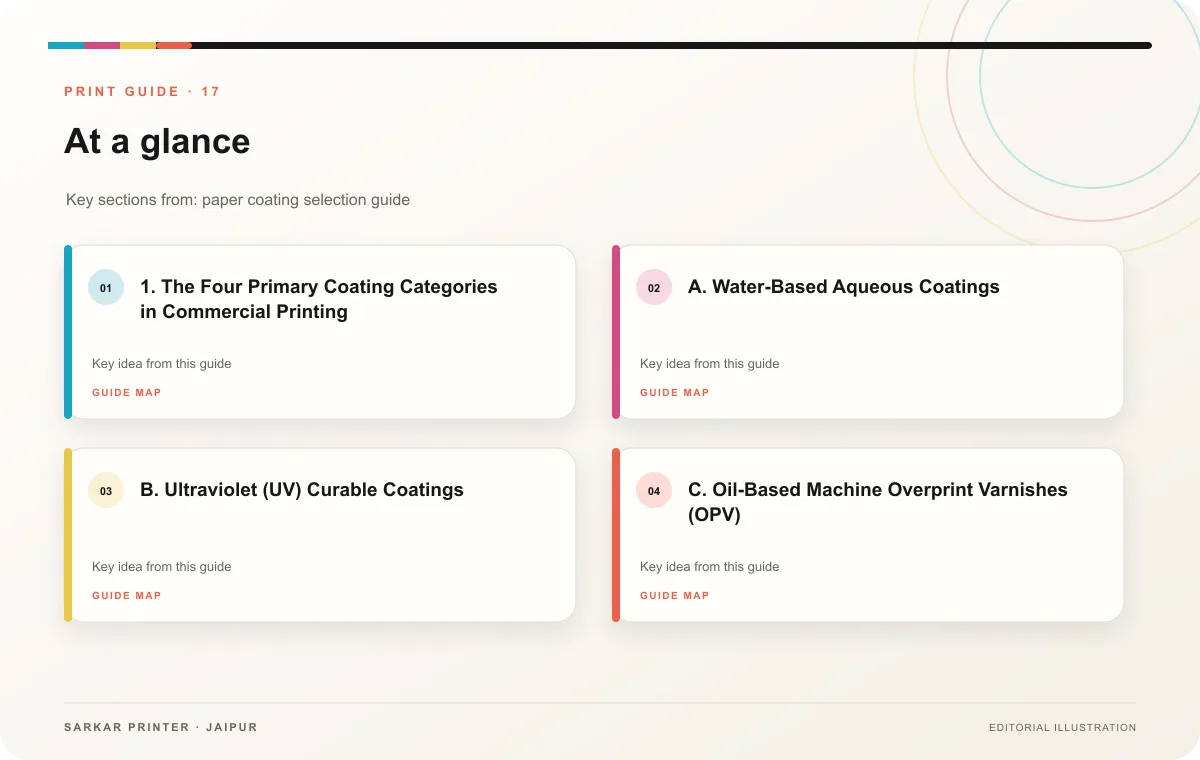
1. The Four Primary Coating Categories in Commercial Printing
Modern commercial offset printing presses feature specialized coater towers positioned directly after the final printing unit. Specifically, four primary chemical families dominate commercial production:
A. Water-Based Aqueous Coatings
Aqueous coatings consist of water-based polymer emulsions formulated with acrylic resins. Applied inline at high press speeds, aqueous coatings dry quickly through infrared heat and hot air blowers. As a result, the coated sheet seals instantly, eliminating the risk of ink set-off in the delivery pile.
Furthermore, aqueous coatings represent the most environmentally sustainable finishing solution for packaging. Because they are 100% repulpable, food brands prioritize aqueous gloss and satin coatings. In contrast, plastic films create recycling challenges. In addition, aqueous formulations do not yellow over time when exposed to sunlight.
B. Ultraviolet (UV) Curable Coatings
Ultraviolet (UV) coatings utilize liquid photopolymer resins containing photoinitiators. Rather than drying by evaporation, UV coatings cure through chemical polymerization under high-intensity UV lamps. Consequently, UV coatings achieve the highest specular gloss levels (often exceeding 90 gloss units).
Moreover, UV coatings provide remarkable chemical resistance and surface hardness. When applied across specific design elements, Spot UV creates dramatic contrast. Specifically, it pops against velvety matte backgrounds. However, cured UV films can crack along tight fold lines. Therefore, pairing UV coatings with precision scoring is essential.
C. Oil-Based Machine Overprint Varnishes (OPV)
Machine varnishes are formulated similarly to transparent offset printing inks without color pigments. Printers apply OPV directly through standard ink ducts. Consequently, this enables fine spot registration with conventional plates. Consequently, OPV represents an economical spot coating method for short production runs.
Nevertheless, oil-based varnishes dry through oxidative polymerization, requiring 12 to 24 hours of curing before post-press bindery. Over prolonged storage, standard solvent varnishes may exhibit slight amber discoloration on bright white substrates.
D. Thermal Film Lamination (BOPP & PET)
Film lamination is an offline converting process where thin polymer plastic films bond to printed paperboard under heat and pressure rollers. Biaxially Oriented Polypropylene (BOPP) films provide total moisture resistance. In addition, they provide high tear reinforcement. For luxury folding cartons, velvet soft-touch films deliver an irresistible tactile sensation.
Comparative Performance Matrix of Surface Coatings
Evaluating protective and optical attributes across industrial print finishing methods
Eco Sealer & Anti-Setoff
Dries in seconds. 100% recyclable, zero VOC emissions. Provides excellent scuff protection for corporate brochures and food cartons.
Ultra-High Gloss Sheen
Instant polymerization under UV lamps. Delivers brilliant glass-like shine and high chemical resistance on luxury packaging.
Heavy Barrier Protection
Bonded polymer barrier. Reinforces paper fold strength and prevents spine cracking on heavyweight carton boards.
2. Substrate Absorption and Coating Compatibility
Coating performance is intimately linked to base paperboard porosity. In lithographic printing, applying liquid coatings to porous uncoated sheets causes rapid vehicle penetration. Consequently, the coating sinks into paper fibers. As a result, it fails to form a smooth surface film.
Conversely, double-coated art papers and coated Folding Box Board (FBB) hold coatings on their surface. As a result, gloss levels remain high and visual clarity is preserved. Therefore, reviewing what is offset printing ink transfer requires helps prepress engineers anticipate coating absorbency.
In addition, when estimating large print runs, calculating your overall offset printing cost in Jaipur helps you determine whether an inline aqueous coat or offline film laminate offers the most cost-effective protection.
3. Technical Specification Matrix: Paper Coating Selection Guide
To assist procurement managers in choosing the right finish, the following matrix outlines technical specifications across commercial coating categories:
*Note: Measured gloss units are calibrated on Gardner 60-degree gloss meters. High-humidity environments slightly prolong aqueous coating evaporation times.
4. Crucial Engineering Variables in Surface Coating Selection
While visual aesthetics influence brand design choices, packaging functionality demands rigorous attention to engineering parameters:
A. Gluing and Adhesive Receptivity
Folding cartons require glue flaps to seal securely on high-speed automated folder-gluers. However, heavy UV coatings and laminated plastic films resist standard water-based packaging adhesives. Consequently, prepress engineers must "knock out" coating coverage across all glue tabs. Failing to leave glue flaps bare causes carton opening failures. Consequently, boxes pop open along retail shelves.
B. Foil Stamping and Overprinting Compatibility
If your project requires hot foil stamping or thermal imprinting, specify foil-stampable coatings. Standard silicone-modified aqueous and UV formulations repel metallic foil adhesion. Therefore, communicating embellishment requirements early ensures your supplier formulates foil-receptive chemistry.
C. Crease Hinge Durability and Cracking Resistance
Cured UV coatings form a rigid, glassy polymer film on the paper surface. When folded without proper creasing, the brittle film fractures. Consequently, it exposes raw white paperboard fibers underneath. Conversely, flexible aqueous coatings and ductile thermal laminates bend smoothly without cracking.
5. Five Procurement Best Practices for Commercial Print Coatings
To maximize production reliability while controlling finishing costs, procurement officers should enforce standard production checks:
- Specify Inline Aqueous Coating as Default: Request inline aqueous gloss or satin sealers for high-volume jobs. This eliminates ink marking and removes drying powders.
- Mandate Coating Knock-Outs on Dielines: Ensure packaging CAD files clearly designate coating-free zones. Specifically, keep carton glue tabs and expiry date panels bare.
- Test Rub Resistance with Standard Sutherland Tests: Verify coating durability using mechanical Sutherland rub testing to simulate long-distance transport friction.
- Balance Luxury Texture with Recycling Mandates: For eco-conscious brands, specify aqueous soft-touch coatings. Consequently, this preserves 100% curb-side repulpability.
- Audit UV Ink Curing Energy: Ensure UV printing lines maintain calibrated lamp irradiance. As a result, you avoid residual odor in consumer packaging.
6. Summary: Implementing a Reliable Paper Coating Selection Guide
Ultimately, choosing the right coating technology requires balancing optical brilliance, tactile experience, and mechanical protection. By utilizing this comprehensive paper coating selection guide , brand owners and procurement specialists protect their printed assets while achieving remarkable visual prestige.
When engineering packaging and corporate marketing collateral, aligning surface coatings with base substrate characteristics ensures seamless press conversion, zero packaging failures, and an exceptional unboxing experience.
TALK TO OUR PRESS EXPERTS
Planning high-volume brochures, mono cartons, or custom rigid boxes? Get factory-direct offset quotes with precision Pantone color matching.