
The phrase types of printing machines can refer to production presses, smaller digital devices or equipment built for a specific material. A machine name alone does not tell you whether it can make your finished product. Define the print surface, format, quantity, artwork versions, quality checks and finishing steps first.
Start with the output, not just the machine name
Printing processes describe how an image transfers to a material; machines are the equipment that performs that work. A sheetfed offset press and a web offset press both use offset printing but feed different formats. A digital press may use toner or inkjet. A flexographic press can serve labels or packaging. Installed equipment and material limits differ by provider.
Use our guide to printing process types for the image-transfer overview, and the print technology workflow guide for what happens before and after a press.
Sheetfed and web offset presses
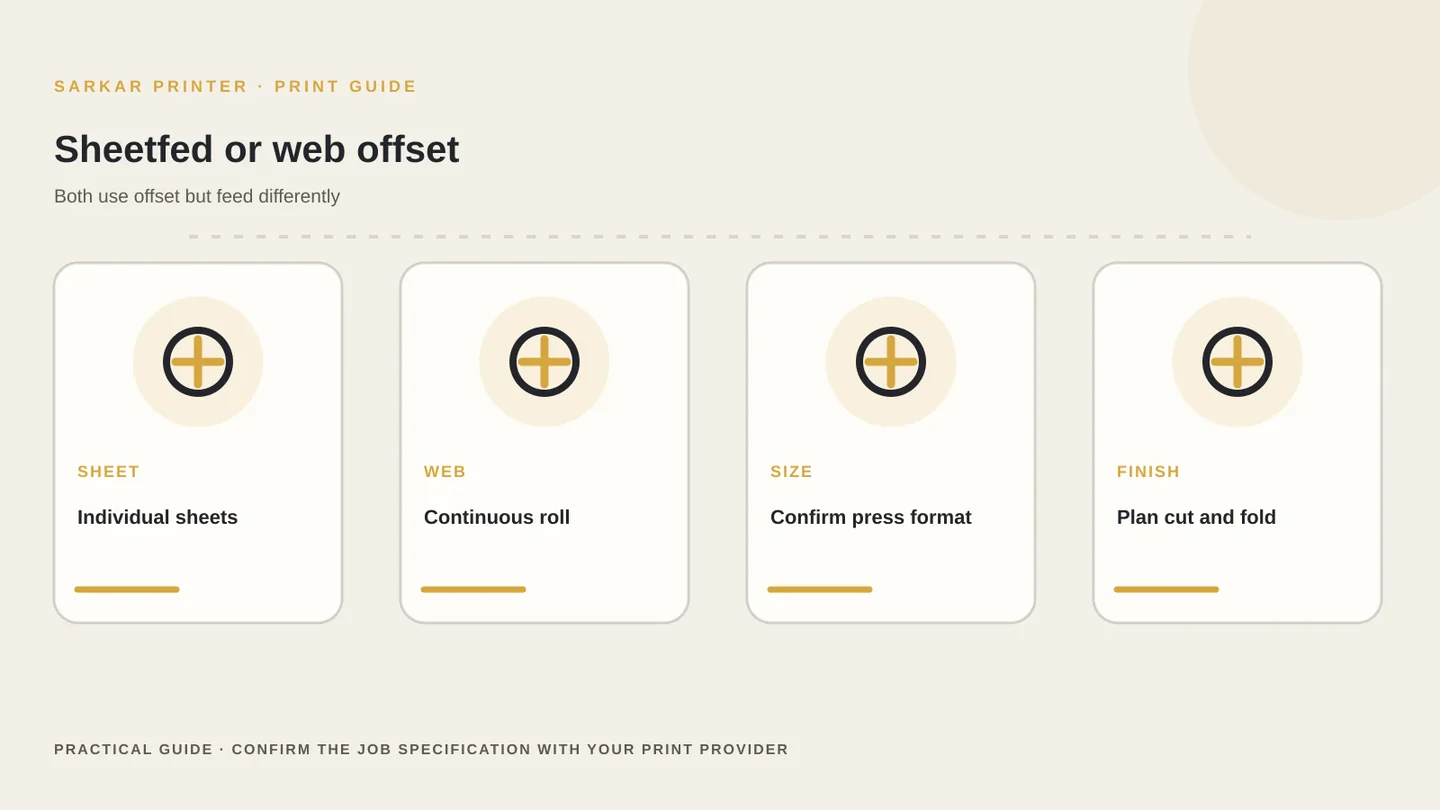
Sheetfed offset presses feed individual sheets through printing units. They appear in commercial print and packaging production for products such as brochures, catalogues, cartons and other planned runs. Sheet size, paper or board, colour configuration and finishing route affect what a specific press can handle.
Web offset presses feed a continuous roll through the press. Depending on the system and finishing line, web presses can support high-volume publication or other continuous production workflows. They need roll-based planning, including web width, repeat length, drying or curing, folding and cut-off details.
HEIDELBERG describes its sheetfed offset press families by format and configuration. Treat a manufacturer portfolio as an example, not a universal promise: ask the supplier which press and sheet size they will use.
Digital, flexographic and screen systems
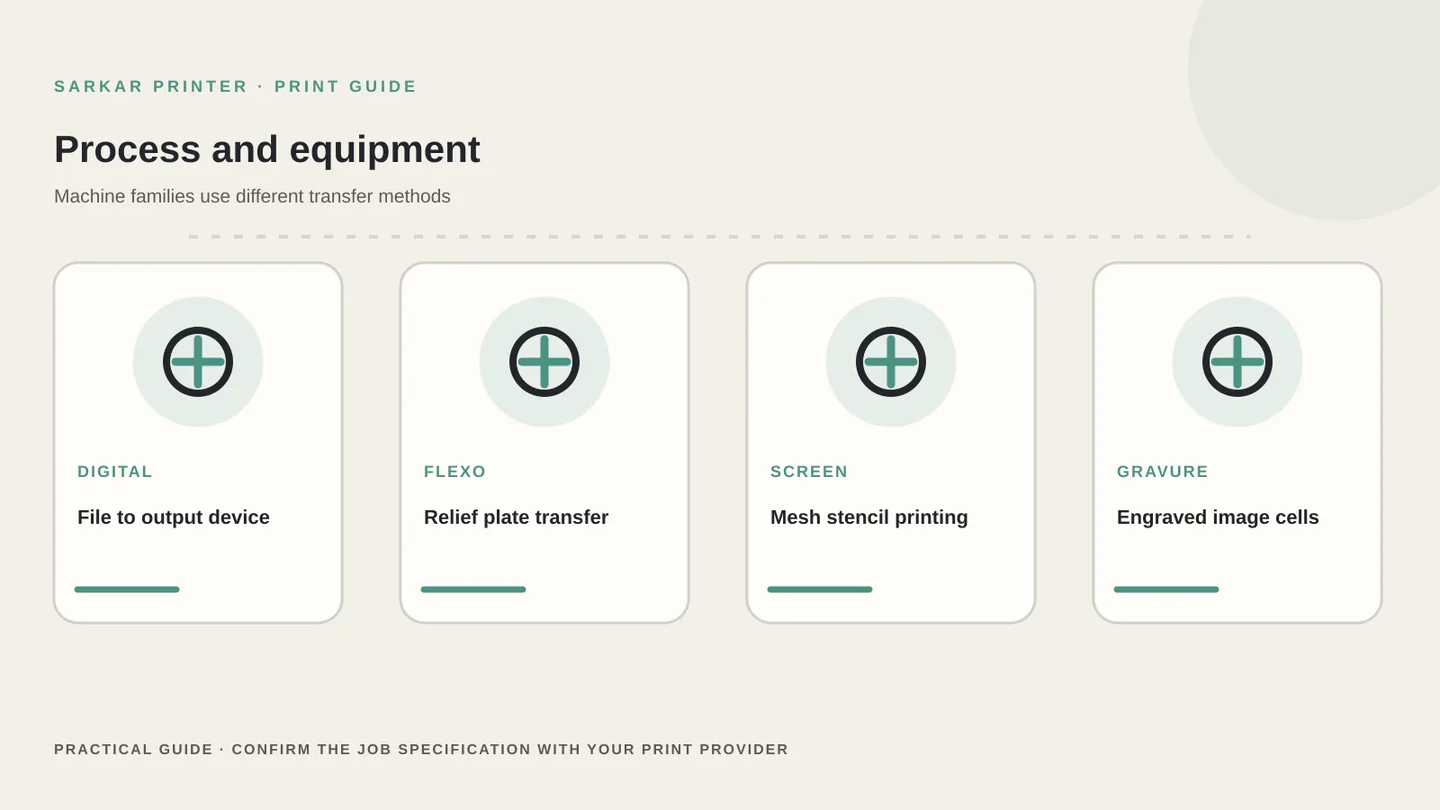
Digital presses receive pages from a digital workflow and can support jobs with short quantities or multiple versions. Production inkjet and toner systems have different output characteristics and substrate requirements. Digital equipment is not limited to tiny jobs; compare a current specification rather than relying on an old run-length rule.
Flexographic presses transfer ink from a flexible relief plate, often as part of label, flexible-packaging or other converting lines. Screen-printing equipment pushes ink through a prepared mesh stencil and can print selected materials or create specialty effects. Gravure systems use engraved image cells and serve particular high-volume applications.
HEIDELBERG presents digital printing equipment, while HP describes its commercial digital press portfolio. These examples illustrate the range; confirm actual material and finishing capability with the shop producing your order.
Compare machine capability with the complete specification
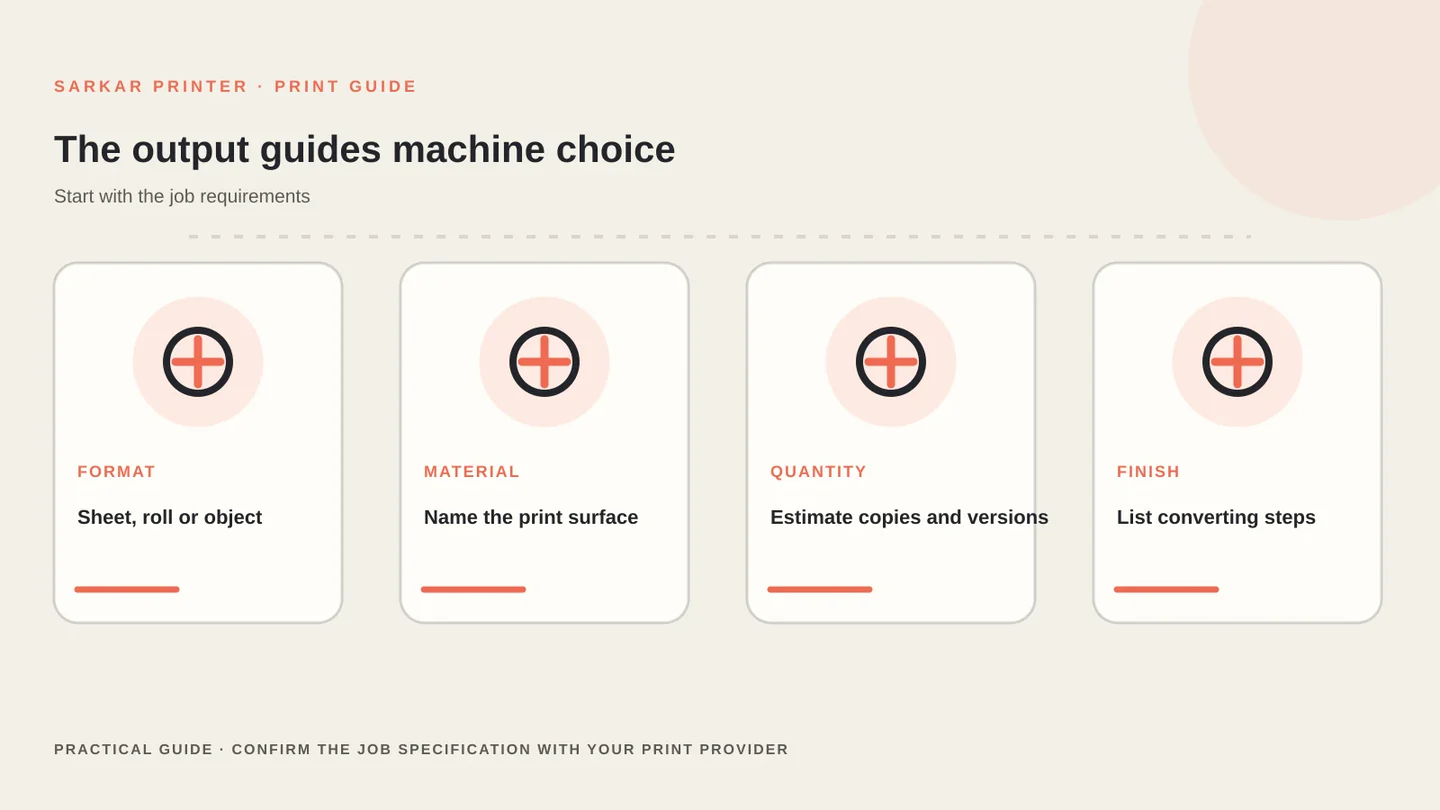
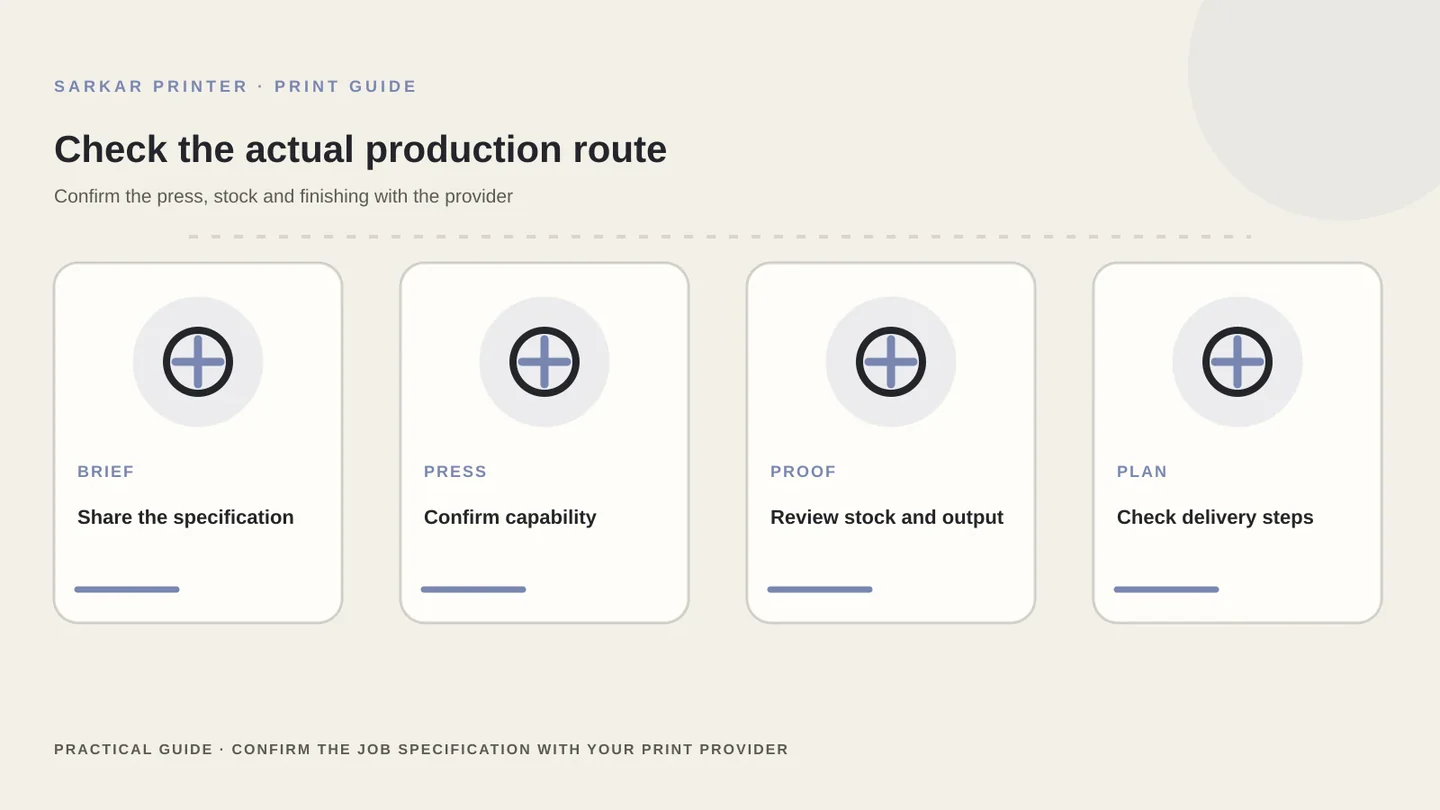
Ask which process and machine the supplier recommends, what material it supports and whether the equipment can produce your finished size. If you need a particular texture, thickness, colour, coating or die-cut, confirm those details before approving artwork. A sample or proof can reveal constraints that a product mock-up cannot.
Compare the press with the whole route: prepress, make-ready, print, drying or curing, folding, binding, die-cutting and packing. Some work happens inline; other jobs move between separate machines. The handoff plan affects handling and the due date.
Use the print technology checklist to map the file, proof and production steps. For brochures, cartons or business materials, give Sarkar Printer the finished size, stock, quantity and requested finish.
Commercial printing machine families
These categories describe broad equipment families. Capabilities depend on the installed press, substrate and finishing line.
| Machine family | How it is fed or transfers ink | Common discussion |
|---|---|---|
| Sheetfed offset | Individual sheets; plate-to-blanket transfer | Commercial sheets, brochures and selected cartons |
| Web offset | Continuous roll through offset units | Roll-fed publication and continuous workflows |
| Digital toner | Digital pages transfer through a toner-based process | Versioned or planned digital jobs |
| Production inkjet | Inkjet heads deposit image data on the chosen material | High-throughput print and selected packaging work |
| Flexographic | Flexible relief plate transfers ink | Labels, packaging and converting lines |
| Screen printing | Ink passes through a prepared mesh stencil | Selected substrates and specialty effects |
CONTINUE THE PRINT PLAN
Make the next print decision with a clear brief.
Share the finished size, stock, quantity and finishing needs so a provider can match the job to actual equipment. Explore offset printing, packaging, or ask the Sarkar Printer team.
Frequently asked questions
What are the main types of printing machines?
Commercial production uses sheetfed and web offset presses, digital toner and inkjet presses, flexographic systems, screen-printing equipment and specialist machines such as gravure presses.
What is the difference between a sheetfed and web press?
A sheetfed press feeds individual sheets. A web press feeds a continuous roll. The format affects planning, compatible materials and downstream finishing.
Are digital printing machines only for short runs?
No. Digital systems serve a range of volumes and applications. Compare the current press specification, quantity, versions, stock and total quote.
How do I choose a printing machine for my product?
Describe the finished size, material, quantity, colours, versions and finishing. Ask the provider which specific press and production route can meet them.