
If you have a physical reference but no formal specification, the sample can help a printer understand the intended result. A print brief from sample should describe what to match, what may change and which details still need measurement.
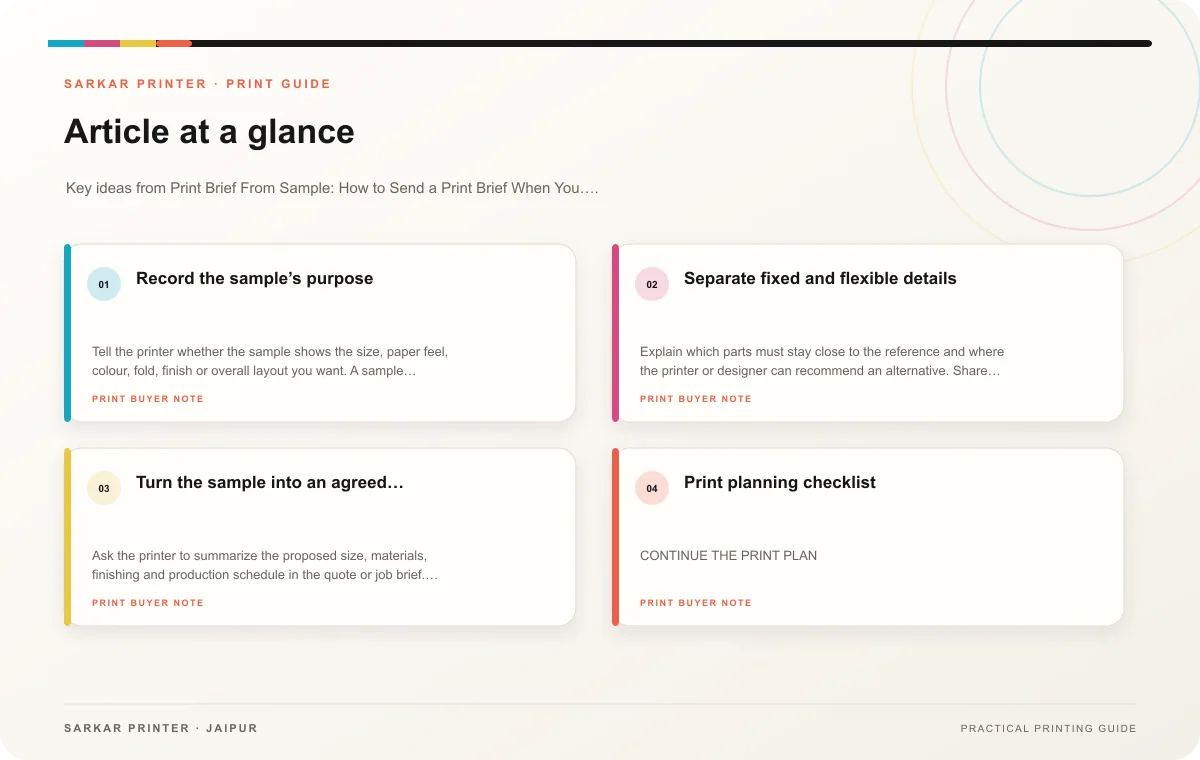
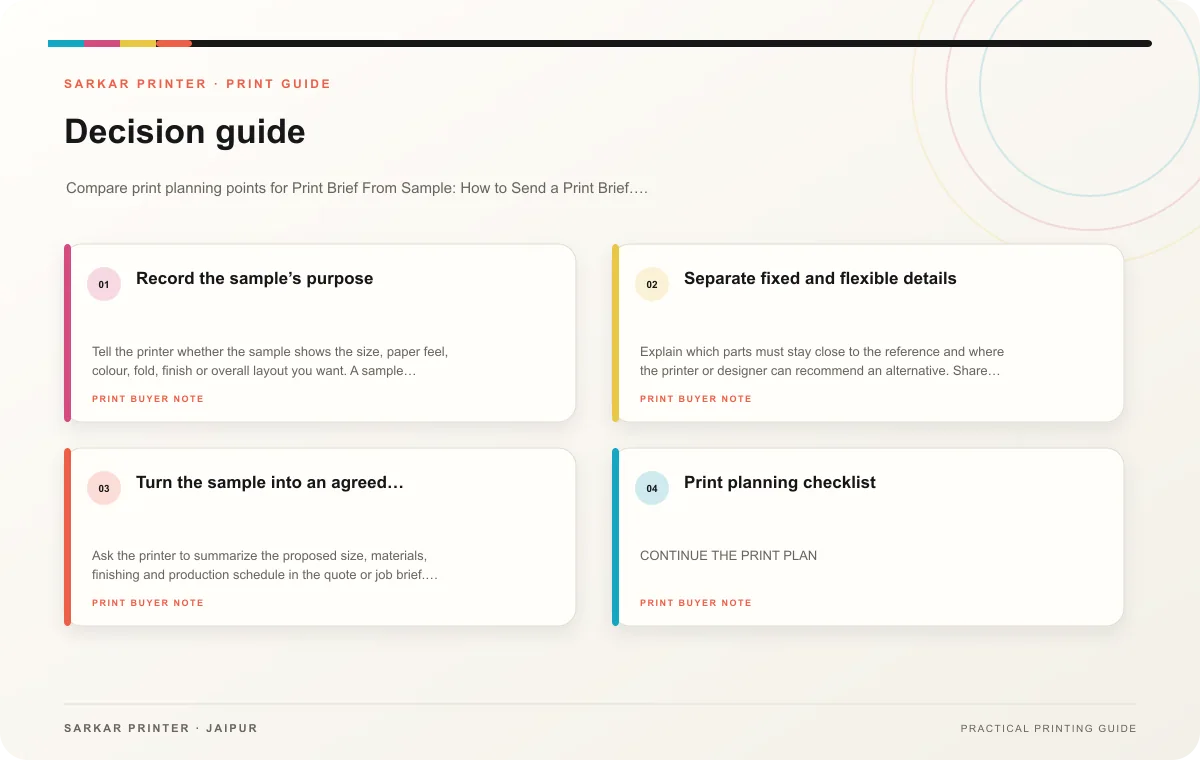
Record the sample’s purpose
Tell the printer whether the sample shows the size, paper feel, colour, fold, finish or overall layout you want. A sample from another supplier may use different materials or processes, so treat it as a reference rather than assuming the production method is identical. Photograph the front, back, open spread and any details that matter.
Measure the finished piece and, where relevant, the open size. Count pages or panels, note how it folds or binds, and record how many copies you need. If the sample includes a feature you cannot identify, mark it as a question instead of guessing its name.
Separate fixed and flexible details
Explain which parts must stay close to the reference and where the printer or designer can recommend an alternative. Share your artwork, if available, and state whether the wording is final. List the audience, use, distribution plan and date required so the print team can suggest suitable choices.
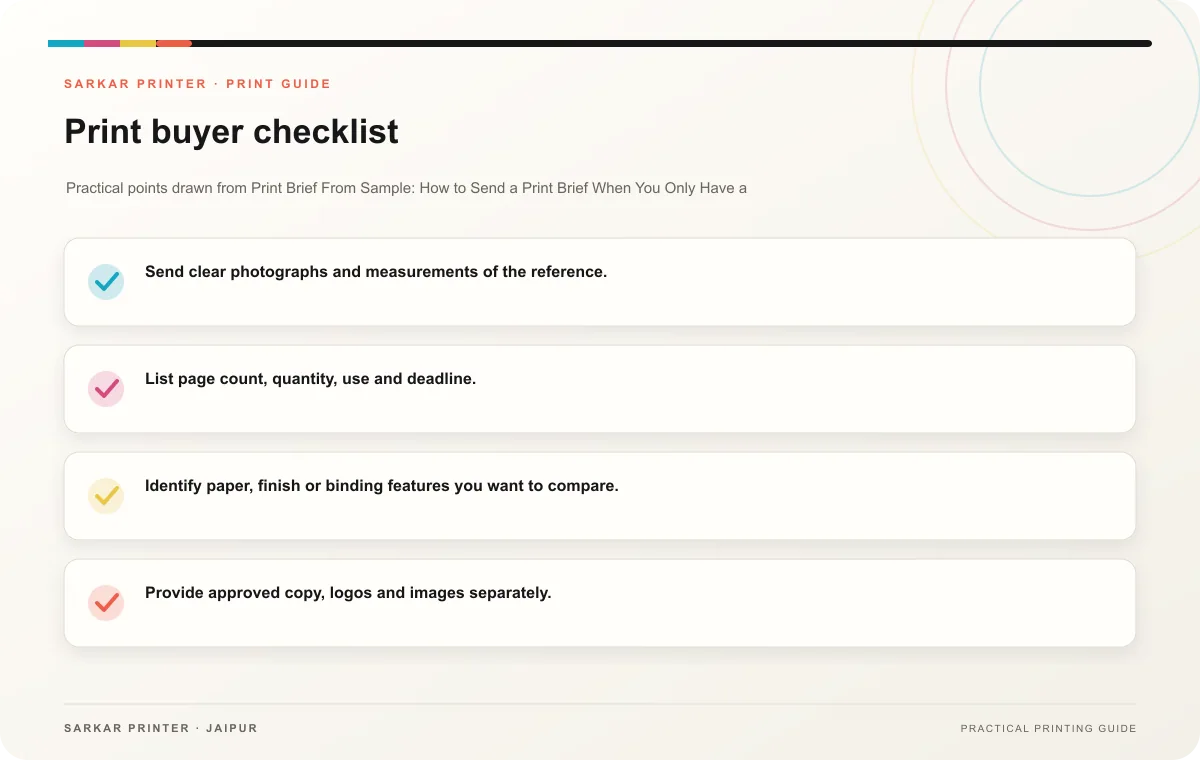
- Send clear photographs and measurements of the reference.
- List page count, quantity, use and deadline.
- Identify paper, finish or binding features you want to compare.
- Provide approved copy, logos and images separately.
- Ask for a proof or sample before confirming an unfamiliar option.
Turn the sample into an agreed specification
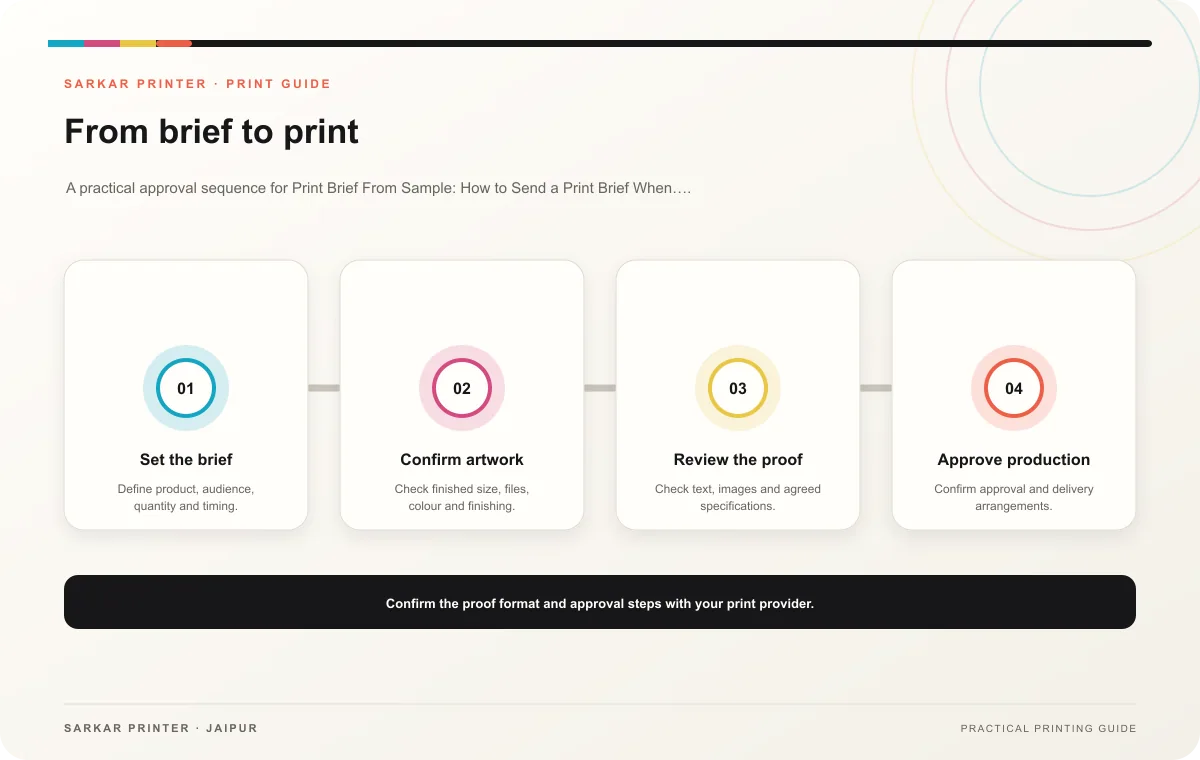
Ask the printer to summarize the proposed size, materials, finishing and production schedule in the quote or job brief. Compare that specification with the physical sample. Once the proof matches the agreed direction, approve the exact version and keep it with your records.
Print planning checklist
| Topic | Key point | Check before approval |
|---|---|---|
| Record the sample’s purpose | Tell the printer whether the sample shows the size, paper feel, colour, fold, finish or overall layout you want. A sample from another supplier may use different materials or processes,… | Record the audience and main message in the print brief. |
| Separate fixed and flexible details | Explain which parts must stay close to the reference and where the printer or designer can recommend an alternative. Share your artwork, if available, and state whether the wording is… | Record the agreed choice in the approved print brief. |
| Turn the sample into an agreed specification | Ask the printer to summarize the proposed size, materials, finishing and production schedule in the quote or job brief. Compare that specification with the physical sample. Once the… | Record the agreed choice in the approved print brief. |
CONTINUE THE PRINT PLAN
Keep the next step useful.
Explore the service page or related drafts, then send the agreed brief to the print team.
Frequently asked questions
Can a photo replace the physical sample?
Photos show layout and appearance, but they cannot communicate weight, texture or all finishing details.
What if I do not know the paper?
Say so and ask the printer to compare samples that fit the intended use.
Should I send the reference sample to the printer?
Ask whether a physical sample would help and how your team will send it and who will return it.