
Plan a petrol pump bill book with readable date, fuel, quantity, rate and payment fields. Separate customer records from shift reconciliation notes before printing. For commercial billing and audit compliance, ensure book serial numbering and tax headers align with statutory CBIC GST invoice rules.
Separate the customer bill from the shift log
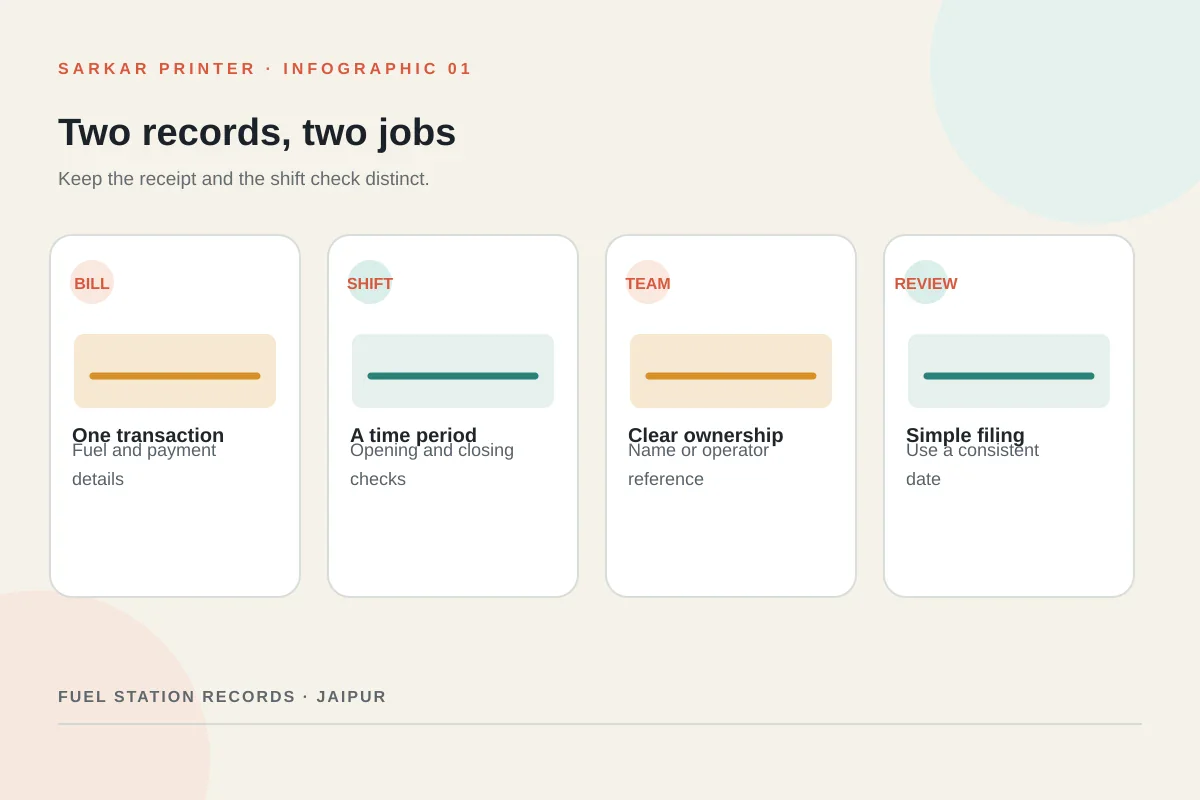
A customer-facing bill and an internal shift record answer different questions. The bill records one transaction. A shift sheet helps a team compare its own meter, payment and closing information. Putting both jobs on one crowded page can slow staff down and make later checks harder.
Decide which form you are printing first. If the shop needs both, give each form a clear title and its own fields. Confirm any formal tax or invoice wording with the business accountant before artwork approval.
Choose fields for a single fuel transaction
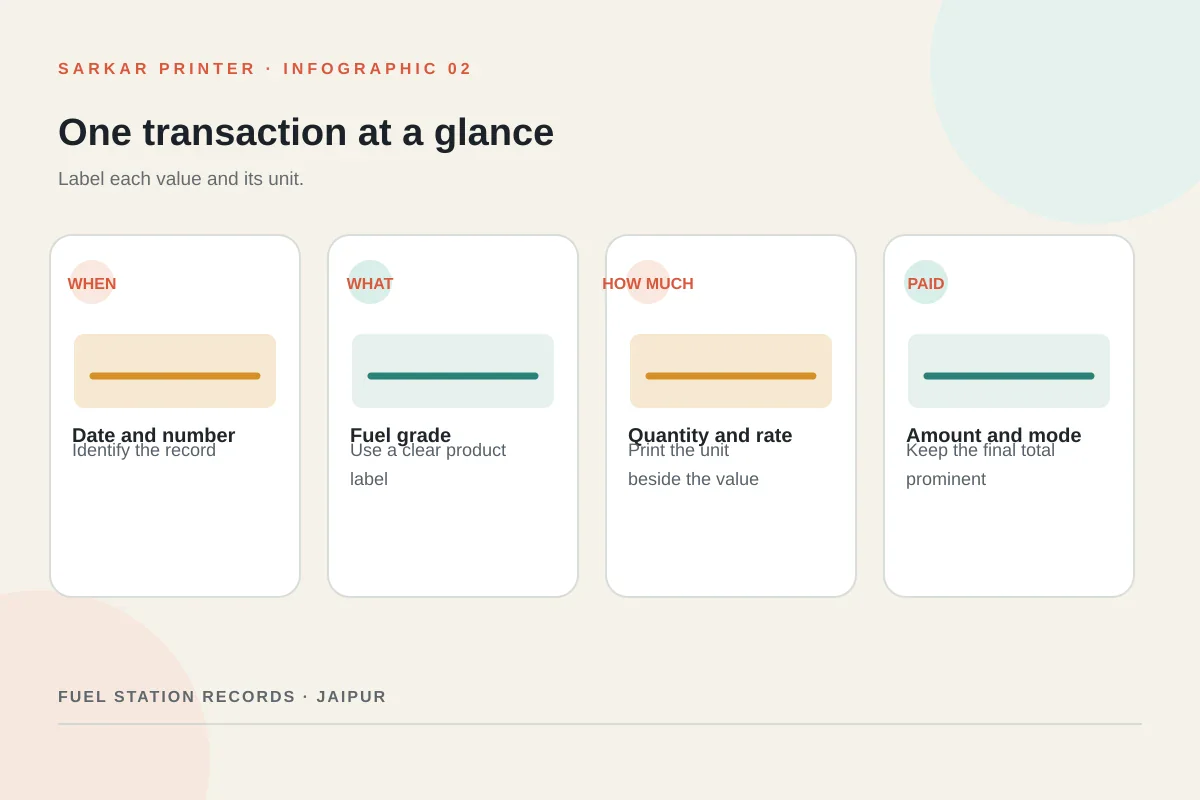
Start with a date and preprinted serial number if the business needs sequential records. Add a clear fuel grade or product name, quantity unit, rate and amount area. Include a payment mode or vehicle reference only when the workflow uses it.
Keep the quantity unit visible and place it beside the quantity field. Use labels that match staff language. If a form has different products, ensure the product choice cannot be mistaken for the payment or amount field.
Make shift reconciliation readable
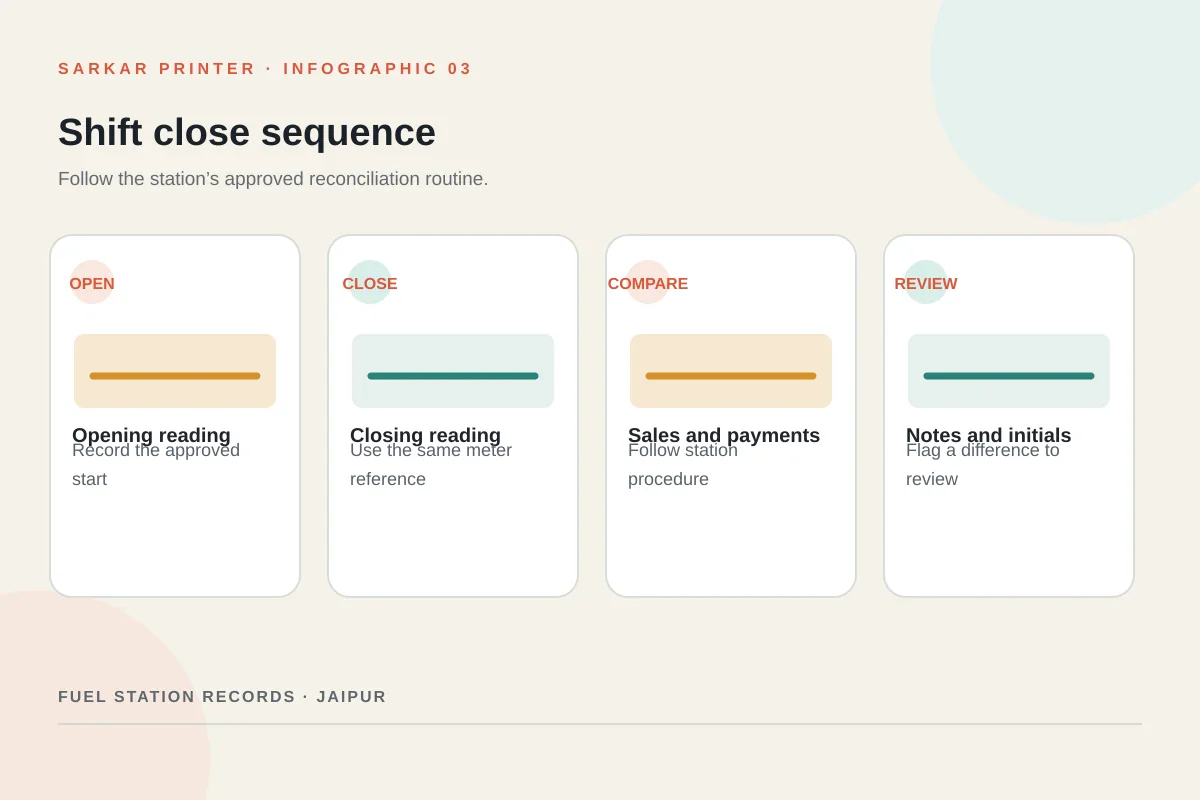
For internal closeout, choose only the readings and totals the station already checks. A team may record the shift, pump or nozzle reference, opening and closing meter readings, sales totals and payment summaries. The manager should define the exact procedure; the printed sheet should mirror it.
Give each reading its own labelled column and leave adequate writing space. Add a variance or review note only if the station uses that field. A form cannot replace the station’s operational checks, but a clear layout can make the recorded information easier to scan.
Test the form with a real shift example
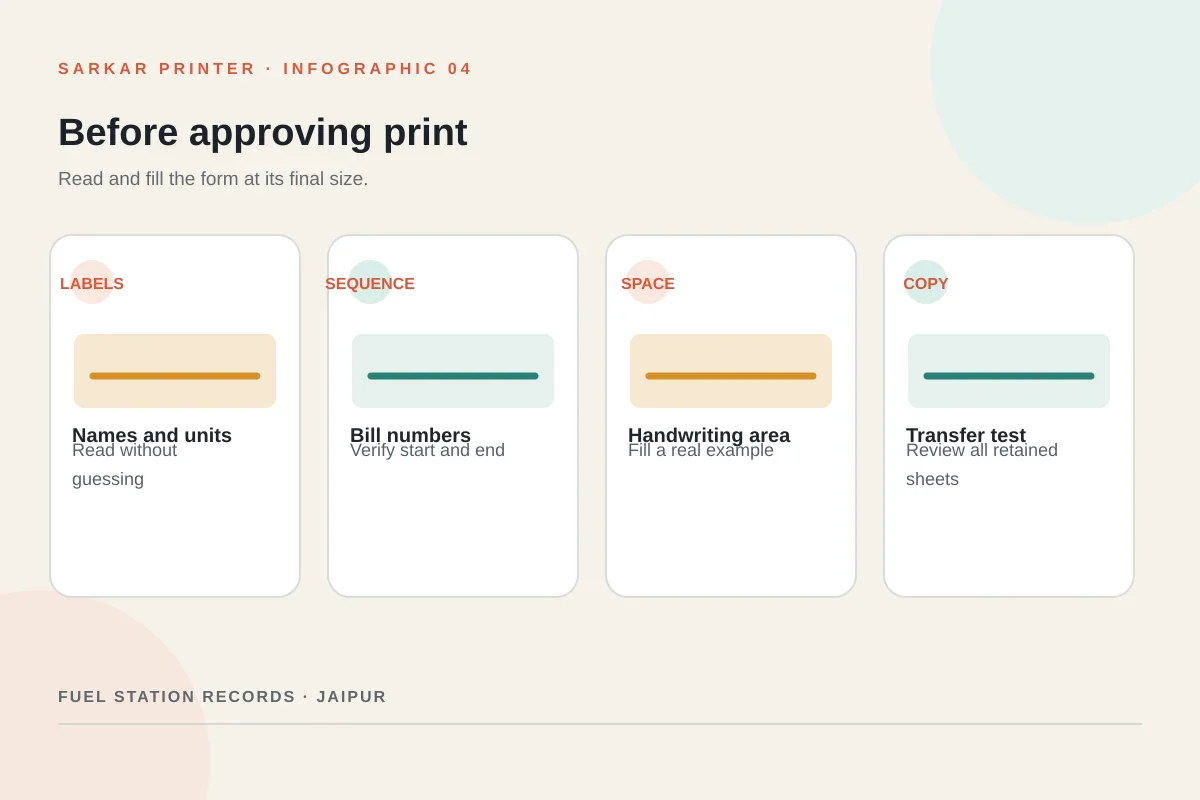
Fill one sample page using a normal transaction and one sample shift close. Ask a staff member to read the page without extra explanation. If the person has to guess which figure belongs in a column, revise the label or spacing.
Check serial numbers, date format, fuel labels, quantity units, amount boxes and the order of the fields. If the book has duplicate copies, test writing transfer with the pen and pressure staff actually uses.
Petrol pump form planning table
Use this table to decide which printed form fits the process. Avoid adding fields simply because another station uses them.
| Form | Field group | Purpose |
|---|---|---|
| Customer bill | Date, serial, fuel, quantity, rate, amount | Record one customer transaction. |
| Payment | Mode or reference, if used | Match the station’s own workflow. |
| Shift log | Shift, pump/nozzle, meter readings | Support an internal closeout check. |
| Review | Variance note, initials, date | Show what needs follow-up. |
Related Sarkar Printer pages
Frequently asked questions
What goes in a petrol pump bill book?
A customer record may include date, serial, fuel type, quantity with its unit, rate, amount and payment details that the station actually uses.
Is a bill book the same as a shift register?
No. A customer bill records one transaction; a shift register supports internal meter and payment reconciliation over a period.
Should a petrol pump form show litres?
If staff records fuel quantity, print the unit clearly beside that field so readers do not confuse it with rate or amount.
Who should approve the form fields?
Ask the station manager and accountant to confirm the operational fields and any formal invoice wording before you approve the artwork.