
A PDF proof and a printed proof answer different questions. Compare a PDF proof vs printed proof by deciding whether you need to verify content and layout, or also inspect the material and finished handling.
Use a PDF proof for the file review
A PDF proof can help reviewers check copy, page order, image placement, crop and overall layout. It is easy to mark and share. Screen colour depends on the display and viewing conditions, so a PDF on a monitor does not guarantee a match for the finished ink on paper.
Review at both page-fit and actual-size zoom. Check headings, small details, footers, page numbers and every correction from earlier rounds. If the item folds, follow the panel order and ask how the proof represents the finished piece.
Use a physical proof when the object matters
A printed sample can show scale, paper feel, fold or binding, surface treatment and the way a package fits together. Ask the printer which elements the sample will represent. A sample made on a different process or material may help with size and handling but may not match final colour or finish exactly.
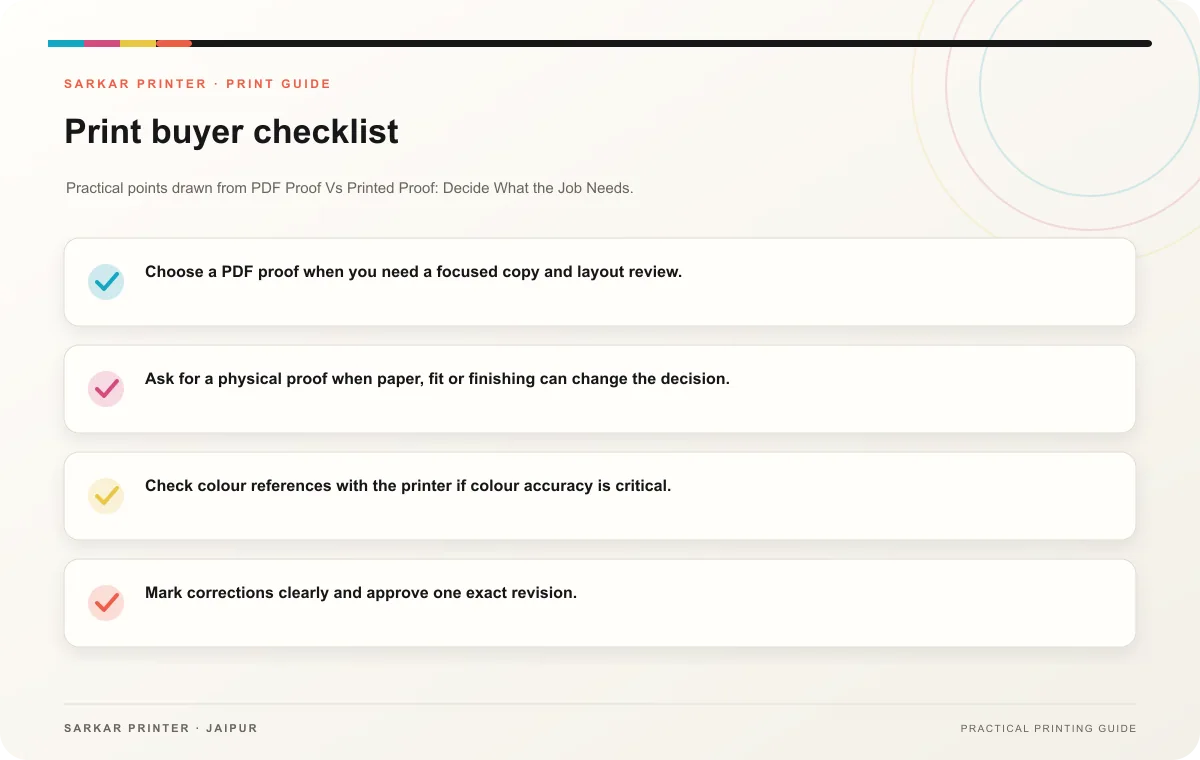
- Choose a PDF proof when you need a focused copy and layout review.
- Ask for a physical proof when paper, fit or finishing can change the decision.
- Check colour references with the printer if colour accuracy is critical.
- Mark corrections clearly and approve one exact revision.
- Record what the proof did and did not verify.
Set expectations before approval
Ask the print team how colour, finishing and how the team will evaluate any variation. Make sure the right person checks each detail: marketing for copy, product owners for facts and the project lead for the physical sample. Approval should refer to the final file or sample revision that will go to production.
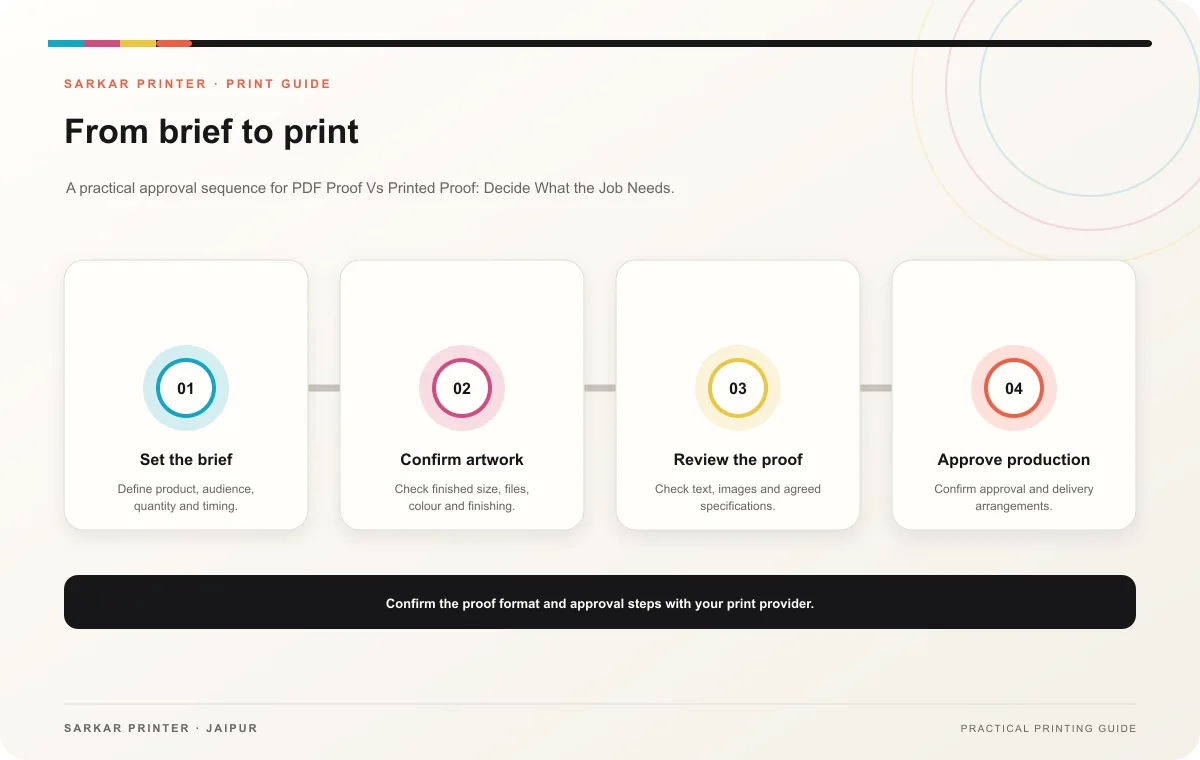
Print planning checklist
| Topic | Key point | Check before approval |
|---|---|---|
| Use a PDF proof for the file review | A PDF proof can help reviewers check copy, page order, image placement, crop and overall layout. It is easy to mark and share. Screen colour depends on the display and viewing… | Check the supplied file at final size and confirm bleed and safe areas. |
| Use a physical proof when the object matters | A printed sample can show scale, paper feel, fold or binding, surface treatment and the way a package fits together. Ask the printer which elements the sample will represent. A sample… | Review one dated proof under suitable light before approval. |
| Set expectations before approval | Ask the print team how colour, finishing and how the team will evaluate any variation. Make sure the right person checks each detail: marketing for copy, product owners for facts and the… | Review one dated proof under suitable light before approval. |
CONTINUE THE PRINT PLAN
Keep the next step useful.
Explore the service page or related drafts, then send the agreed brief to the print team.
Frequently asked questions
Does a PDF prove the final colour?
A monitor preview can vary. Ask the printer about colour references or a physical proof for colour-critical work.
Is a physical proof always required?
No. Choose it when physical scale, paper, fit or finish needs review.
Can I approve copy from a printed sample?
Yes, but compare it against the approved source and check every page or panel.