
Compare duplicate and triplicate bill books by copy routing, handwriting transfer and filing needs. Use this guide to choose a practical format before printing. For commercial billing and audit compliance, ensure book serial numbering and tax headers align with statutory CBIC GST invoice rules.
What a duplicate bill book means
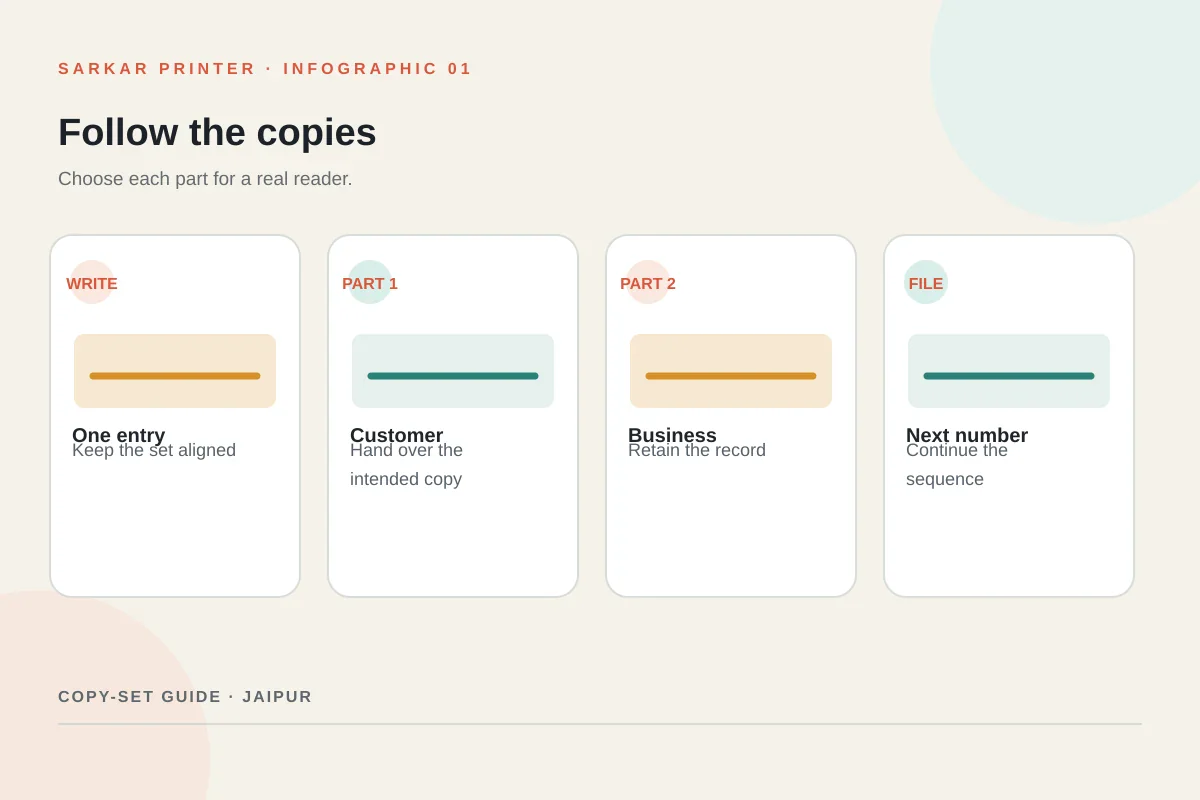
A duplicate bill book creates two matching records from one handwritten entry: one copy can go to the customer while the business retains the other. A triplicate format creates three parts when a third person or department needs a copy.
The names describe the number of copies, not the full quality of the book. Paper type, writing method, binding, serial numbering and the way the team handles each set also affect the result.
Choose duplicate or triplicate by copy route
Use a duplicate set when two parties need a readable record. Choose triplicate only when a third person or team uses a separate copy, such as a dispatch desk or another internal department. If no one can name the reader of the extra part, the third copy may add cost and handling without improving the process.
Map the route before you choose paper colours. Give each part a short label such as “Customer,” “Office” or “Dispatch” when staff could hand over the wrong sheet. Confirm that the copy order matches the real handoff.
Test copy transfer before approving a run
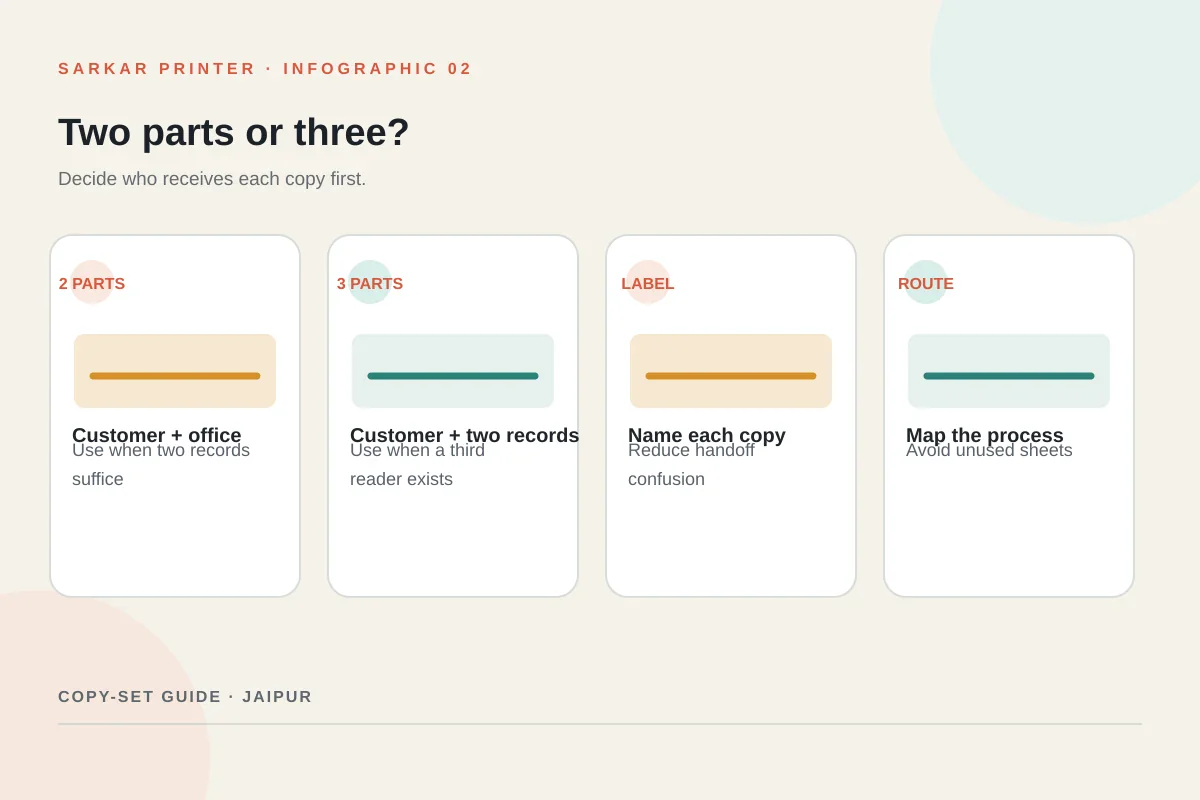
Ask the printer which paper system suits the artwork and how the set should be written. NCR paper transfers writing without a separate carbon sheet; other formats may use a different method. Whatever the construction, fill a sample set with the pen and pressure your staff expects to use.
Check the last part, not only the top page. A light or incomplete copy can make a multi-part book difficult to use. Also verify that the sheets remain aligned, the perforation tears cleanly and the binding holds the book during ordinary writing.
Write a quote-ready bill book specification
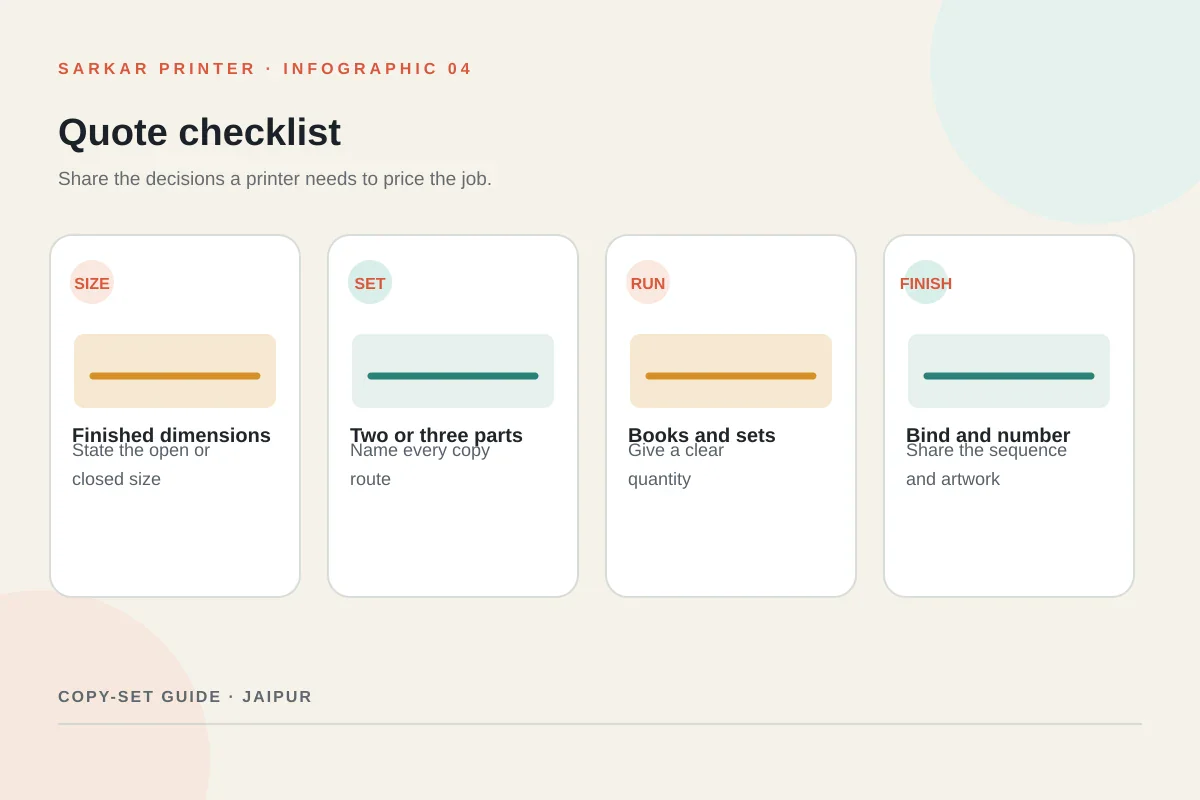
Tell the printer the finished size, number of parts, paper preference if known, sets per book, quantity, numbering sequence and binding style. Share the artwork or a photograph of a current form, and mark every change you want.
Before approval, check copy labels, serial numbers, page order, first and last number, business details and a sample transfer. If the book supports a formal invoice process, ask your accountant to review the required fields rather than relying on a generic print guide.
Duplicate and triplicate planning table
Use this comparison as a workflow prompt. It does not replace your accountant’s guidance on formal document requirements.
| Format | Copy route | Useful when |
|---|---|---|
| Single part | One original record | The business does not need a matching copy from the book. |
| Duplicate | Customer + business | Two people need the same handwritten details. |
| Triplicate | Customer + two record holders | A third team or handoff needs its own part. |
| Any format | Numbered, labelled pages | Staff need a clear sequence and filing method. |
Related Sarkar Printer pages
Frequently asked questions
What is a duplicate bill book?
It is a two-part book that makes a customer copy and a retained business copy from one entry.
When should a business choose triplicate?
Choose three parts when a third person or team has a defined use for its own copy. Map the handoff before ordering.
What does NCR mean on a bill book?
NCR means “no carbon required.” The set transfers writing without a separate carbon sheet; ask the printer to confirm the paper construction and test a sample.
How do I check copy quality?
Write on a sample set with the usual pen and handwriting pressure, then read every copy, including the last part.