
Booklet binding options affect how a publication opens, how many pages it can hold and how readers handle it. Compare the binding with the page count, format and intended use before the design team finalizes the artwork.
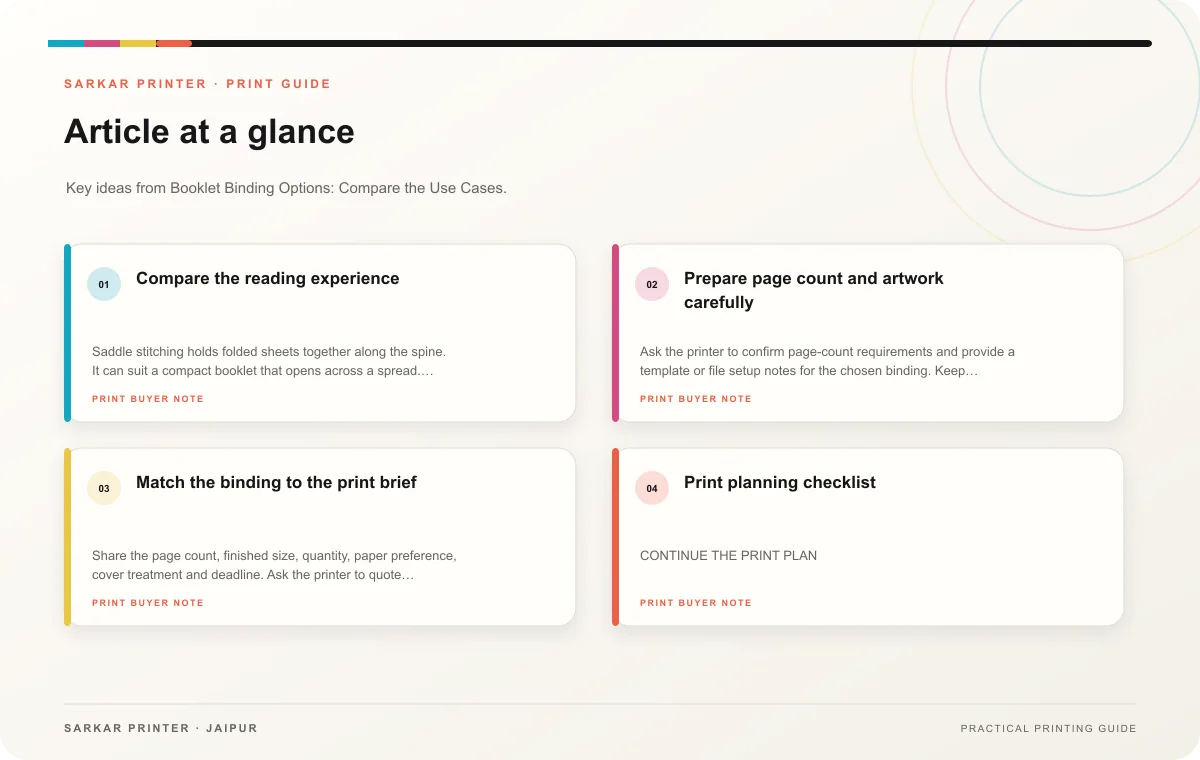
Compare the reading experience
Saddle stitching holds folded sheets together along the spine. It can suit a compact booklet that opens across a spread. Perfect binding uses a flat spine and creates a book-like edge that can carry a title. The right fit depends on the publication’s size, thickness, opening needs and the printer’s available production choices.
Think about how the reader will use the piece. Attendees may open and carry a short event programme for a few minutes. Readers may consult a product guide or manual repeatedly and benefit from a spine that stays easy to identify on a shelf. Consider whether a page needs to lie open for reference and whether an image or table crosses the centre.
Prepare page count and artwork carefully
Ask the printer to confirm page-count requirements and provide a template or file setup notes for the chosen binding. Keep essential text and faces clear of the spine area. If the design includes a spread across the centre, review how the binding affects the visible image. The production team can confirm suitable margins and any finishing considerations for the job.
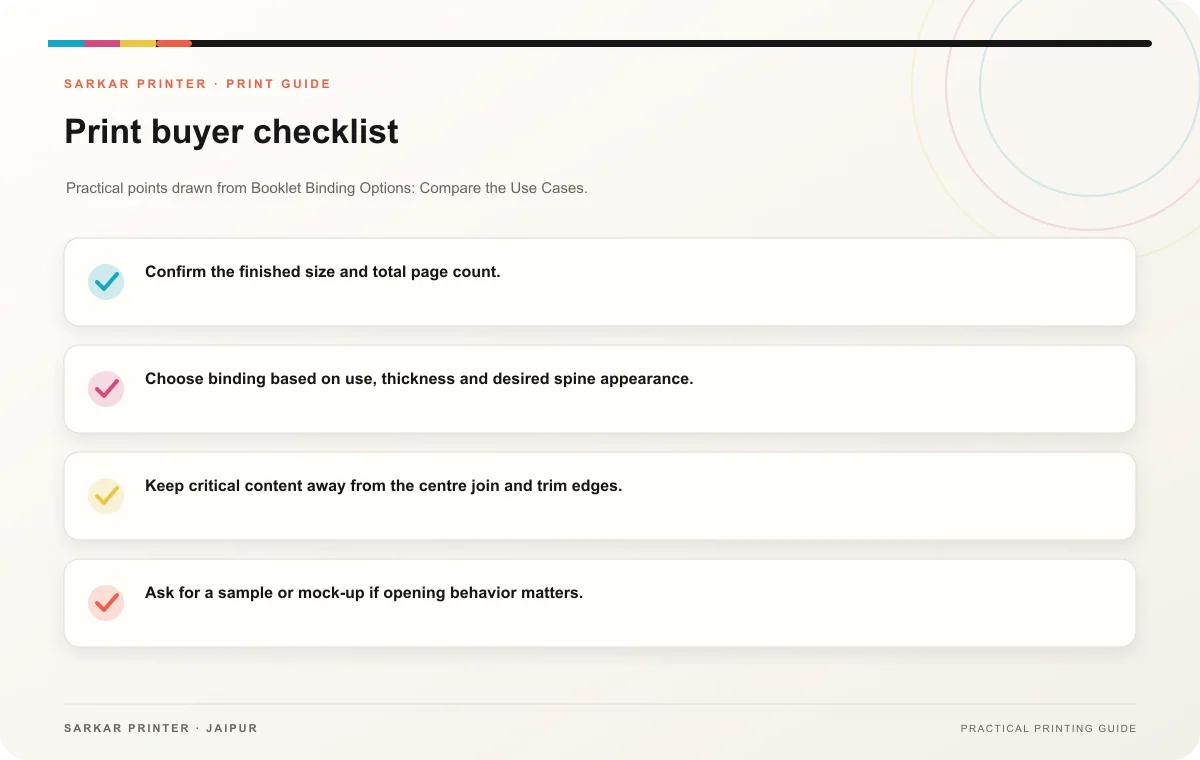
- Confirm the finished size and total page count.
- Choose binding based on use, thickness and desired spine appearance.
- Keep critical content away from the centre join and trim edges.
- Ask for a sample or mock-up if opening behavior matters.
- Approve the final page sequence and cover details.
Match the binding to the print brief
Share the page count, finished size, quantity, paper preference, cover treatment and deadline. Ask the printer to quote the options that suit the job. Compare the physical handling, shelf appearance and budget with the audience’s needs before selecting one.
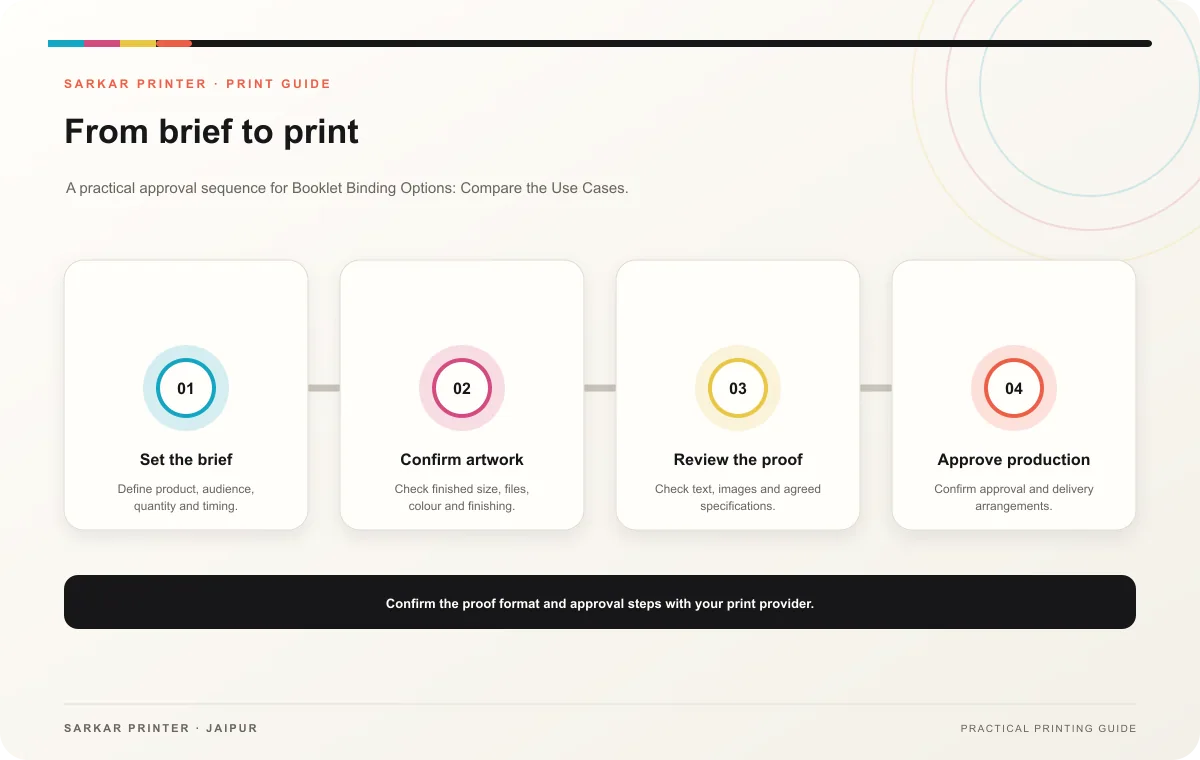
Print planning checklist
| Topic | Key point | Check before approval |
|---|---|---|
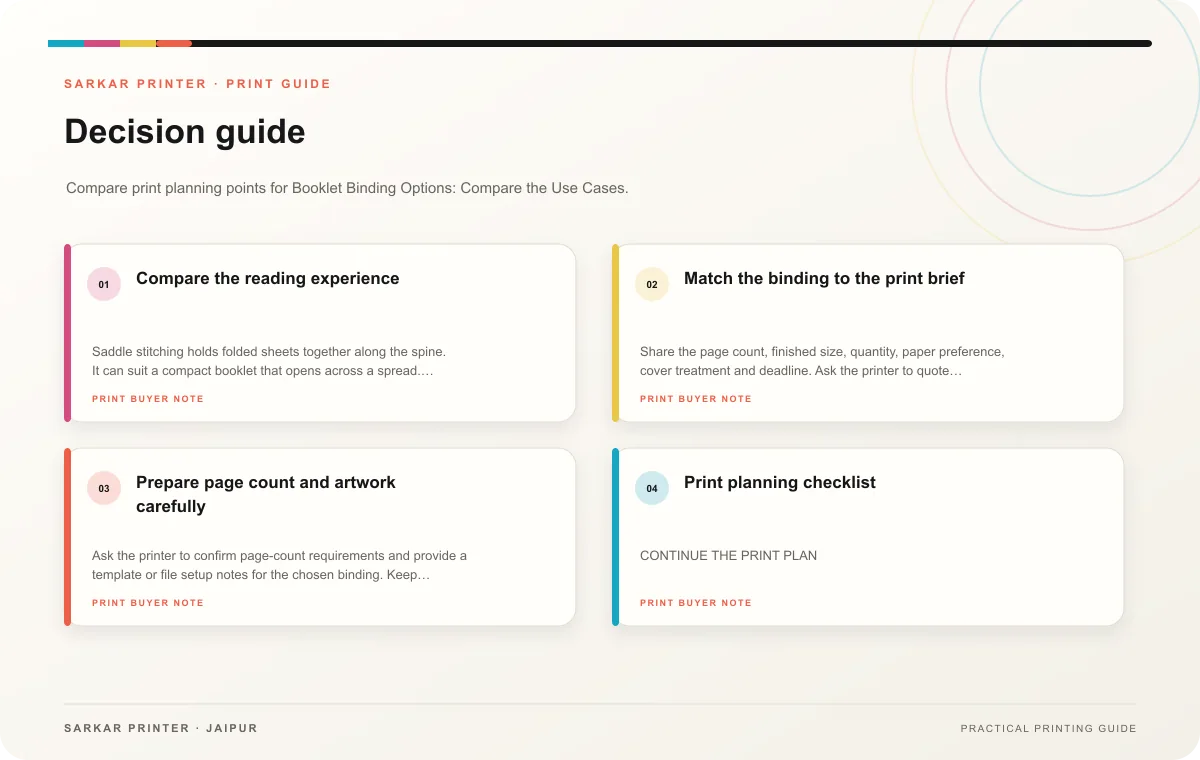
| Compare the reading experience | Saddle stitching holds folded sheets together along the spine. It can suit a compact booklet that opens across a spread. Perfect binding uses a flat spine and creates a book-like edge… | Record the agreed choice in the approved print brief. |
| Prepare page count and artwork carefully | Ask the printer to confirm page-count requirements and provide a template or file setup notes for the chosen binding. Keep essential text and faces clear of the spine area. If the design… | Check the supplied file at final size and confirm bleed and safe areas. |
| Match the binding to the print brief | Share the page count, finished size, quantity, paper preference, cover treatment and deadline. Ask the printer to quote the options that suit the job. Compare the physical handling,… | Record the agreed choice in the approved print brief. |
CONTINUE THE PRINT PLAN
Keep the next step useful.
Explore the service page or related drafts, then send the agreed brief to the print team.
Frequently asked questions
Which binding works for a short booklet?
Saddle stitching is a common option for compact publications; confirm whether the page count and format suit the printer’s setup.
When does a flat spine help?
A flat spine can carry a title and make a thicker publication easier to identify. Ask the printer whether the planned thickness supports it.
Can a booklet open fully flat?
Opening behavior depends on binding and materials. Ask for a physical sample when the reader must keep pages open.