
A bilingual print layout must give each language an equivalent reading path and enough room for its text. Bilingual print artwork preparation begins with approved translations and a clear decision about how readers will move between the two versions.
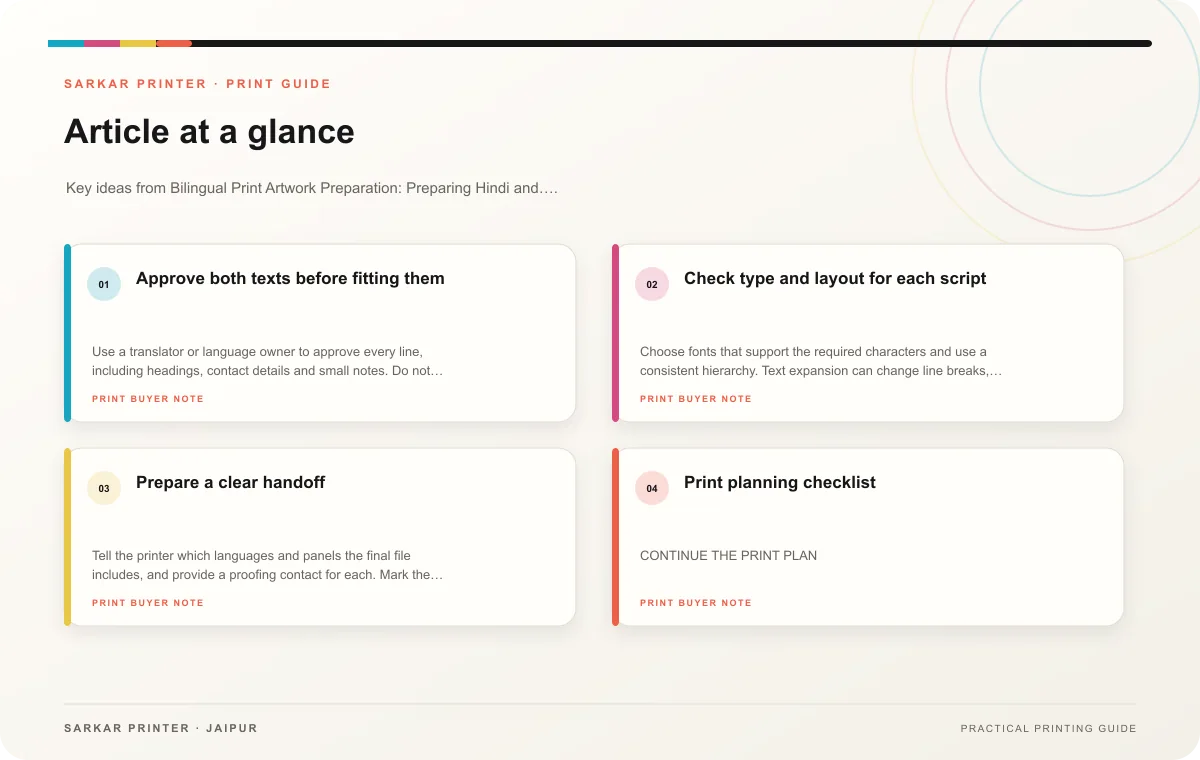
Approve both texts before fitting them
Use a translator or language owner to approve every line, including headings, contact details and small notes. Do not shorten a translation only to make the design fit without checking that the meaning remains the same. Keep one source document with matching section labels so reviewers can compare the two languages side by side.
Decide whether languages appear together, on facing panels or in separate editions. Paired sections help readers compare information; separate panels can give each language a more natural flow. Choose a format by weighing the audience, page size, and the distribution plan.
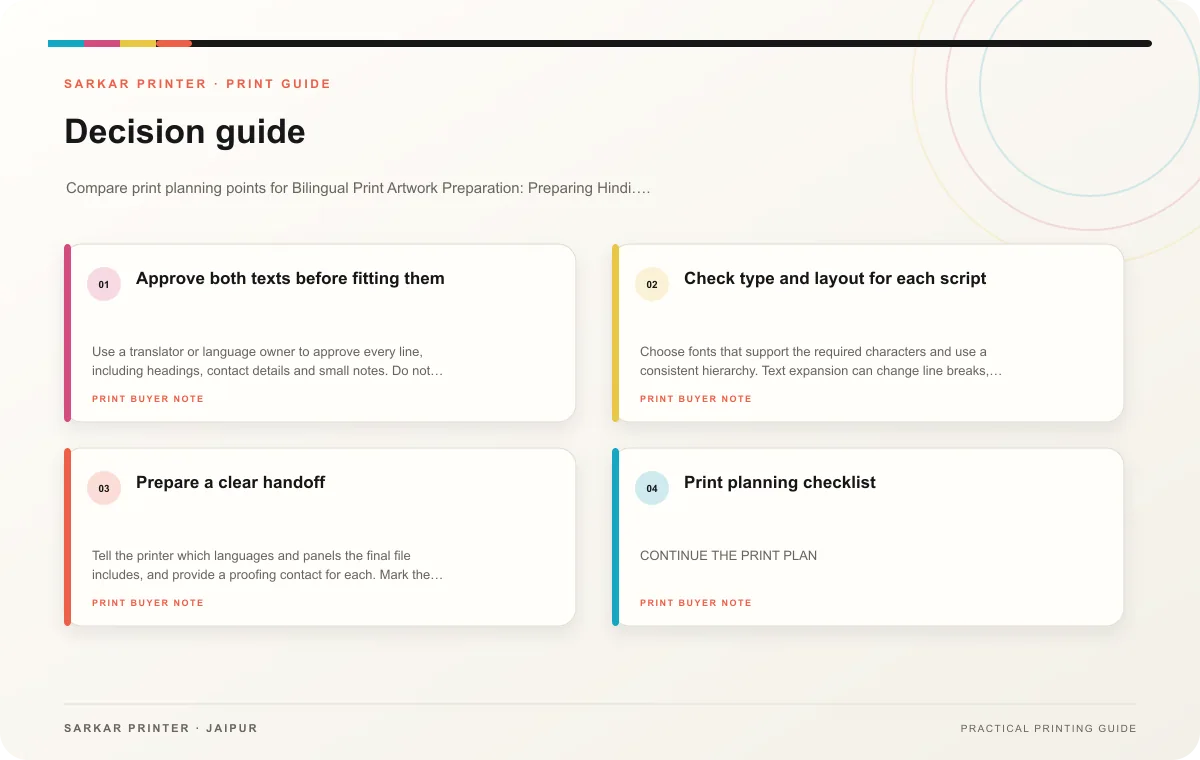
Check type and layout for each script
Choose fonts that support the required characters and use a consistent hierarchy. Text expansion can change line breaks, so review both languages at final size. For Hindi or other scripts, inspect matras, conjuncts, punctuation and line wraps carefully. Have a fluent reader proof the final export; a technical file check cannot confirm linguistic accuracy.
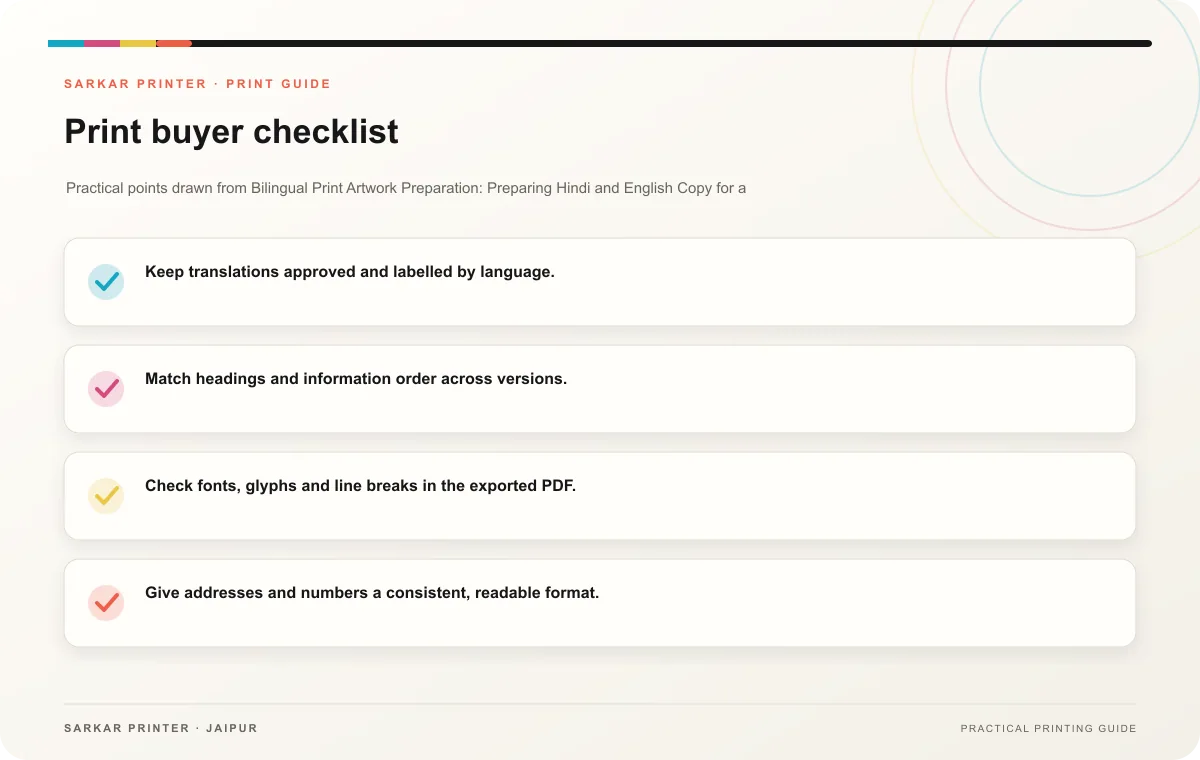
- Keep translations approved and labelled by language.
- Match headings and information order across versions.
- Check fonts, glyphs and line breaks in the exported PDF.
- Give addresses and numbers a consistent, readable format.
- Ask a fluent reviewer to inspect each final language version.
Prepare a clear handoff
Tell the printer which languages and panels the final file includes, and provide a proofing contact for each. Mark the file version and identify who approved the translated text. Review the finished size and reading sequence in a folded mock-up if the layout uses panels.
Print planning checklist
| Topic | Key point | Check before approval |
|---|---|---|
| Approve both texts before fitting them | Use a translator or language owner to approve every line, including headings, contact details and small notes. Do not shorten a translation only to make the design fit without checking… | Record the agreed choice in the approved print brief. |
| Check type and layout for each script | Choose fonts that support the required characters and use a consistent hierarchy. Text expansion can change line breaks, so review both languages at final size. For Hindi or other… | Check the supplied file at final size and confirm bleed and safe areas. |
| Prepare a clear handoff | Tell the printer which languages and panels the final file includes, and provide a proofing contact for each. Mark the file version and identify who approved the translated text. Review… | Record the agreed choice in the approved print brief. |
CONTINUE THE PRINT PLAN
Keep the next step useful.
Explore the service page or related drafts, then send the agreed brief to the print team.
Frequently asked questions
Can machine translation provide final print copy?
Use a qualified language owner to review the meaning and natural phrasing before print approval.
Why does translated text not fit?
Languages use different word lengths and scripts. Plan the layout around approved copy instead of shrinking type as a quick fix.
Who checks Hindi typography?
A fluent Hindi proofreader should review the final export, including matras, conjuncts and line breaks.