
Implementing sophisticated luxury packaging finishing techniques elevates premium brand equity. In addition, it creates memorable unboxing experiences for discerning consumers. According to luxury goods research from the Luxury Packaging Association standards , multi-sensory packaging finishes directly increase perceived product value and retail shelf dominance. Consequently, mastering the technical nuances of hot foil stamping, multi-level blind embossing, and micro-etched textures is essential for high-end cosmetic, confectionery, and spirits packaging.
For prestige consumer brands across India, secondary packaging serves as the tangible ambassador of product craftsmanship. When cartons feature flawless metallic foil alignment and tactile velvet touch coatings, they communicate uncompromised luxury. Therefore, understanding structural embellishment metallurgy and heat-curing parameters allows procurement managers to execute flawless production runs without surface defects.
Whether you manufacture rigid gift boxes, perfume folding cartons, or limited-edition corporate gift hampers, advanced finishing technology delivers unmatched distinction. When planning your high-end brand packaging, this comprehensive luxury packaging finishing techniques manual ensures world-class pressroom execution. Furthermore, it prevents costly embellishment tooling errors.
Luxury Finishing Metallurgy & Process Architecture
- 1. Metallic Embellishment Technologies Hot Foil Stamping: Thermal activation of vacuum-metallized aluminum rolls via brass dies.
- Cold Foil Transfer: Inline lithographic UV adhesive bonding for ultra-fine micro-halftones.
- Metallic Pigment Inks: Sustainable leafing and non-leafing metallic bronze powders.
- 2. Dimensional Tactile Deformations Multi-Level Embossing: Hand-engraved CNC brass dies sculpting 3D paperboard relief.
- Blind Debossing: Recessed graphic contours without ink or foil registration.
- Combination Foil-Embossing (Fluted Dies): Single-pass simultaneous foiling and sculpting.
- 3. Specialized Optical Surface Coatings Velvet Soft-Touch Barrier Films: Haptic tactile surfaces resistant to fingerprint marks.
- Raised Tactile UV (Screen High-Build): 30 to 60 micron localized resin deposits.
- Synergy with our paper coating technology guide and commercial print color accuracy standards.
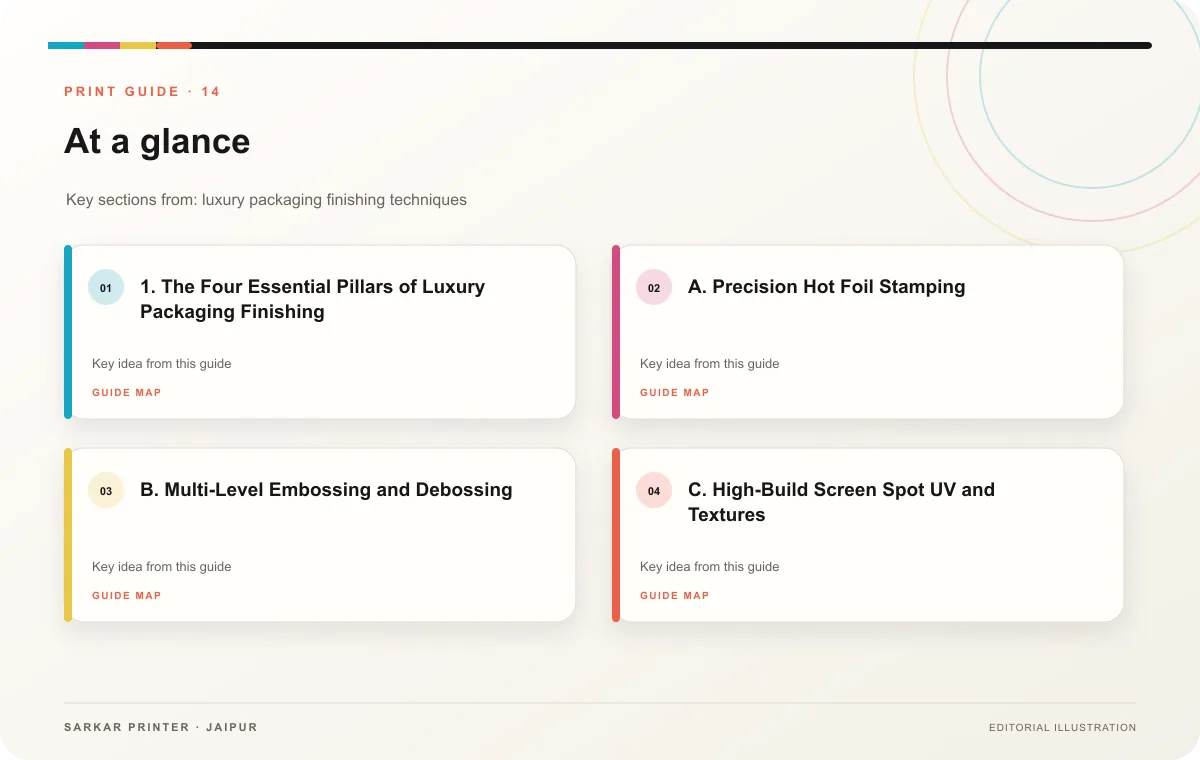
1. The Four Essential Pillars of Luxury Packaging Finishing
Modern luxury packaging demands a balance between visual brilliance and structural durability. Specifically, four core finishing categories dominate high-end carton production:
A. Precision Hot Foil Stamping
Hot foil stamping utilizes heated magnesium, copper, or CNC-engraved brass dies to transfer metallic polyester film onto paperboard. Under temperatures ranging from 110°C to 150°C and immense hydraulic tonnage, the thermal release layer melts. Consequently, the vacuum-metallized aluminum layer bonds permanently with the paper fibers.
Moreover, brass dies allow multi-level sculpted bevels. Consequently, light reflects dynamically across curved metallic edges. When paired with high-density board from our paper gsm selection guide , brass tooling achieves micron-level registration accuracy without blistering.
B. Multi-Level Embossing and Debossing
Embossing deforms paperboard fibers into positive dimensional relief, while debossing presses graphics below the surface plane. Standard single-level blind embossing creates a clean raised plateau. In contrast, multi-level sculpted embossing mimics classical sculptured reliefs with varying elevations.
To avoid tearing delicate fiber matrices, die-makers engineer custom female counter dies with precise shoulder bevels. Therefore, paperboard moisture content must remain between 5% and 7% during press stamping to prevent fiber cracking.
C. High-Build Screen Spot UV and Textures
While standard offset UV coaters deposit 4 to 6 microns of liquid resin, rotary screen finishing units lay down 30 to 80 microns of high-viscosity photopolymer lacquer. As a result, screen UV creates tangible raised raindrops, simulated leather grains, and tactile water droplets.
When applied over deep matte soft-touch laminated board, high-build spot UV creates stark optical contrast. The gloss lacquer captures ambient light, while the surrounding velvet background absorbs reflections completely.
D. Cold Foil Transfer Technology
Cold foil is an inline lithographic process where standard offset printing units print a UV-curable adhesive pattern onto the substrate. The cold foil roll then presses against the wet adhesive. Under UV lamp exposure, the foil bonds instantly to the printed pattern. Consequently, cold foil enables overprinting with CMYK inks, producing millions of shimmering metallic hues in a single press pass.
Comparative Luxury Finishing Performance
Evaluating sensory impact, tooling complexity, and manufacturing scale
Simultaneous foiling and embossing in one pass. Delivers razor-sharp metallic bevels and maximum luxury appeal.
Tactile 3D Deposition
Heavy 50-micron lacquer deposit. Simulates glass domes, braille lettering, and intricate raised patterns.
Velvet Haptic Barrier
Ultra-matte haptic film. Prevents scuffing on dark backgrounds while providing an irresistible tactile feel.
2. Substrate Physics: Caliper and Fiber Strength in Embellishment
Executing advanced luxury packaging finishing techniques exerts severe mechanical stress on paperboard substrates. In addition, high stamping pressure tests fiber resilience. For luxury rigid boxes, laminating 157 GSM art paper wrap around 1.5mm to 3.0mm greyboard cores ensures rigid structural permanence.
Furthermore, when designing intricate packaging blanks using modern folding carton dieline design protocols, structural designers must position deep embossing at least 5mm away from primary score lines. Placing heavy embossing across crease hinges causes premature carton tearing on high-speed folder-gluers.
In addition, calculating unit economics through our dedicated offset printing cost in Jaipur benchmark helps procurement managers evaluate when multi-die combination stamping outweighs multiple separate finishing passes.
3. Technical Specification Matrix: Luxury Finishing Methods
To assist packaging designers and procurement teams, the following table details technical engineering specifications across luxury embellishment methods:
*Note: Maximum relief height depends on paperboard elongation at break. Exceeding fiber stretch limits leads to surface micro-cracking.
4. Sustainability and Recyclability in Luxury Finishes
Modern luxury packaging must align aesthetic elegance with environmental responsibility. Historically, heavy plastic laminates and full-coverage metallized films presented recycling challenges. Today, advanced manufacturing techniques preserve sustainability without compromising luxury:
A. Recyclability of Hot Foil Stamped Packaging
Extensive repulpability testing confirms that hot foil stamped paperboard is 100% recyclable in standard paper recovery streams. Because the stamped aluminum layer is extraordinarily thin (less than 0.1 microns thick), the metal separates cleanly during the hydrapulping process without contaminating recycled paper pulp.
B. Repulpable Soft-Touch Aqueous Coatings
While traditional plastic soft-touch laminates require specialized delamination during recycling, modern soft-touch aqueous coatings deliver identical velvety haptics using water-based acrylic polymers. Consequently, cartons remain fully biodegradable and recyclable in municipal paper bins.
C. Forest-Certified Substrates (FSC Certified)
Prestige global brands increasingly mandate Forest Stewardship Council (FSC) certified folding box board. Pairing certified virgin fiber substrates with eco-friendly soy-based inks and solvent-free foil stamping ensures your packaging complies with global ESG packaging directives.
5. Five Procurement Best Practices for Luxury Packaging Finishes
To maximize manufacturing yield and avoid costly finishing tooling errors, procurement teams should follow standard production protocols:
- Invest in CNC Brass Tooling for Runs Exceeding 10,000 Units: While magnesium dies cost less upfront, brass dies retain crisp edge definition across hundreds of thousands of impressions without distortion.
- Mandate Prepress Trap Clearances: Ensure artwork provides at least 0.15mm trapping between foil edges and printed ink boundaries to accommodate mechanical press sheet movement.
- Conduct Pre-Production Adhesive Compatibility Checks: Test carton closing glues on coated substrates to guarantee permanent bond strength under extreme transport temperatures.
- Specify Clean Knockouts on Barcodes and Regulatory Copy: Ensure all mandatory product text, ingredients, and barcodes remain completely free of foils, embossing, and high-gloss varnishes.
- Demand Hardproof Embellished Mockups: Always evaluate physical, fully embellished structural mockups under calibrated D50 viewing light before approving high-volume production.
6. Summary: Mastering Luxury Packaging Finishing Techniques
Ultimately, luxury packaging is an art form engineered through precision industrial chemistry and mechanical craftsmanship. By selecting the appropriate combination of hot foil stamping, sculptured embossing, and haptic surface coatings, brand owners transform ordinary packaging into extraordinary brand statements.
By enforcing strict engineering tolerances and following this comprehensive luxury packaging finishing techniques guide, luxury brands ensure exceptional product protection, flawless retail presence, and an unforgettable tactile unboxing journey.
TALK TO OUR PRESS EXPERTS
Planning high-volume brochures, mono cartons, or custom rigid boxes? Get factory-direct offset quotes with precision Pantone color matching.