
The fast-paced nature of modern commercial marketing requires absolute agility and rapid decision-making from corporate procurement managers. Understanding the proven advantages of digital printing allows your business to choose the ideal production method, protecting marketing timelines and operational budgets without unnecessary overhead.
Traditional lithography remains ideal for massive bulk runs. However, modern press technology delivers a revolutionary alternative for fast-turnaround, high-precision projects. Exploring these capabilities helps your brand optimize collateral production from start to finish.
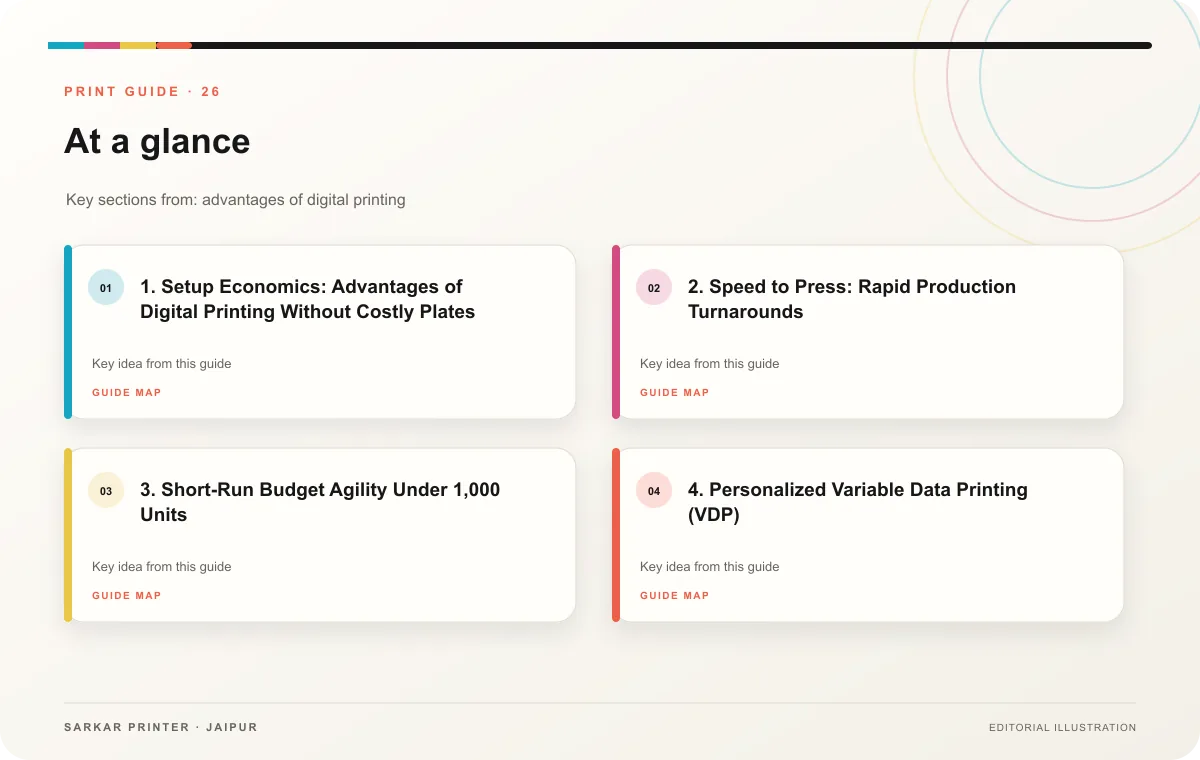
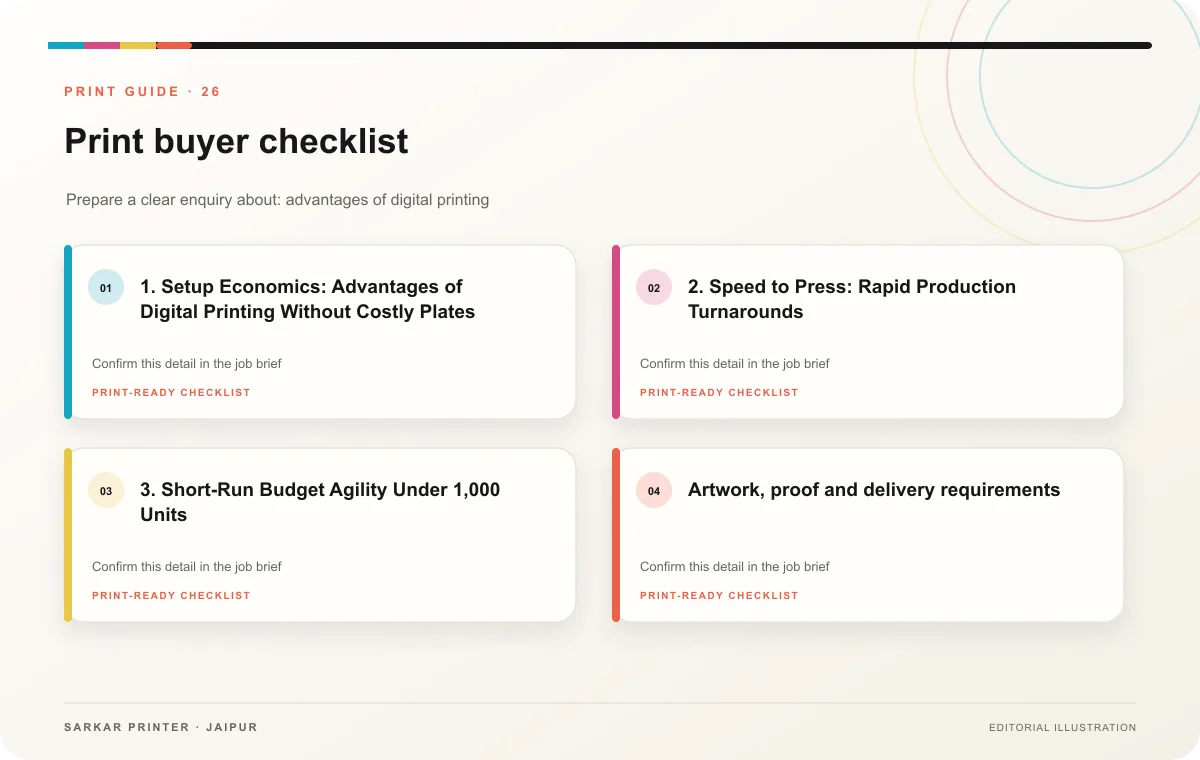
1. Setup Economics: Advantages of Digital Printing Without Costly Plates
The primary financial differentiator between conventional press workflows and modern digital setups centers on upfront tooling. Traditional lithography requires the physical manufacturing of custom aluminum plates before a single sheet feeds through the press.
Digital press configurations bypass this mechanical hurdle by transferring artwork directly from prepress software to the substrate. Because there are no physical plates or chemistry baths, you eliminate initial plate-making fees entirely.
This setup-free workflow frees up working capital for small businesses and growing retail labels. Instead of paying heavy upfront preparation charges, companies allocate their budget strictly to finished print materials.
2. Speed to Press: Rapid Production Turnarounds
Waiting weeks for a print shipment can derail time-sensitive product launches and corporate sales pitches. Because digital presses bypass physical plate staging and manual ink fountain adjustments, production begins almost instantly.
A print-ready PDF file passes through the Raster Image Processor (RIP) and prints within minutes of final approval. This eliminates days of make-ready prepress work.
For marketing agencies facing strict event deadlines, that rapid turnaround is invaluable. Adopting digital printing keeps your schedule flexible when unexpected print orders emerge.
3. Short-Run Budget Agility Under 1,000 Units
Every brand manager recognizes the challenge of ordering small batches of custom packaging or event flyers without being forced into high minimum order quantities. Conventional presses require high volumes to absorb the fixed mechanical setup costs.
In contrast, digital printing offers a flat, consistent unit cost for short runs. Whether you need 50 product brochures, 100 personalized invitations, or 250 custom stickers, the per-unit cost remains predictable and cost-effective.
As a practical rule of thumb, print runs under 1,000 copies generally achieve the lowest overall production cost through digital methods. That means you never have to tie up company cash in idle warehouse inventory.
4. Personalized Variable Data Printing (VDP)
Modern marketing demands targeted, customer-specific communication. Because digital presses generate images electronically on each pass rather than transferring ink from a fixed plate, every single printed piece can carry unique information.
This capability unlocks Variable Data Printing (VDP) for direct mail campaigns, event tickets, and specialized product labeling. You can vary recipient names, individual QR codes, addresses, or serial numbers without stopping the press.
Automating personalization at high running speeds delivers stronger consumer engagement and measurable marketing ROI without driving up unit costs.
5. Eco-Friendly Advantages of Digital Printing and Minimal Waste
Sustainable manufacturing is no longer optional for consumer-facing brands. Traditional offset print environments historically required harsh chemical solvents to etch plates and generated dozens of make-ready waste sheets to achieve color balance.
Because digital machinery requires zero chemical plate processing, it reduces workshop waste and hazardous liquid disposal. Furthermore, industry color standards developed by organizations like the Fogra Research Institute for Media Technologies guarantee that modern digital presses meet strict ProcessStandard Digital (PSD) specifications for substrate color consistency and energy efficiency.
Printing only the exact run required also prevents surplus stock from ending up in landfills. This lean workflow supports genuine corporate sustainability goals.
6. Rapid Prototyping and Dynamic Packaging Proofs
Before investing in a large commercial production run, you need to inspect structural dimensions, paper weight, and finishing details in real life. Traditional prototyping can be expensive and slow due to plate requirements.
Digital equipment produces exact one-off physical mockups on production-grade paperboard. Packaging designers can verify fold lines, closure flaps, and graphics on a tangible sample before placing the full order.
If a correction is needed, designers make adjustments directly in the vector file and print an updated sample immediately. This helps prevent costly errors before full production begins.
7. In-Line Finishing and Automated Binding
Post-press finishing, such as folding, saddle-stitching, and trimming, often introduces bottlenecks when jobs are moved across different stations on a shop floor.
Modern high-speed production digital engines frequently incorporate modular finishing units directly at the output tray. The press can fold, collate, staple, and edge-trim an entire annual report or booklet in a single continuous process.
This automated consolidation cuts labor hours and simplifies turnaround times on urgent corporate projects.
Strategic Comparison: Digital Press vs. Offset Press
Choosing the Right Advantages of Digital Printing for Your Brand
Selecting between digital and traditional printing comes down to matching project turnaround times, total run quantities, and customization needs. If you require targeted direct mail, on-demand prototypes, or low-quantity collateral on a tight deadline, digital printing is the most economical solution.
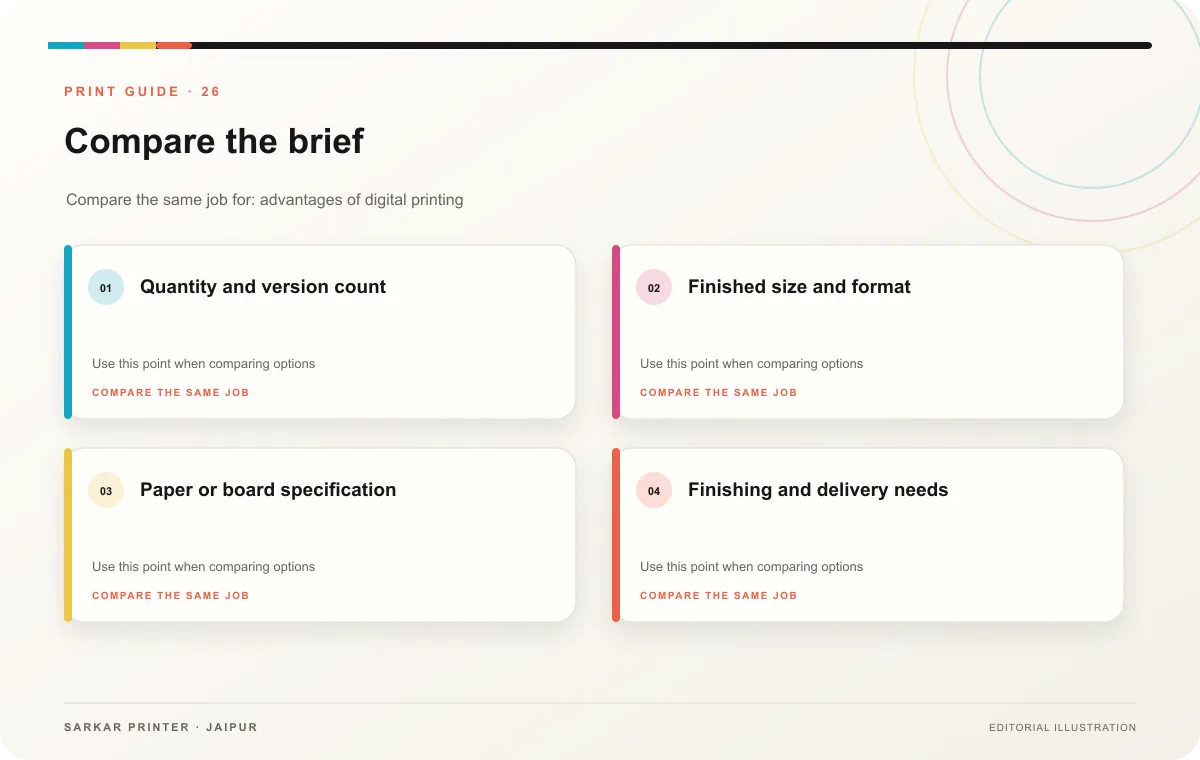
For a job enquiry, share the artwork status, quantity, material, finish and target date with Sarkar Printer. Ask the team to confirm the available production route, any applicable process records and the delivery schedule in the written quotation.
Explore our custom print manufacturing capabilities to find the ideal production path for your next packaging, brochure, or commercial marketing project.
TALK TO OUR PRESS EXPERTS
Planning high-volume brochures, mono cartons, or custom rigid boxes? Get factory-direct offset quotes with precision Pantone color matching.