
A Tyvek label needs a material and print plan that fit its real use. Identify the exact grade, then confirm the ink, process, adhesive and proof with the printer and material supplier. This guide helps you ask the right questions before you order.
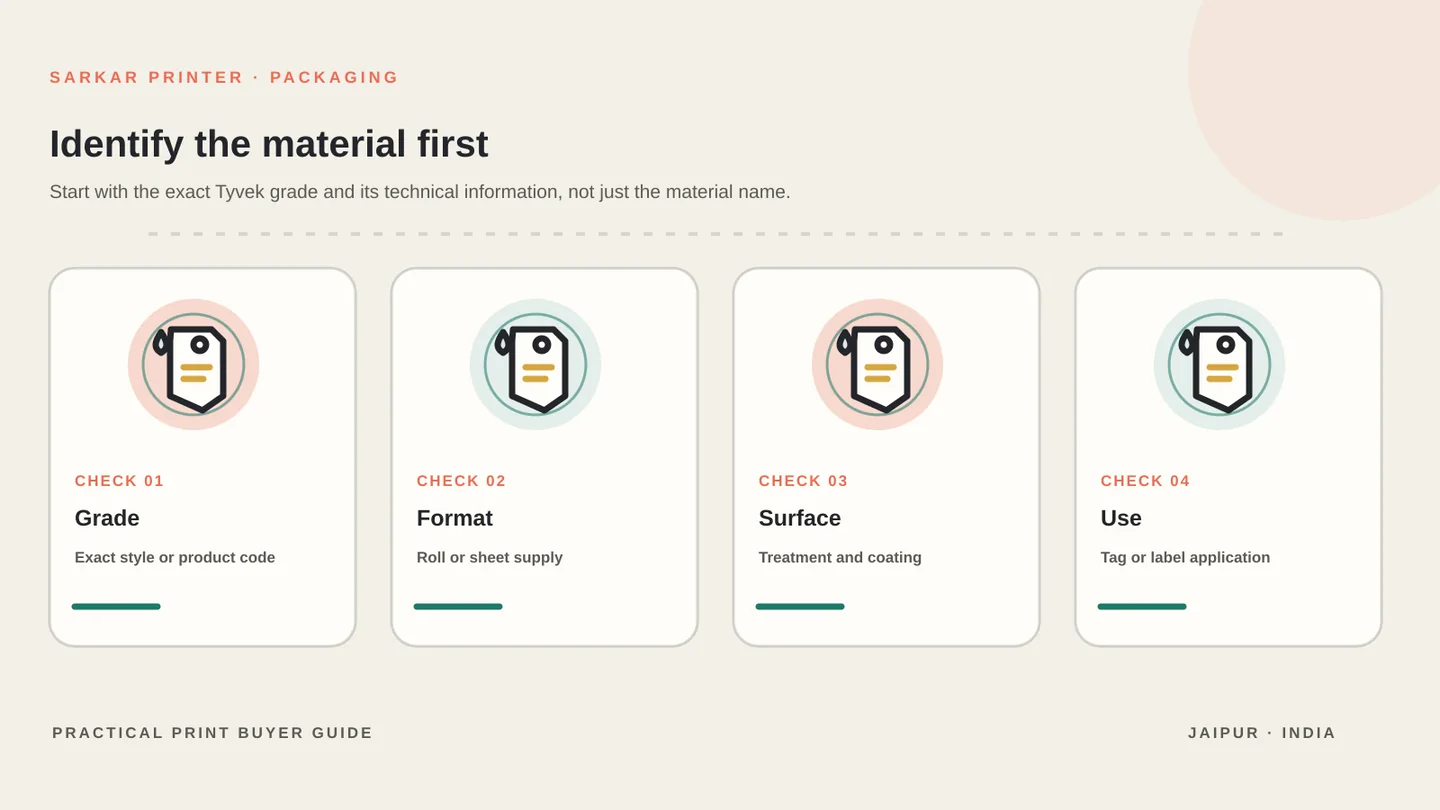
Identify the exact Tyvek material
A Tyvek label is not ordinary paper with a special finish. DuPont describes Tyvek as a material made from continuous high-density polyethylene filaments. Its surface and handling properties differ from absorbent paper, so a designer or buyer should name the exact grade before selecting a print process.
The DuPont Tyvek printing guide describes the material as lightweight, durable and water-resistant, and explains that its characteristics need attention during printing. Those properties can suit some tags and labels, but the intended use still determines whether the material is appropriate.
Ask the material supplier for the grade, roll or sheet format, surface treatment and technical data. Keep that information with the artwork brief so the printer can check the material against its equipment and ink system.
Match the print process and ink
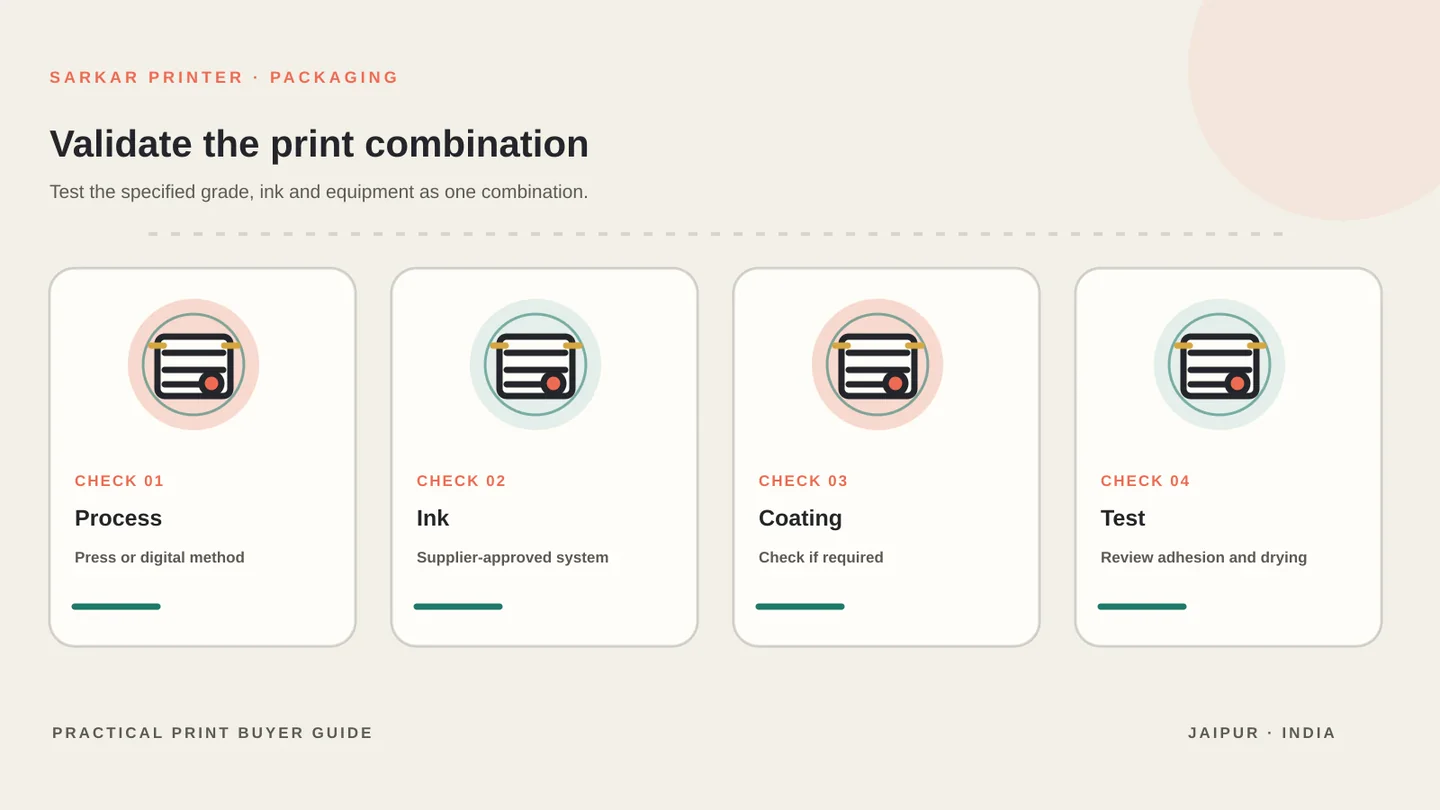
Printability depends on the specific Tyvek grade, press, ink and required finish. DuPont notes that many traditional and digital techniques can print on Tyvek, while some equipment may need a suitable coating. The right choice should be made with the printer and ink supplier for the actual application.
Do not assume that ink will behave on this material exactly as it does on paper. Ask how the selected ink adheres, dries and holds colour on the specified grade. If the label must resist rubbing, moisture or handling, request a test that reflects those conditions.
Keep a written record of the agreed material and process. If a vendor changes a grade or ink after proofing, review a new sample rather than treating the earlier approval as proof of the new combination.
Specify adhesive and end use
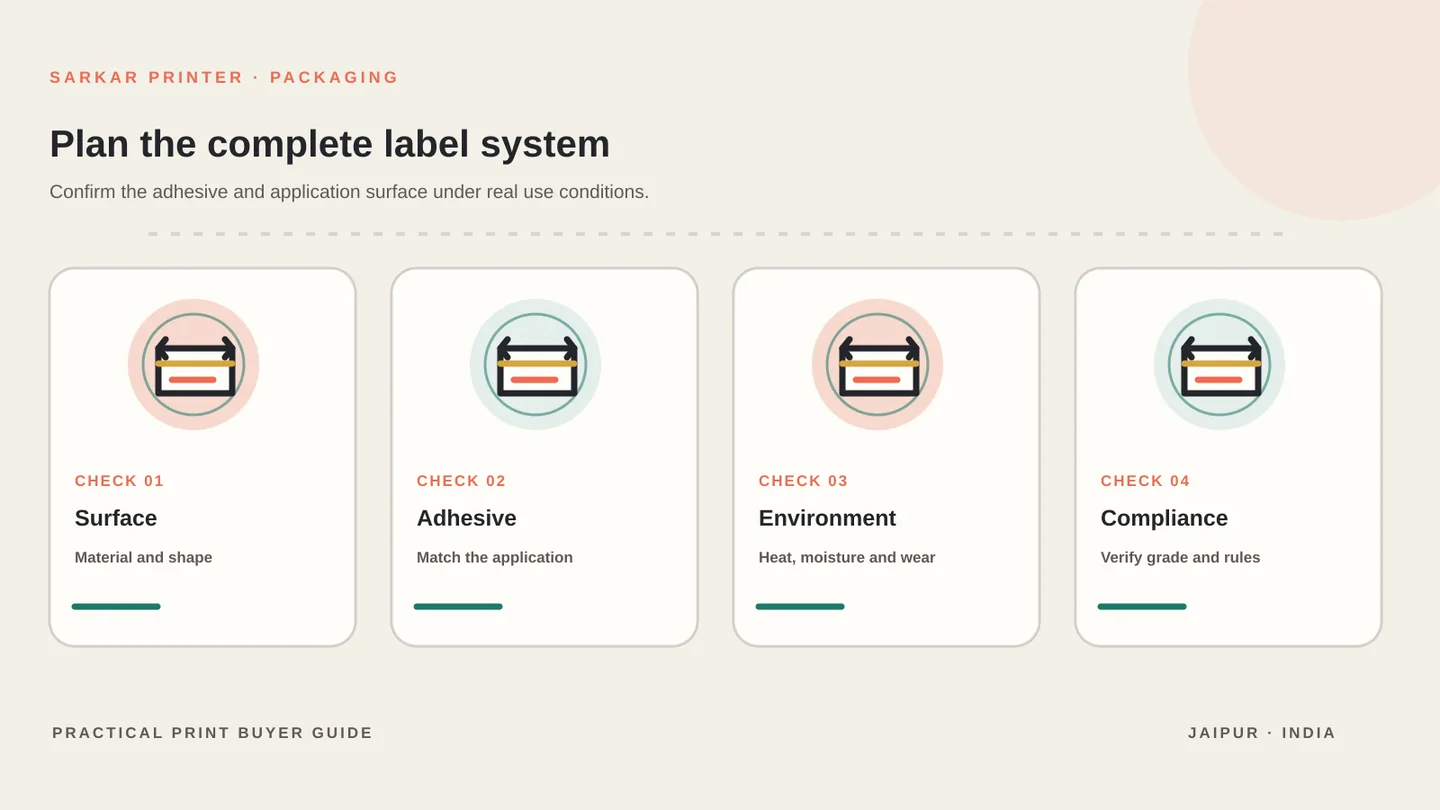
A label is a system: the face material, adhesive, release liner and application surface all affect the result. Describe what the label will attach to, whether that surface is curved or textured, and the conditions it will meet during storage and use.
Give the printer the expected temperature, moisture, friction and handling conditions. Ask the adhesive supplier or converter to recommend a suitable construction and test it on the real surface. A good-looking print proof does not confirm that the label will stay attached in use.
Check regulatory requirements for the product and market before specifying the material. DuPont’s Tyvek FAQ cautions that printing-industry Type D or R styles are not recommended for direct food contact, while some other styles may be suitable. Verify the exact style and obtain qualified compliance advice for the intended use.
Approve the label proof and scan test
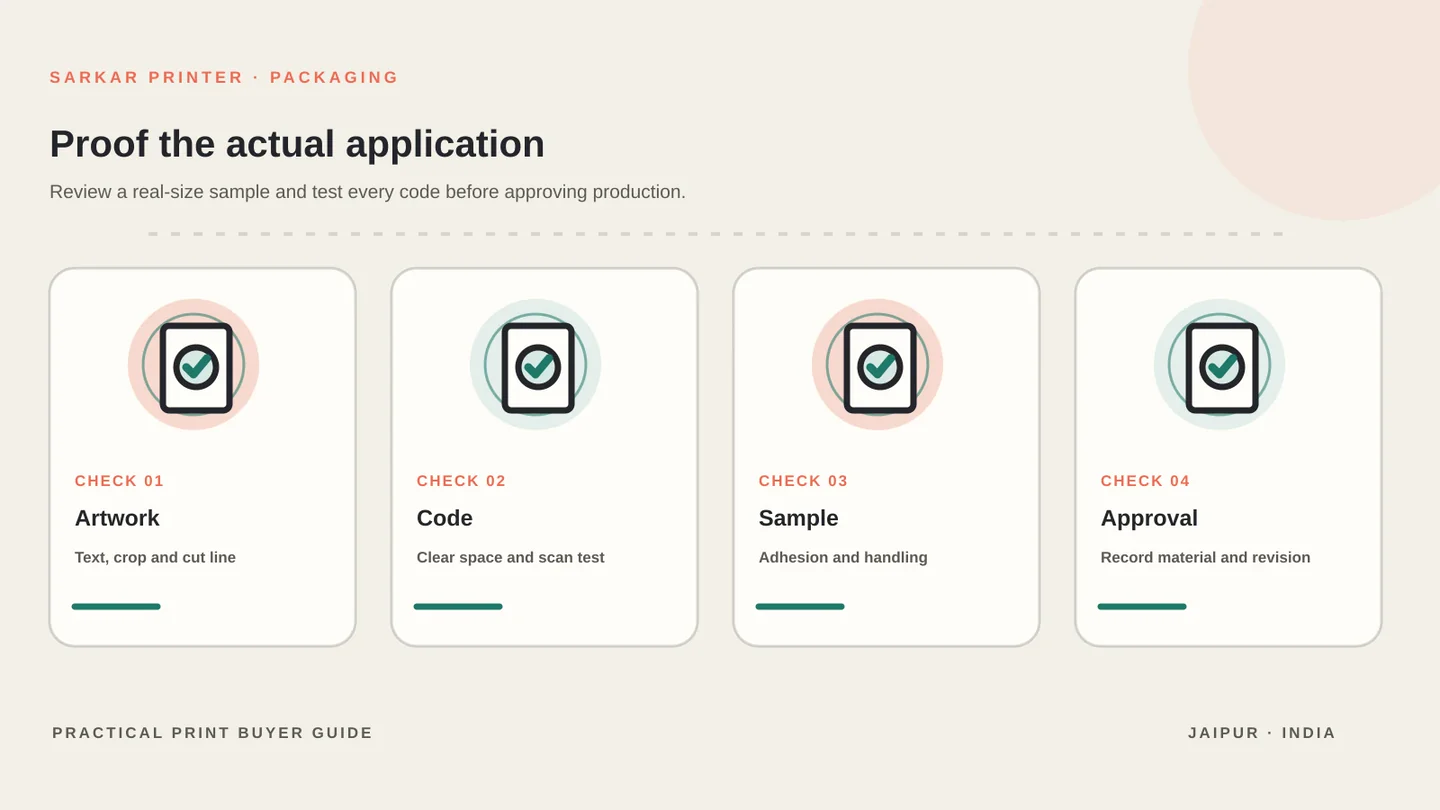
Check the proof at the actual label size. Review the brand mark, product name, small text, lot or date fields, cut line and placement. If the label carries a barcode or QR code, keep clear space around it and test a printed sample with the devices or scanners used by the customer.
Confirm the final artwork format, bleed, safe area, colours and revision date. Ask for a press or production sample when the application is demanding. A screen image can show layout, but it cannot demonstrate adhesion or performance on the real package.
Sarkar Printer lists label formats in the packaging section. See our product label file guide for artwork checks, then ask the team to review the material brief. Material availability and process compatibility must be confirmed for each job.
Tyvek label printing checklist
Use this table as a starting point, then confirm the production details with the print provider for your job.
| Decision | What to record | Why it matters |
|---|---|---|
| Material | Exact Tyvek style and format | Grades and surface treatments differ |
| Print method | Press or digital process | Equipment compatibility can vary |
| Ink and coating | Supplier-approved system | Adhesion, drying and colour depend on the combination |
| Adhesive | Surface and expected conditions | A label must attach reliably to its actual package |
| Use and compliance | Environment and product rules | Material suitability depends on the application |
| Proof | Real-size sample and revision | Confirms artwork and practical performance |
CONTINUE THE PRINT PLAN
Make the material decision with the full label brief.
Review packaging label formats, prepare artwork with our product-label file guide, or send the material details to our team.
Frequently asked questions
Is Tyvek paper?
No. DuPont describes Tyvek as a material made from continuous high-density polyethylene filaments. Its printing and handling properties differ from paper.
Can a Tyvek label be printed?
Many traditional and digital printing techniques can work on certain Tyvek grades. The process, ink and any coating must be checked for the exact material and use.
Is Tyvek waterproof?
DuPont describes Tyvek as water-resistant and non-absorbent. Ask the material supplier about the exact grade and test it under the conditions the label will face.
Can every Tyvek style be used for food packaging?
No. DuPont says printing-industry Type D or R styles are not recommended for direct food contact, while some other styles may be appropriate. Verify the exact grade and applicable rules before use.