
Sheetfed printing feeds individual sheets into a press, rather than printing on a continuous paper web. That simple difference affects how a job is planned, handled and finished. For a buyer, the useful question is not which press sounds more advanced; it is whether the sheet format, quantity, artwork and delivery plan suit the job.
What sheetfed printing means
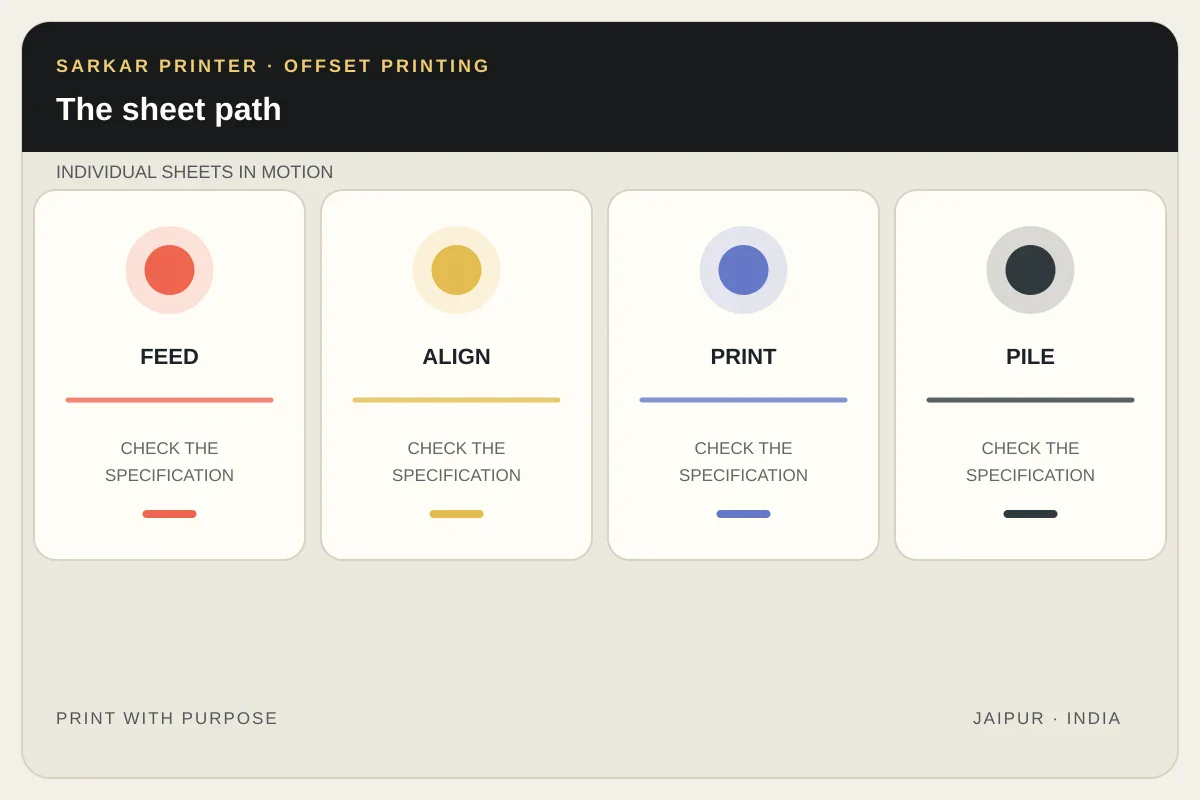
In sheetfed offset, the press prints on separate sheets that are picked up, aligned, printed and delivered into a pile. The job moves through prepress, press setup, printing and finishing as a set of defined sheets. Depending on the press configuration and work, a sheet may carry one page, several panels or multiple copies arranged together.
Sheetfed offset is one form of offset lithography. It uses plates and a blanket transfer, while the press handles sheets individually. A printer chooses equipment and sheet layout based on the project’s format, paper, production quantity and finishing needs.
How sheets move through production
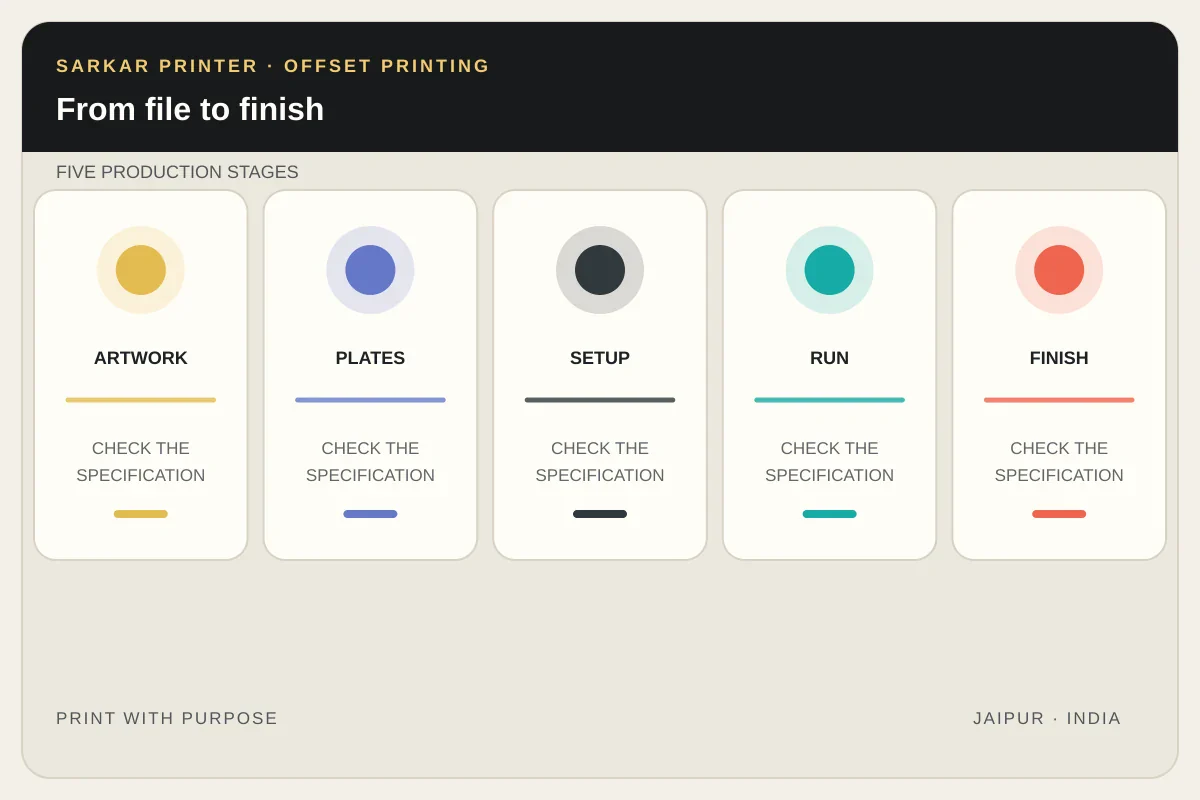
The artwork is checked and prepared for the agreed sheet size. Prepress creates the needed separations and plates, then the press team sets the sheet guides and prepares the press for the stock. During makeready, operators bring the press toward the approved print condition and check registration, colour and image quality before the full run continues.
After printing, sheets may need time or handling before they are ready for cutting, folding, binding or coating. The finishing sequence depends on the product. For example, a brochure may need folding and trimming, while a booklet may also require binding and a cover operation.
When a sheetfed workflow can fit
Consider a sheetfed conversation when you need commercial-quality work on defined paper stocks, multiple finishing steps or a repeatable run of identical pieces. It can be relevant to brochures, stationery, catalogues, booklets, inserts and certain packaging components. The right method depends on the actual order; this guide does not set a universal minimum quantity or promise a turnaround.
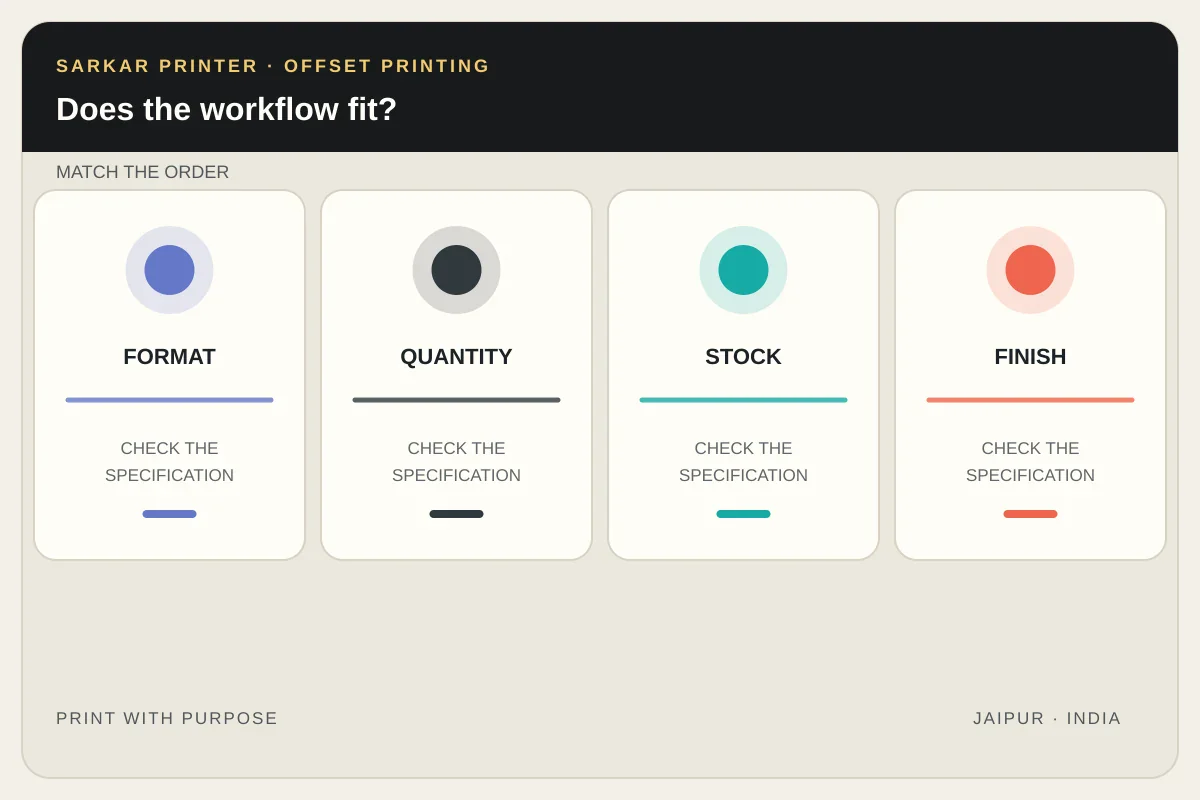
Compare it with other workflows using the job’s total needs: number of copies, finished size, number of versions, special inks, paper, folds, binding and deadline. If every copy needs different names or data, ask whether digital production is a better fit for that part of the order.
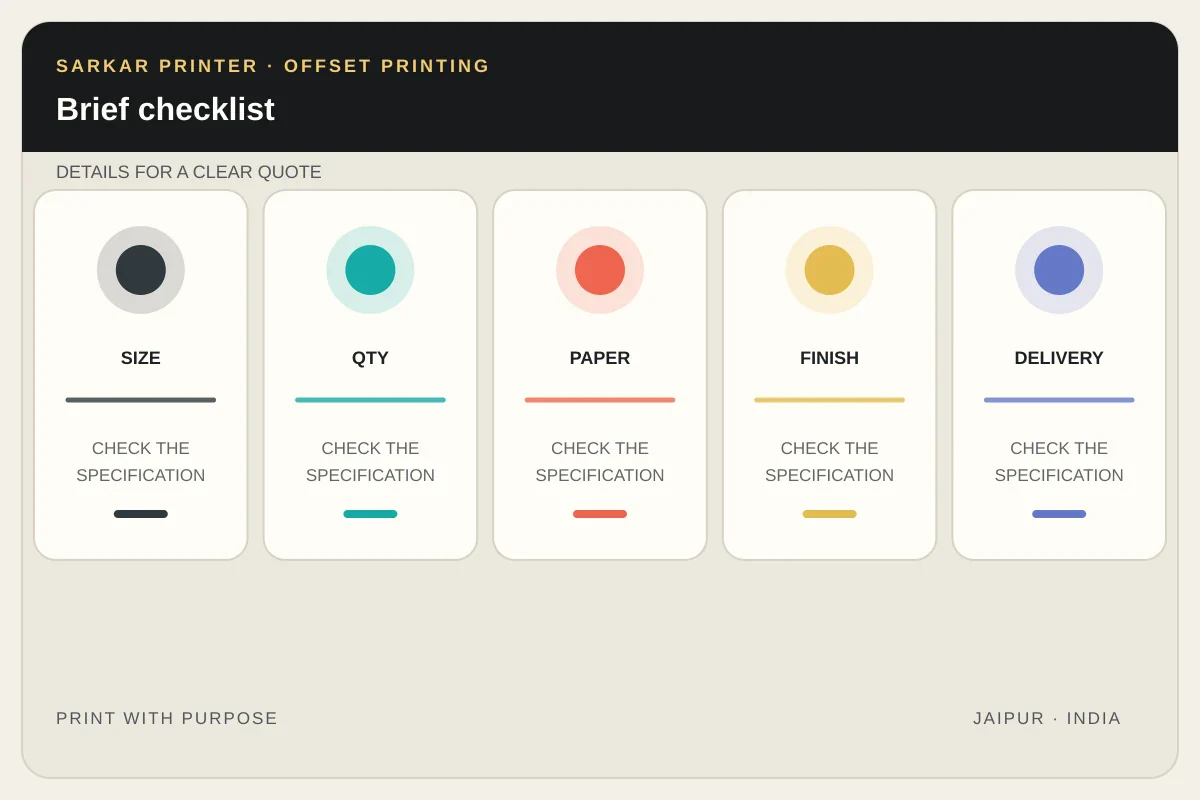
What to include in the brief
- Finished size and whether the size refers to the flat or folded piece.
- Approximate quantity, number of artwork versions and any repeat-order expectations.
- Paper preference, printed sides, colour plan and finishing requirements.
- Delivery date, delivery location and any packaging or bundling instructions.
- Artwork status and the person who will approve the proof.
Our print enquiry brief checklist can help gather these details. Explore offset printing services, brochure printing or send a print enquiry when the specification is ready.
Sheetfed job planning table
| Specification | Example detail | Why to confirm it |
|---|---|---|
| Finished format | Final width and height; flat size if folded | Guides imposition, stock and finishing. |
| Quantity | Copies for each version or SKU | Helps compare process and setup needs. |
| Paper | Stock name, weight or approved sample | Press and finish choices depend on the material. |
| Finishing | Fold, trim, bind, coat or pack | Defines operations after printing. |
Further reading
Frequently asked questions
What is sheetfed printing?
Sheetfed printing feeds individual paper sheets through a press. In sheetfed offset, plates and a blanket transfer ink to each sheet.
Is sheetfed printing the same as offset printing?
Sheetfed describes how paper enters the press; offset describes the image-transfer method. Sheetfed presses can use offset lithography.
What products can use sheetfed offset?
The process can suit a range of commercial print jobs, such as brochures, catalogues, stationery, booklets and some packaging components. Suitability depends on the specification.
What should I send for a quote?
Share finished size, quantity, paper preference, colour plan, finishing, artwork status, deadline and delivery location.