
Paper types affect how a printed piece feels, reads and handles. GSM helps describe the mass of a sheet, but it does not identify the surface or guarantee the stiffness you need. Compare the stock family, finish, shade, opacity and intended use before approving a specification. Align sheet dimensions with ISO 216 international paper standards and preflight color separations using Adobe InDesign print-ready PDF guidelines.
Look beyond the paper weight
Paper types affect how a printed piece feels, reads and handles. GSM helps describe the mass of a sheet, but it does not identify the surface or guarantee the stiffness you need. Compare the stock family, finish, shade, opacity and intended use before approving a specification.
Two papers with the same GSM can feel different because their coating, fibre, caliper and manufacturing characteristics differ. For a weight-focused explanation, read our paper GSM selection guide. This guide focuses on how common stock families behave in a print brief.
Ask the printer for the exact stock name and a physical sample when the tactile result matters. A screen image cannot show surface feel, show-through or the way a fold behaves.
Know the common stock families
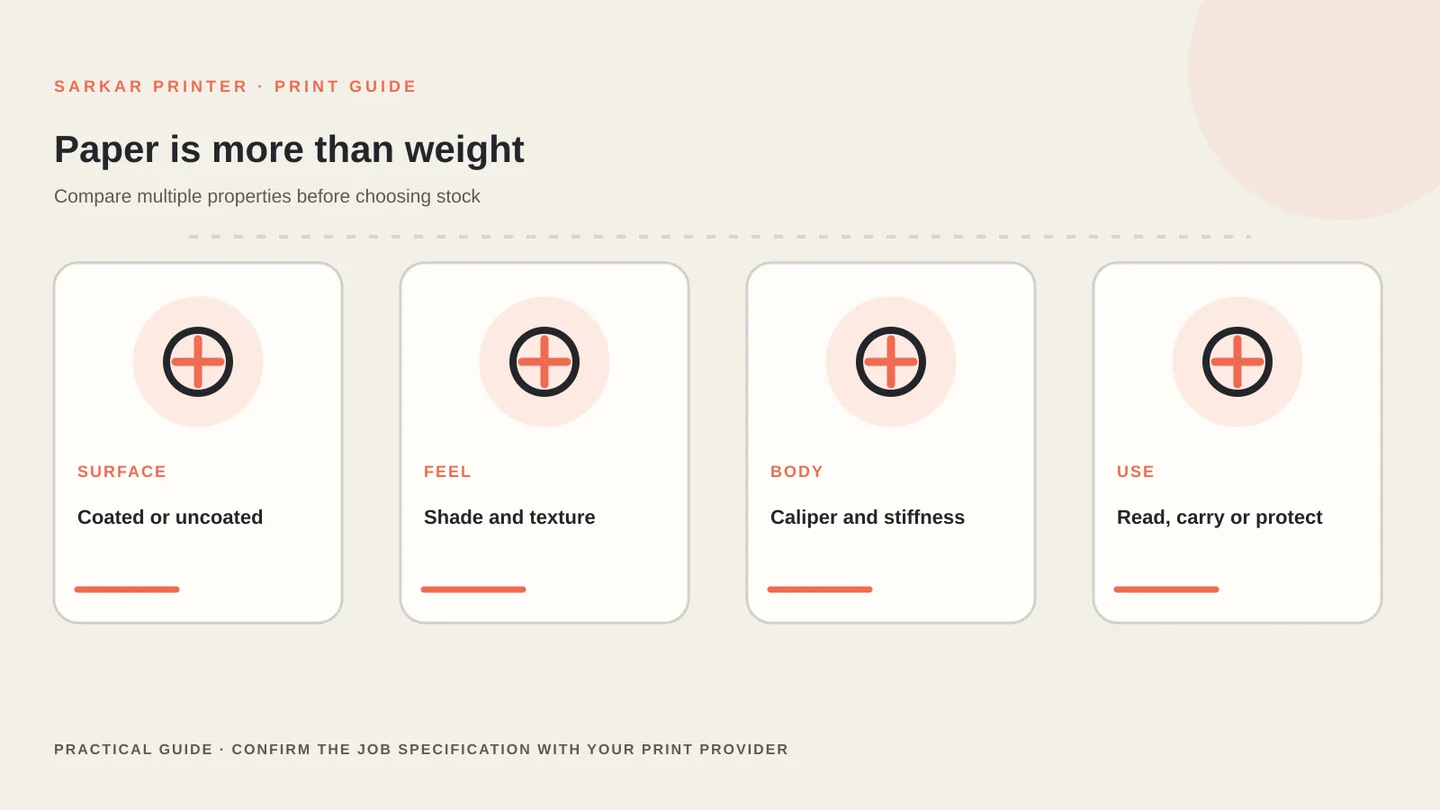
Uncoated stocks have no glossy print coating on the surface. They often suit documents, forms, text-heavy pages and items that need a natural feel. Bond and maplitho are familiar names in many print conversations, but available grades vary by supplier.
Coated art paper has a smoother surface that can present colour imagery differently from an uncoated stock. Printers may offer gloss or matte options. The appropriate surface depends on how the piece will be read and handled. Our paper coating guide explains how coatings change the finish.
Art card is a heavier coated stock often considered for covers, cards or tags. Kraft paper has a natural brown appearance and can support a particular brand aesthetic. Paperboard and duplex board are packaging-oriented families; the exact grade must suit the carton design, converting steps and product requirements.
These are broad families, not fixed specifications. Confirm the stock name, shade, surface and available sizes with the print provider.
Map the paper to the printed item
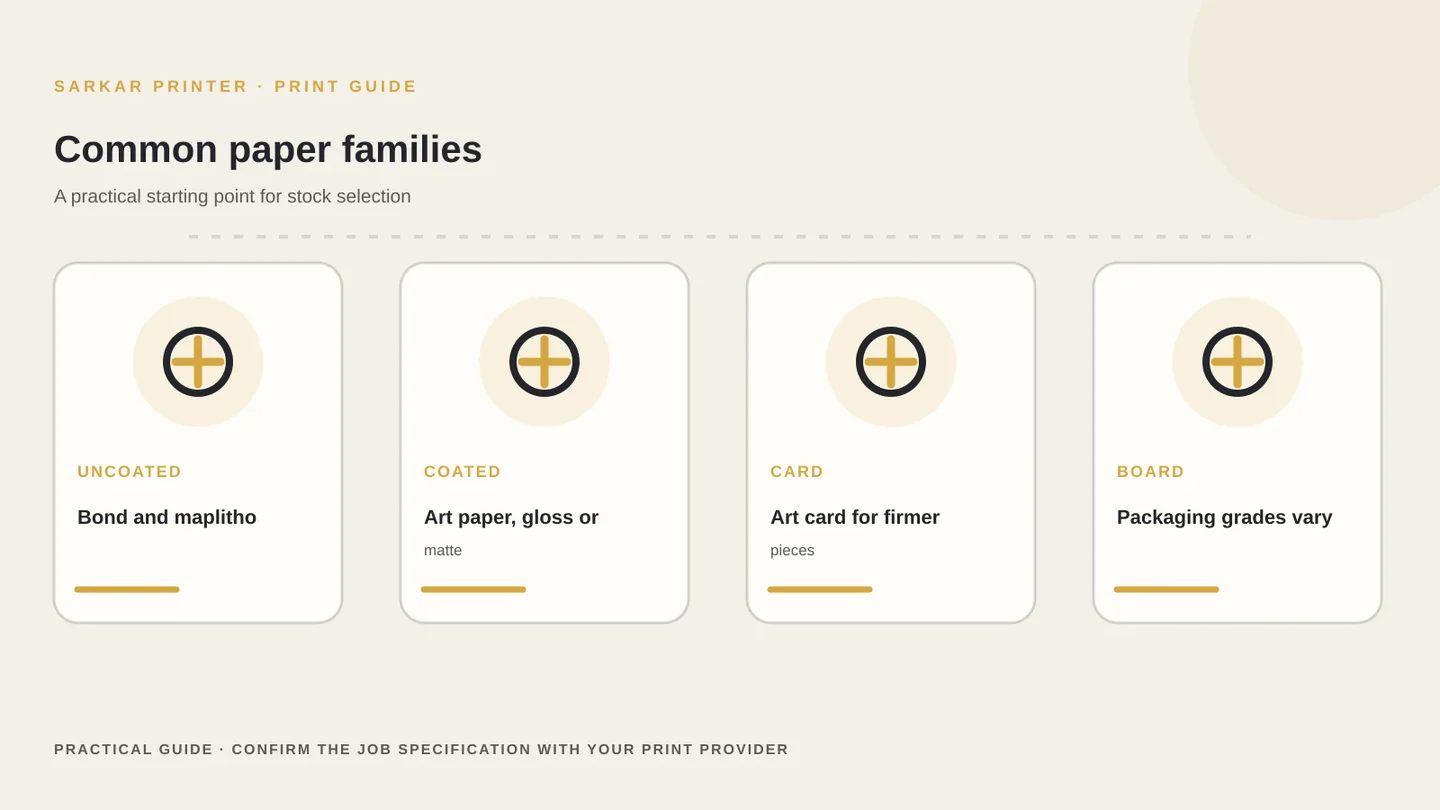
Start with the reader and the use environment. A brochure that people carry at an event needs a different balance of image presentation, foldability and feel than a bound manual read repeatedly. A product card needs suitable stiffness; a package needs a board that works with its structure and handling.
For text-heavy documents, look at readability, opacity and writing requirements. For image-led promotional pieces, compare coated and uncoated samples under consistent lighting. For kraft packaging, account for the natural substrate colour when you approve colours; a white-looking file will not make brown paper white.
Also consider how a sheet will fold, bind or trim. If a project has several finished formats, compare available sheet sizes and the layout plan using our offset printing paper sizes guide.
Approve samples, finish and print proof
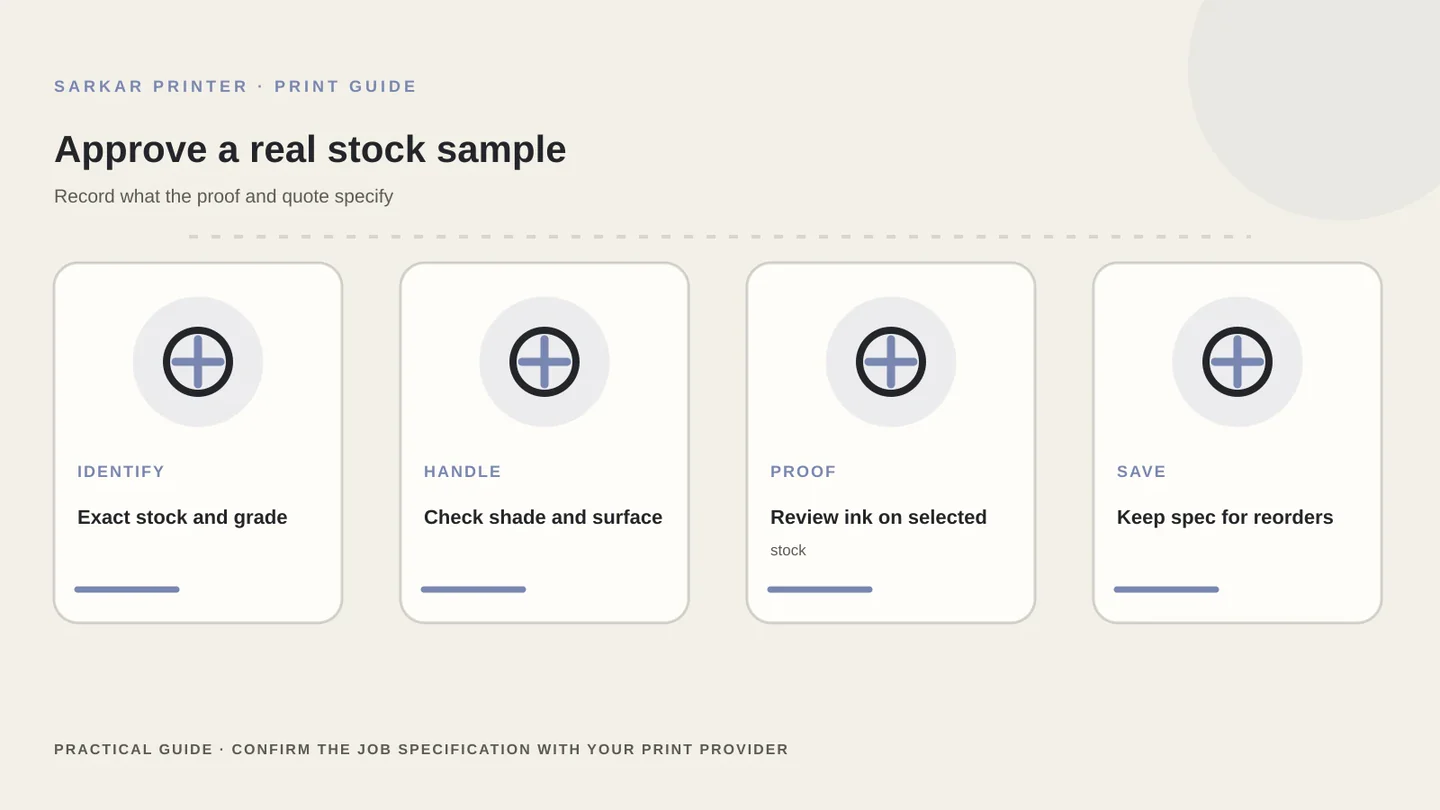
Ask the supplier to identify the exact stock on the quote. If the choice has a noticeable tactile or colour effect, handle a real sample before approval. Compare the front and reverse, note the shade and test the intended fold or writing use when relevant.
Proof the artwork using the selected stock when the paper materially changes colour appearance or legibility. Check small text, fine rules, large colour areas and image shadows. Ask how the job will be finished and whether the chosen stock is suitable for those steps.
Save the paper specification with the approved artwork. When you reorder, compare the current stock name with the last job rather than relying on a vague note such as “same paper.” Our business card paper guide applies the same thinking to a specific product.
Printing paper types at a glance
This comparison describes common families; supplier grades and specifications vary.
| Paper family | Surface and feel | Common print conversations |
|---|---|---|
| Bond or maplitho | Uncoated, natural feel | Forms, books, text-led materials |
| Art paper | Coated; gloss or matte options | Brochures, catalogues and image-led pieces |
| Art card | Heavier coated sheet | Cards, covers and tags |
| Kraft paper | Natural brown, usually uncoated | Bags and selected packaging designs |
| Paperboard / duplex board | Packaging-oriented board; grades vary | Folding cartons and printed components |
CONTINUE THE PRINT PLAN
Make the next print decision with a clear brief.
Send the product, finished size, handling needs and a stock reference if you have one. Explore offset printing or packaging printing.
Frequently asked questions
What are common types of paper for printing?
Common print conversations include uncoated bond or maplitho, coated art paper, art card, kraft and paperboard. Ask the supplier which grade is available for your job.
Is art paper coated or uncoated?
Art paper is generally a coated stock and may be offered with gloss or matte surfaces. Confirm the exact finish and grade with the supplier.
Does a higher GSM always mean thicker paper?
No. GSM measures mass per area, not thickness by itself. Paper construction and grade also affect caliper, stiffness and feel.
How do I choose paper for a brochure or carton?
Start with the purpose, finished size, image needs, fold or structural design and handling. Then compare actual samples and approve the final stock with the printer.