
Choosing paper size for offset printing starts with the finished piece, then works backward through bleed, trim, imposition and the press sheet available. A good plan uses stock efficiently while leaving room for finishing. A-series dimensions are useful reference points, but the final sheet layout must match the printer’s equipment and job specification. Control pressroom tonal values, ink film density, and dot gain tolerances in accordance with ISO 12647 offset process control standards and Fogra graphic technology specifications.
A-series sizes and the half-size relationship
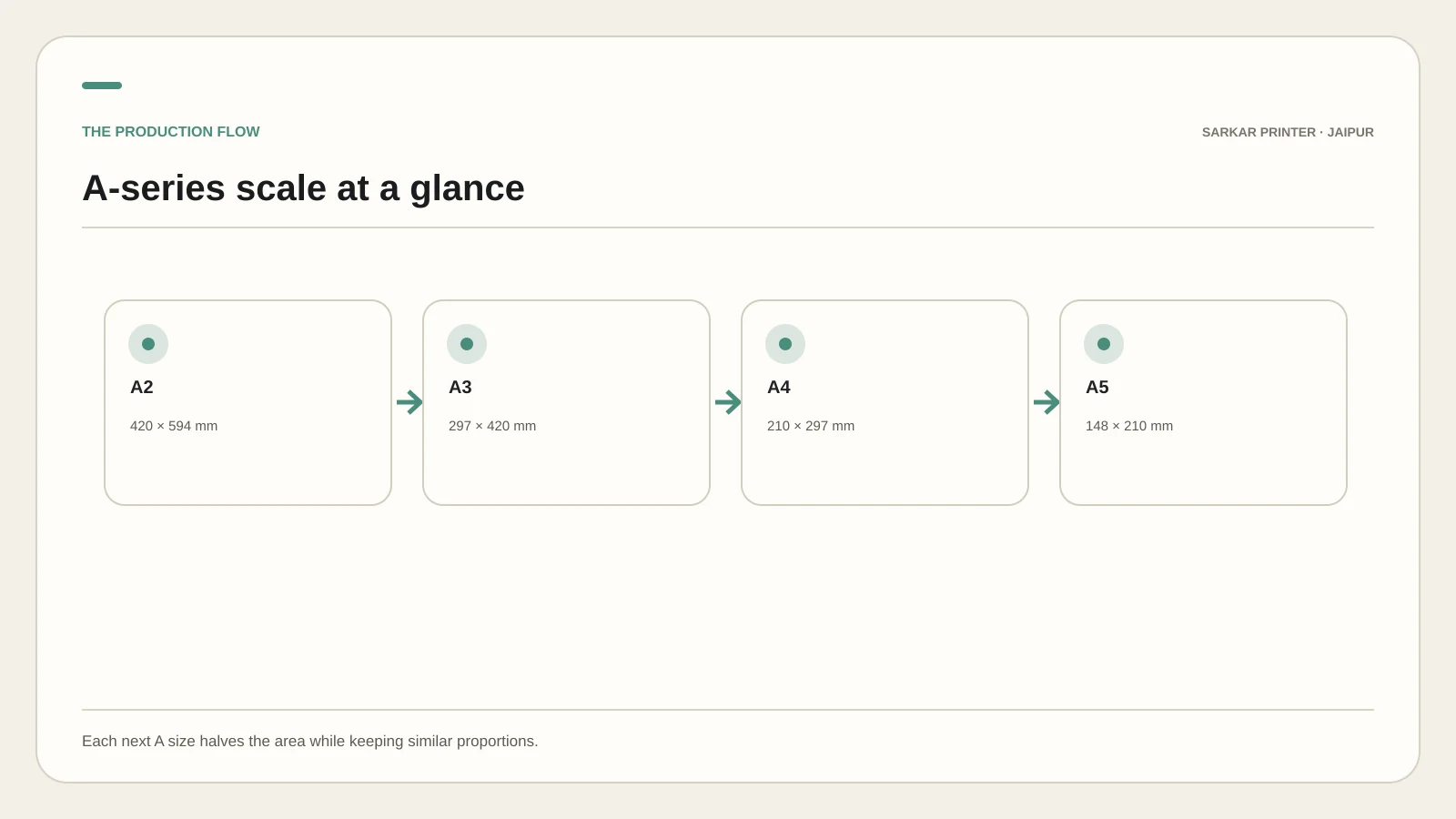
The ISO A-series keeps the same overall shape as it moves between sizes: each size is approximately half the area of the size above. A3 measures 297 × 420 mm and A4 measures 210 × 297 mm. This makes the series convenient for documents, inserts and many standard formats.
The finished product may use a custom size, and a press sheet is usually larger than the piece. Ask for final trim size and stock sheet size separately.
Plan how pages fit on the press sheet
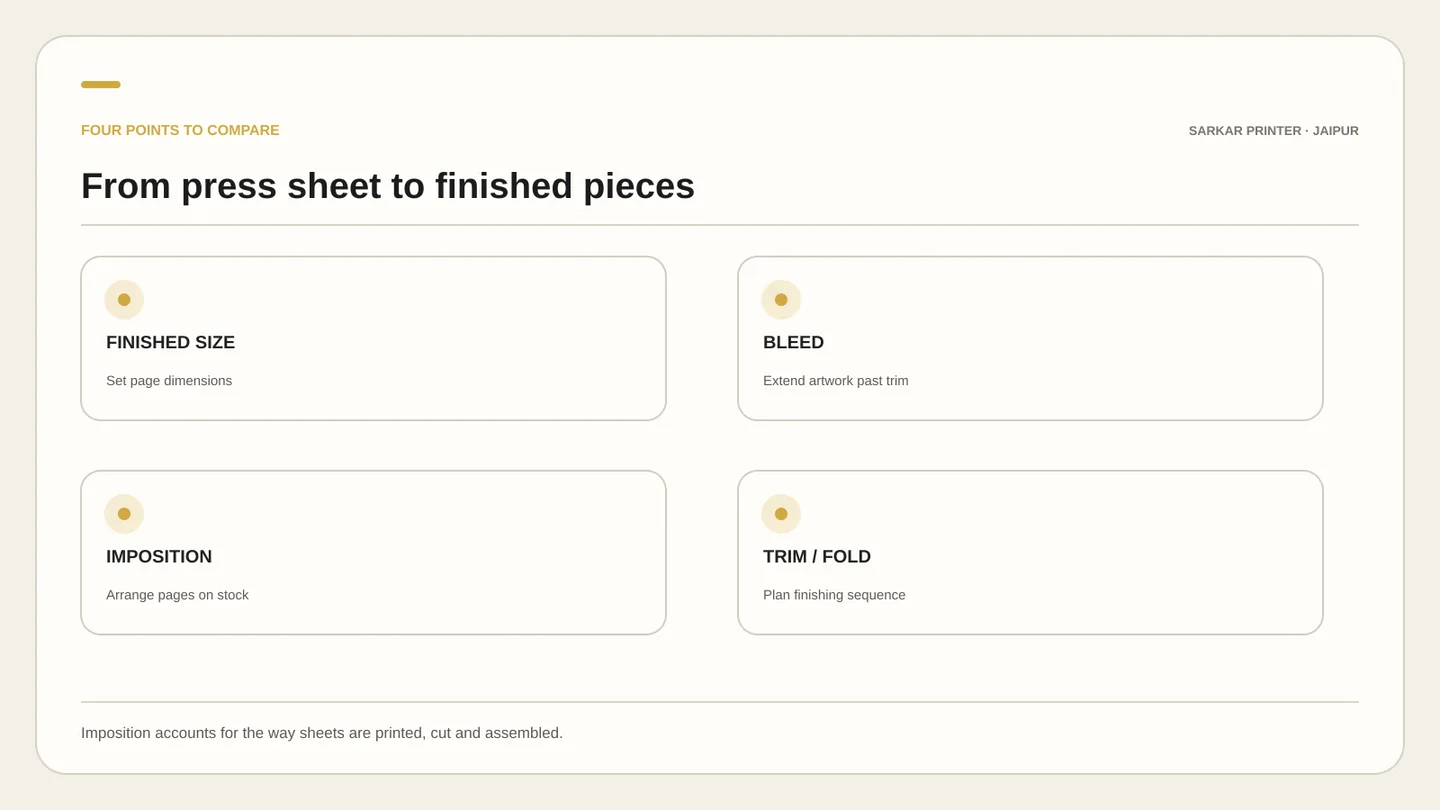
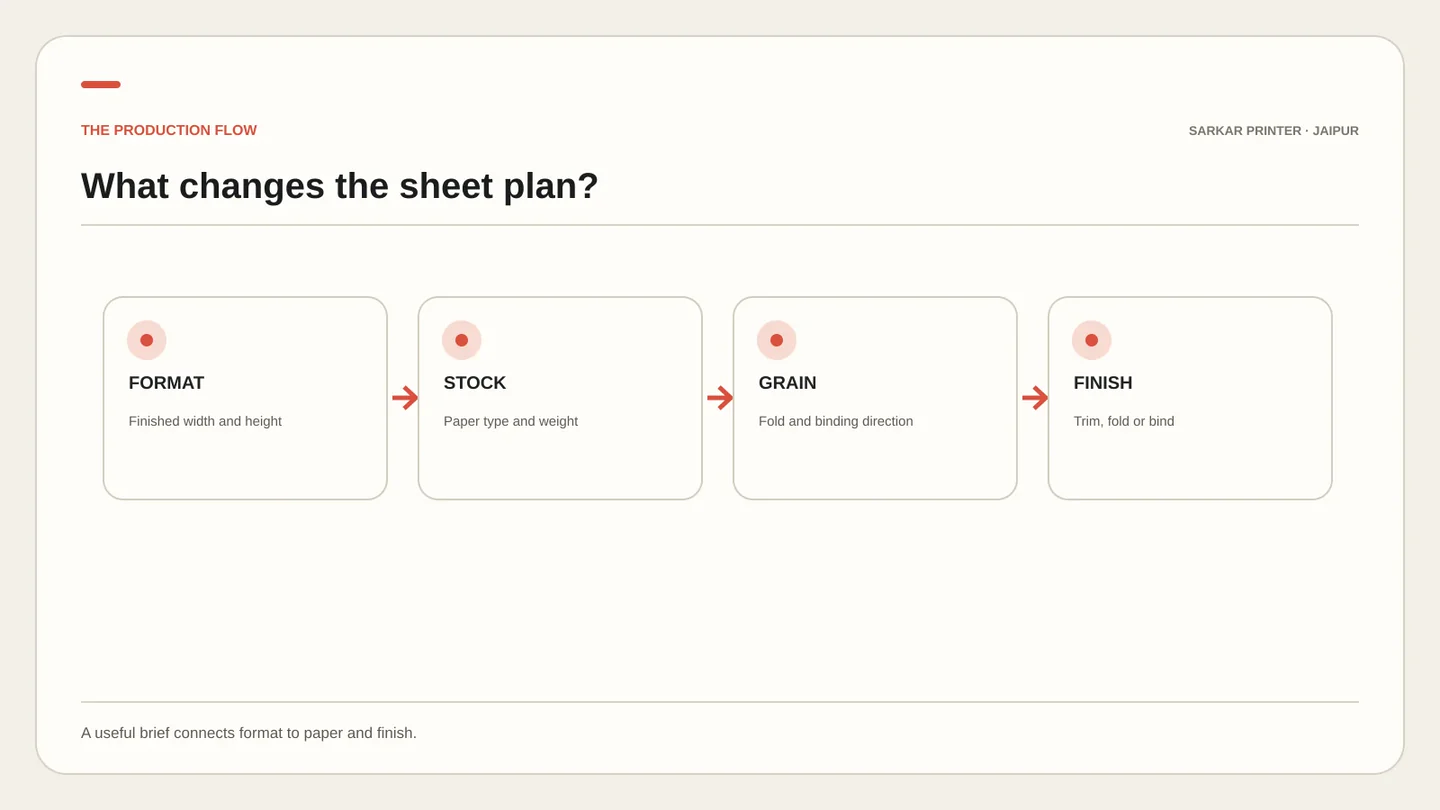
Imposition arranges pages on a press sheet so that the printed sheet can be cut, folded and assembled in the required order. Page count, finished format, binding method, grain direction, gripper edge and available sheet size all affect the layout.
A layout that seems to fit on screen can fail once trim allowance, bleed and press marks are included. The printer or designer should verify imposition before production.
Allow for bleed, trim and safe margins
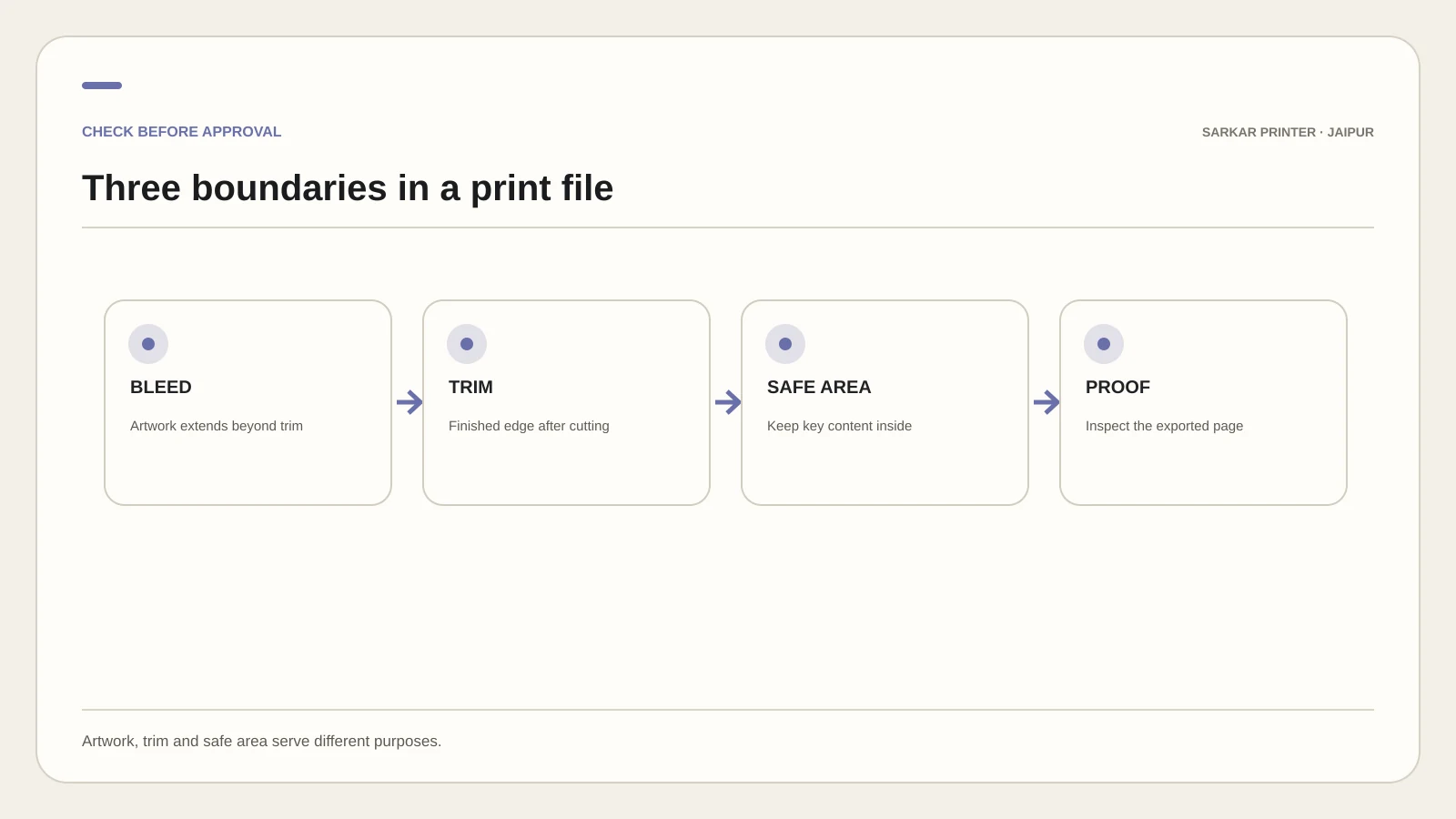
Bleed lets colour or imagery extend past the trim edge, helping prevent an unprinted sliver if a sheet shifts during cutting. Keep important text, logos and small details inside the safe area. Use values supplied for the specific job rather than relying on one universal number.
Include crop marks only if requested. The printer’s template or file specification is the best reference for the final PDF.
Check stock, grain and finishing together
Paper weight and surface affect the feel, but thickness and stiffness also affect folding and binding. Grain direction can influence how a sheet folds, especially on larger pieces or heavier stock. A fold across the grain may need a different plan to reduce cracking.
Share finished size, page count, use case and preferred feel with the printer. The team can confirm which stock size and layout suit the press and finishing method.
Common A-series reference dimensions
| Topic | Key point | Practical check |
|---|---|---|
| A3 | 297 × 420 mm | Posters, menus and folded layouts |
| A4 | 210 × 297 mm | Documents and inserts |
| A5 | 148 × 210 mm | Leaflets, booklets and handouts |
| Custom | Confirm with printer | Brand-specific formats |
CONTINUE THE PRINT PLAN
Put the guide into practice.
Compare service details or ask our print team to review the requirements for your job.
Frequently asked questions
What is the size of A4 paper?
A4 measures 210 × 297 mm. A print job may need a larger press sheet for bleed, gripper space, imposition and trimming.
Is the press sheet the same size as the finished product?
Usually not. A press sheet can hold arranged pages and include allowances for printing and finishing.
How much bleed should I add?
Use the value given by the printer for the job. Requirements can vary with equipment, stock and finishing.