
A product card can help a customer understand a handmade item after the maker has packed it. Handicraft product card printing in Jaipur should describe the craft accurately and give the product a clear route back to the maker or brand.
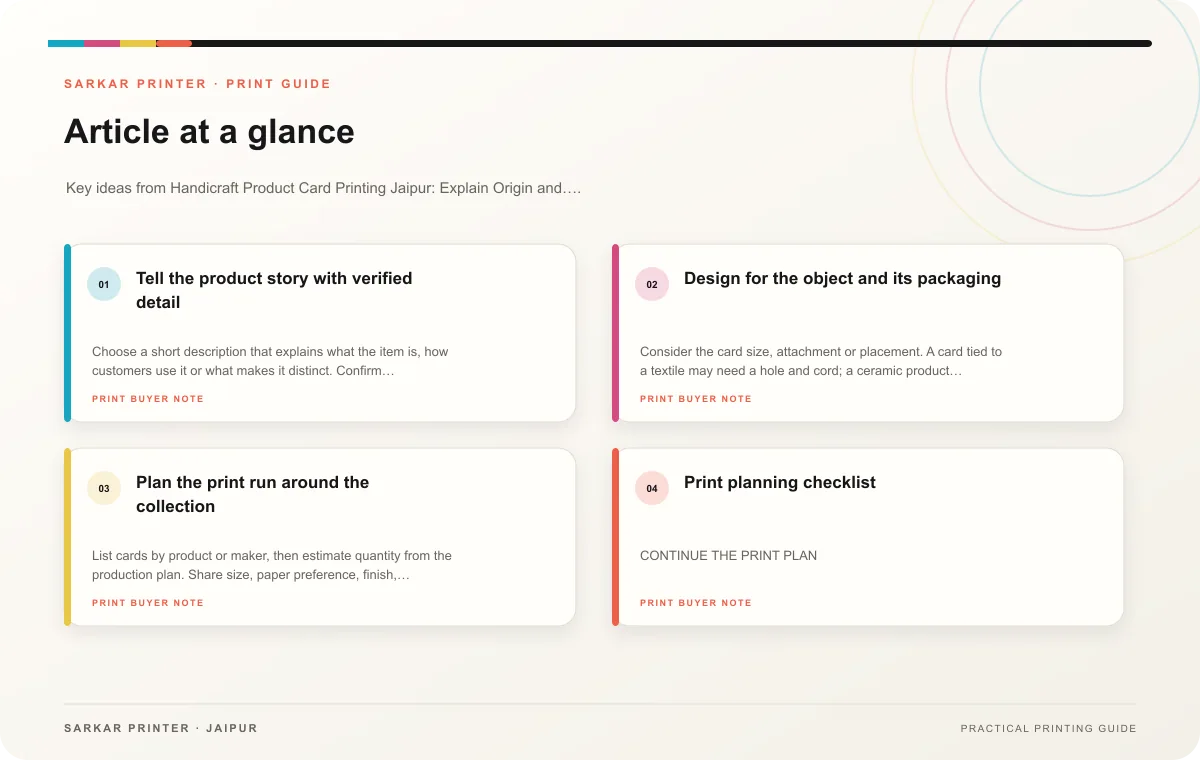
Tell the product story with verified detail
Choose a short description that explains what the item is, how customers use it or what makes it distinct. Confirm material, origin, maker, care and process statements with the artisan or business owner. Use specific language the maker can support instead of broad claims about tradition or sustainability.
Make the card practical as well as expressive. Add the product name, variant or care information if buyers need it. A website, contact detail or QR code can support a later enquiry. Check that the destination belongs to the maker and remains current.
Design for the object and its packaging
Consider the card size, attachment or placement. A card tied to a textile may need a hole and cord; a ceramic product might need a separate insert that does not scratch the surface. Test the design on the actual package and ensure small text stays readable.
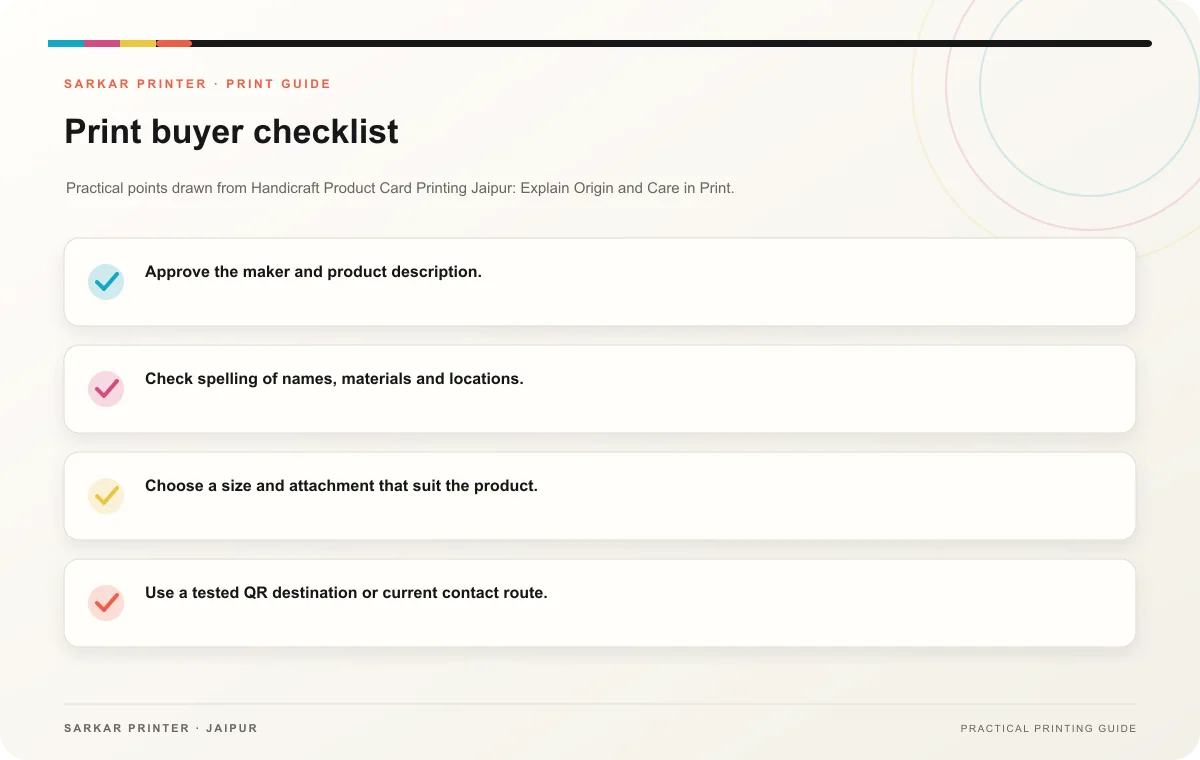
- Approve the maker and product description.
- Check spelling of names, materials and locations.
- Choose a size and attachment that suit the product.
- Use a tested QR destination or current contact route.
- Keep product-specific versions clearly labelled.
Plan the print run around the collection
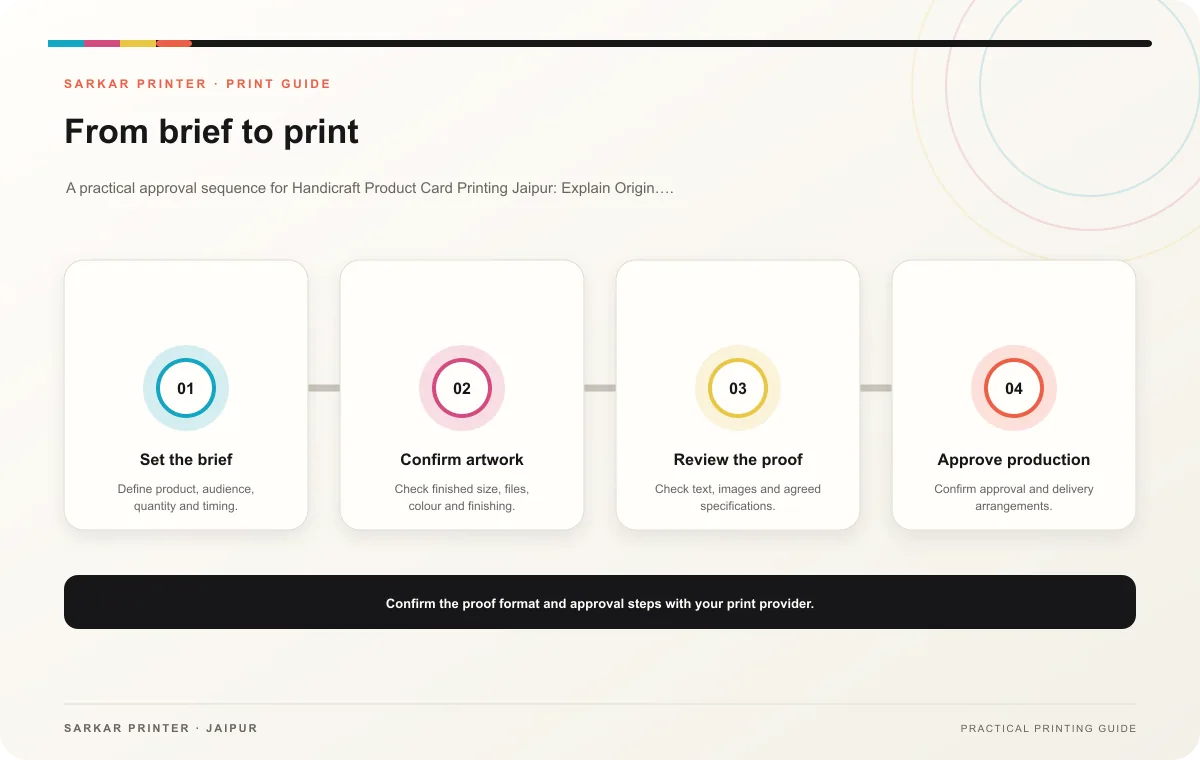
List cards by product or maker, then estimate quantity from the production plan. Share size, paper preference, finish, hole or die cut, quantities and deadline with the printer. Keep a master card design and update only the fields that have changed.
Print planning checklist
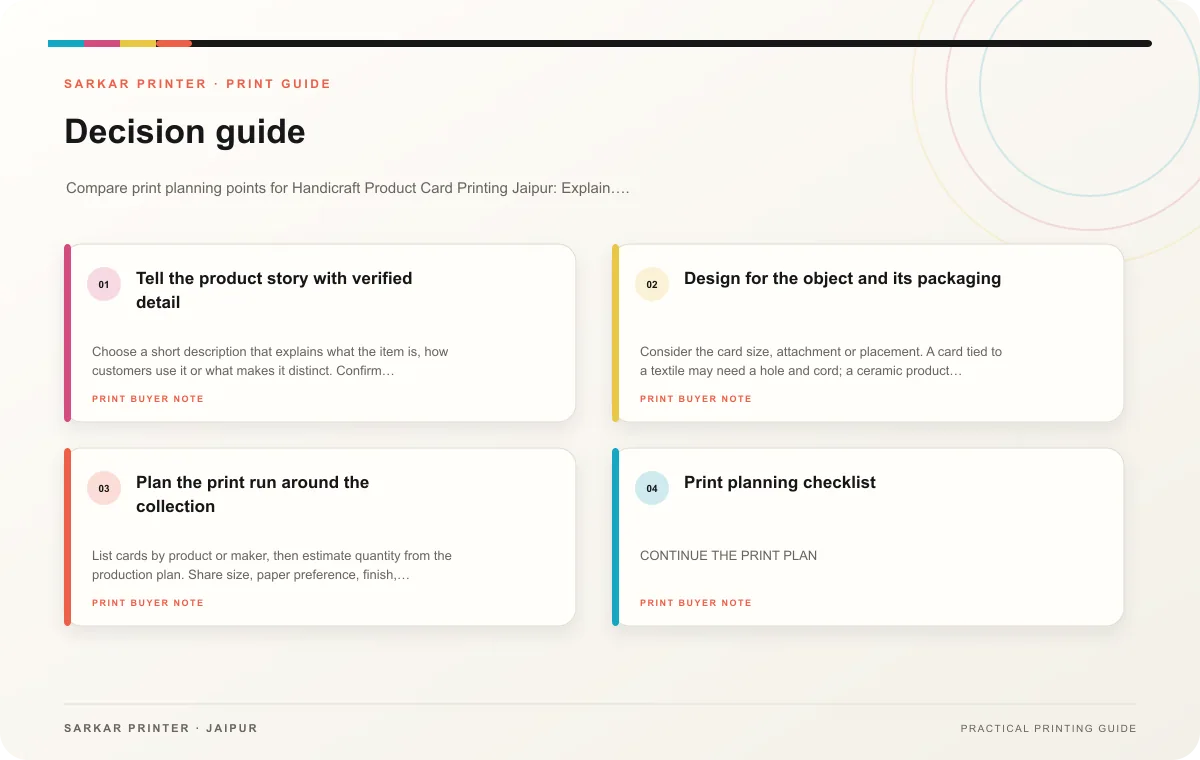
| Topic | Key point | Check before approval |
|---|---|---|
| Tell the product story with verified detail | Choose a short description that explains what the item is, how customers use it or what makes it distinct. Confirm material, origin, maker, care and process statements with the artisan… | Record the agreed choice in the approved print brief. |
| Design for the object and its packaging | Consider the card size, attachment or placement. A card tied to a textile may need a hole and cord; a ceramic product might need a separate insert that does not scratch the surface. Test… | Record the audience and main message in the print brief. |
| Plan the print run around the collection | List cards by product or maker, then estimate quantity from the production plan. Share size, paper preference, finish, hole or die cut, quantities and deadline with the printer. Keep a… | Compare estimates at the quantities you are considering. |
CONTINUE THE PRINT PLAN
Keep the next step useful.
Explore the service page or related drafts, then send the agreed brief to the print team.
Frequently asked questions
What should a handmade product card say?
Include concise, accurate information that helps a buyer understand, care for or reconnect with the product.
Should every item have a unique card?
Use variants when product facts differ. A shared brand card can accompany items with a separate product identifier.
How do we keep maker stories accurate?
Ask the maker to review their description and approve the final printed wording.