
Food packaging artwork carries product identity and information in a space shaped by a real package. Food packaging artwork printing needs careful coordination between design, production and the people who approve product details.
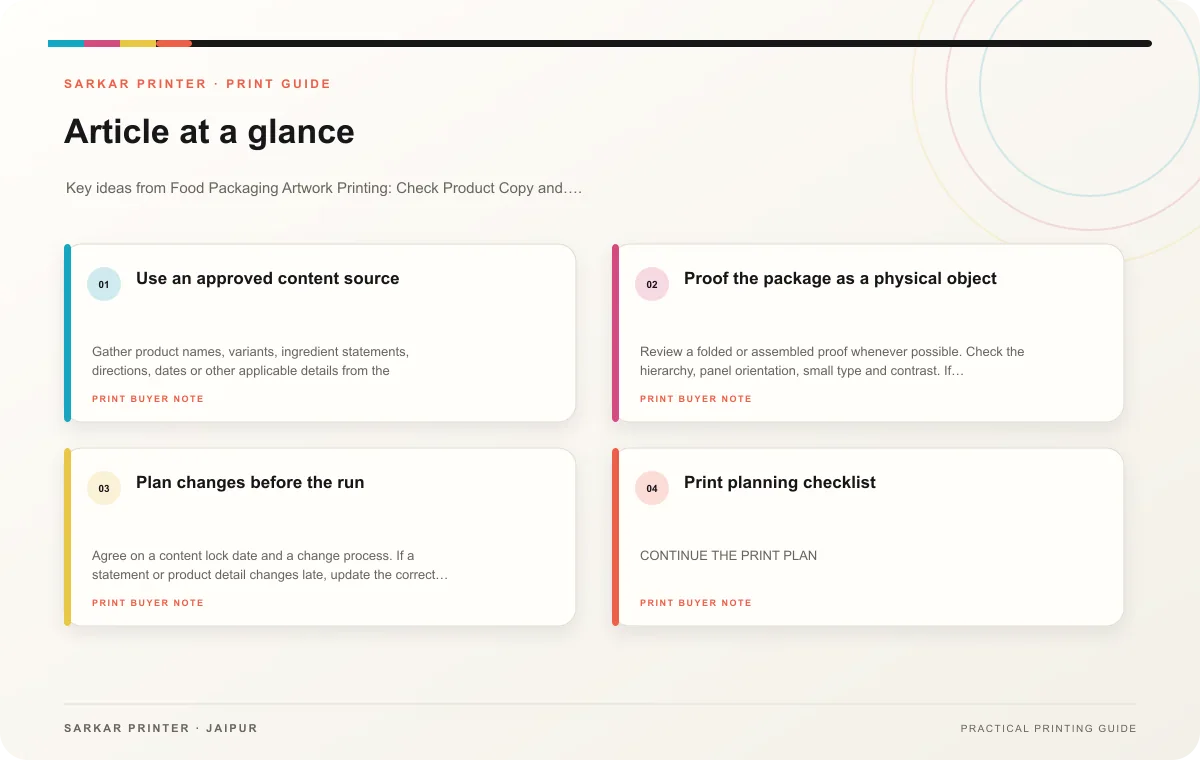
Use an approved content source
Gather product names, variants, ingredient statements, directions, dates or other applicable details from the responsible owner. Requirements depend on the product and market, so route regulated or safety-related wording to a qualified reviewer. The designer should place approved text accurately, not decide whether the wording meets a rule.
Map the content to the package dieline. Identify panels, folds, seals, windows and areas the packing team will cover. Keep important information visible after assembly. Match each artwork file to the correct product variant so a flavour or size does not inherit another product’s copy.
Proof the package as a physical object
Review a folded or assembled proof whenever possible. Check the hierarchy, panel orientation, small type and contrast. If a barcode or QR code appears, confirm data and placement with the appropriate owner and test the code on the package. Ask the printer to advise on material and finish options for the intended storage and handling conditions.
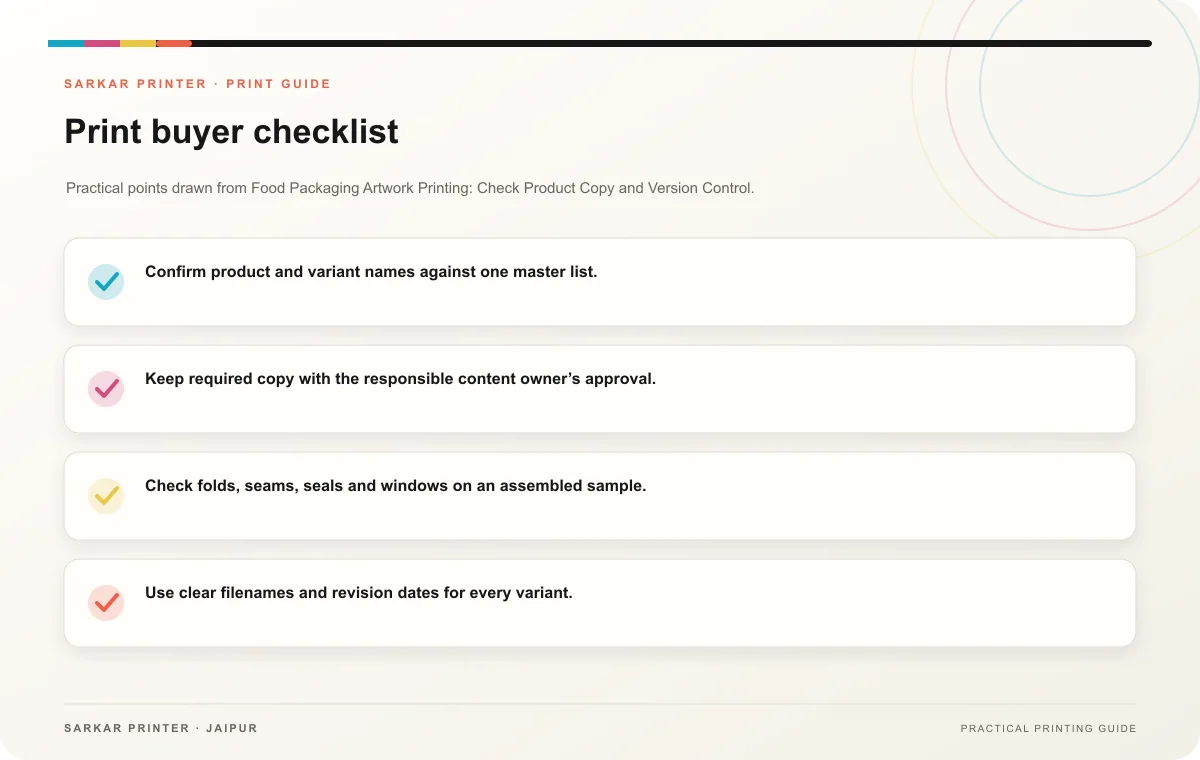
- Confirm product and variant names against one master list.
- Keep required copy with the responsible content owner’s approval.
- Check folds, seams, seals and windows on an assembled sample.
- Use clear filenames and revision dates for every variant.
- Save the final proof and written approval with the production brief.
Plan changes before the run
Agree on a content lock date and a change process. If a statement or product detail changes late, update the correct variant, regenerate the proof and get the proper sign-off. Avoid reusing a file simply because its product name looks similar.
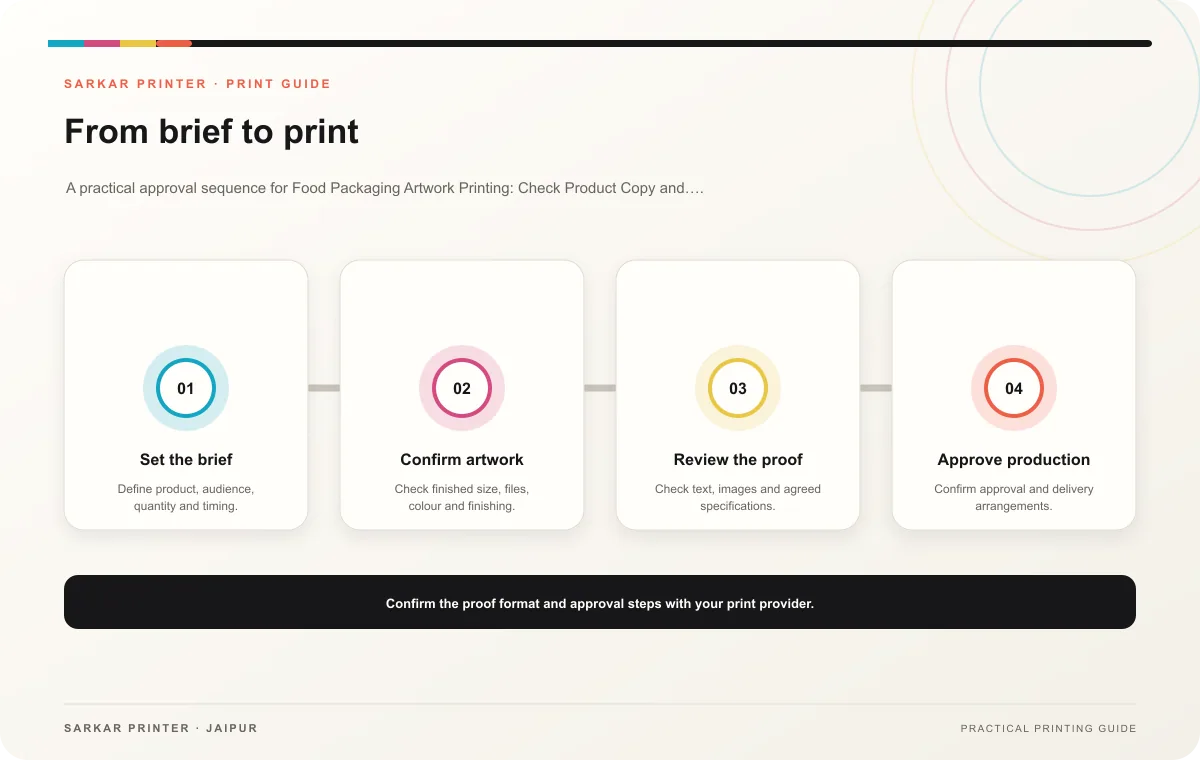
Print planning checklist
| Topic | Key point | Check before approval |
|---|---|---|
| Use an approved content source | Gather product names, variants, ingredient statements, directions, dates or other applicable details from the responsible owner. Requirements depend on the product and market, so route… | Record the agreed choice in the approved print brief. |
| Proof the package as a physical object | Review a folded or assembled proof whenever possible. Check the hierarchy, panel orientation, small type and contrast. If a barcode or QR code appears, confirm data and placement with… | Review one dated proof under suitable light before approval. |
| Plan changes before the run | Agree on a content lock date and a change process. If a statement or product detail changes late, update the correct variant, regenerate the proof and get the proper sign-off. Avoid… | Compare estimates at the quantities you are considering. |
CONTINUE THE PRINT PLAN
Keep the next step useful.
Explore the service page or related drafts, then send the agreed brief to the print team.
Frequently asked questions
Who approves food label copy?
The product owner and any responsible compliance reviewer should approve information that they control.
Can a digital proof replace a package sample?
A digital proof helps check content and layout. A physical sample can reveal folds, fit and surface issues that a screen may not show.
How do we manage several flavours?
Use a master variant list, clearly named files and a proof check for each version.