
A reliable booklet page count starts with one distinction: a page is one printed side; a sheet or leaf is the physical paper. Binding determines how pages are assembled, so decide the total before artwork is laid out. Register publication metadata via the International ISBN Agency, and specify durable document stocks compliant with ISO 9706 archival permanence.
Know what counts as a page
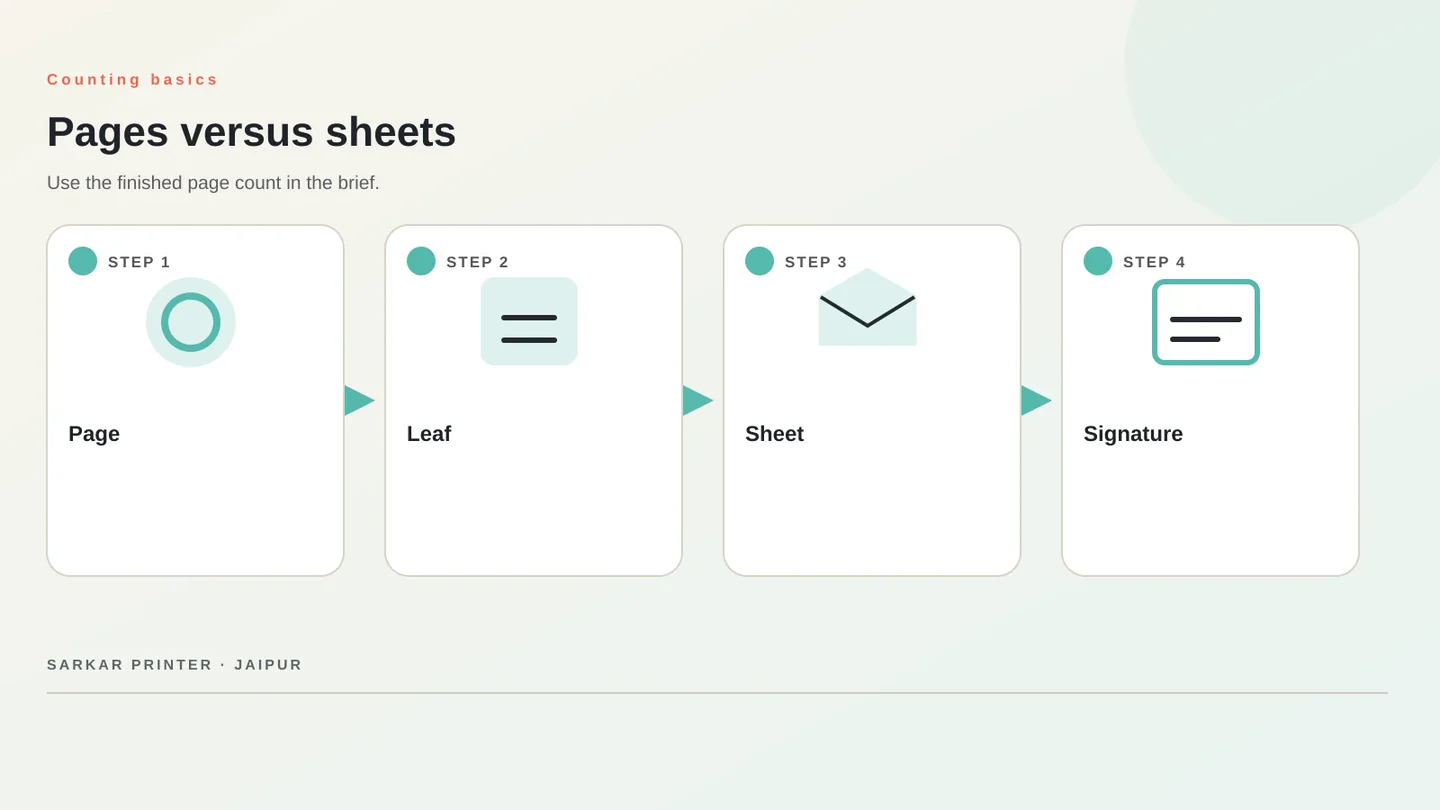
A page is one side of a leaf. A sheet printed on both sides contributes two page sides to the finished publication. Folding can create multiple panels from a sheet, so “number of sheets” and “booklet pages” should not be used interchangeably in a quote request.
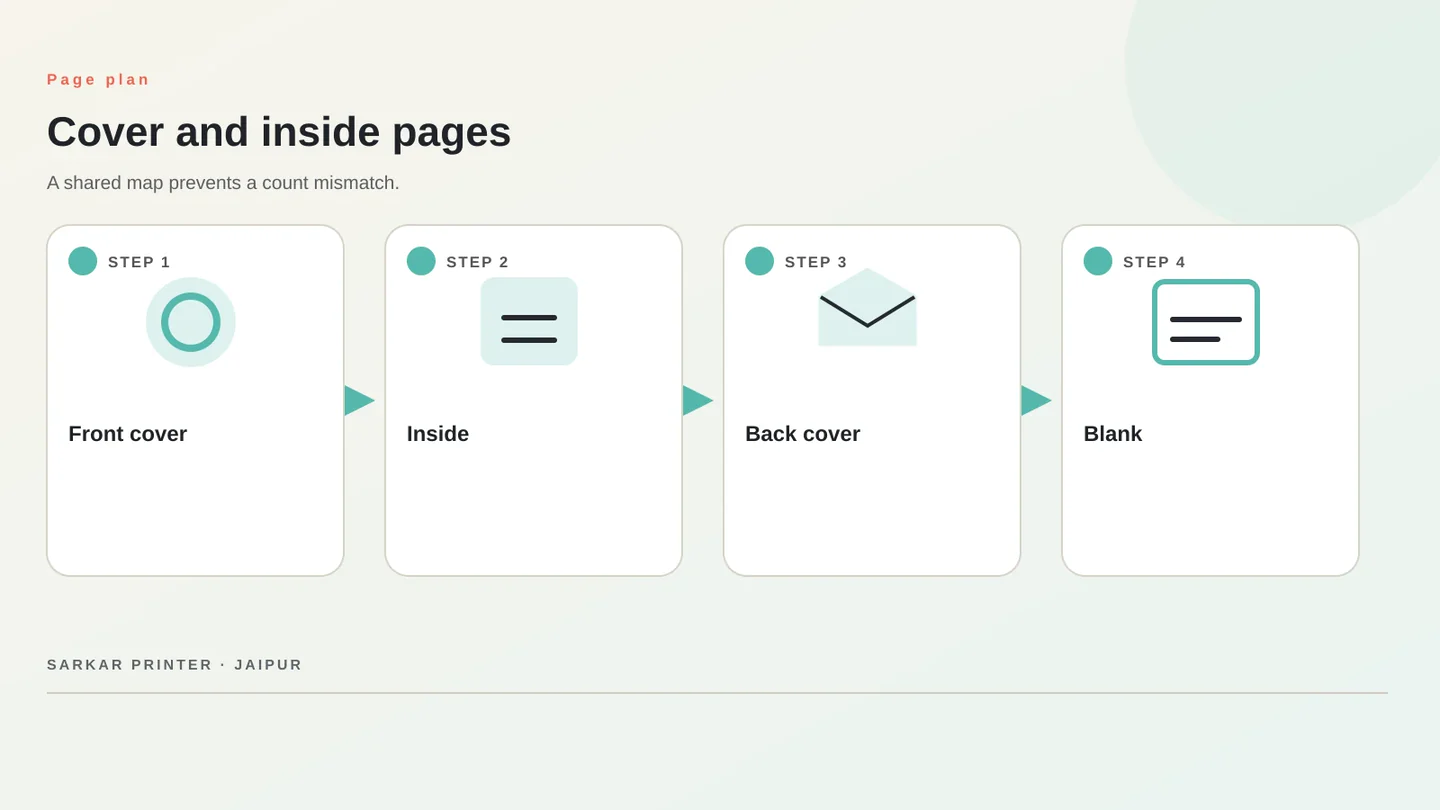
Write the desired total as a finished page count and state whether it includes the cover. A cover may be specified or priced separately. A page map listing front cover, inside pages and back cover avoids different interpretations.
Match the count to binding
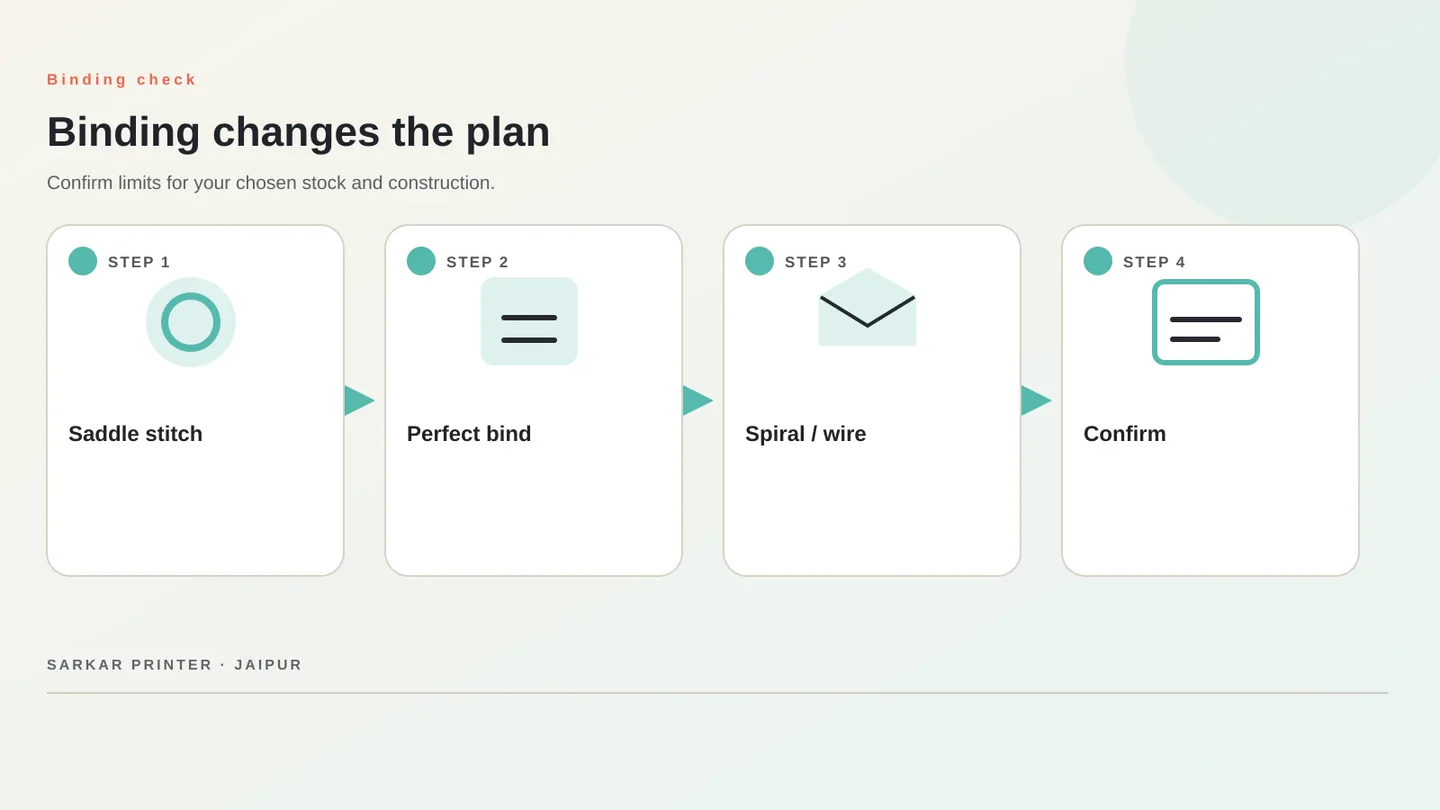
Saddle stitching nests folded sections and secures them along the fold. Its page plan commonly works in groups of four because a folded sheet contributes four page surfaces, but confirm the method, cover treatment and stock with the printer. If the count leaves unused panels, revise the sequence or use intentional blank pages where they make sense.
Perfect binding and spiral or wire binding assemble pages differently. They suit different thicknesses and opening behaviours, but still have material and machine limits. Ask about the chosen paper, finished thickness and how the booklet needs to open rather than relying on a generic cutoff.
Plan the cover and blank pages
Decide whether the cover uses the same paper as the inside pages or a separate stock. State if the quoted total includes the cover. Identify front, inside-front, inside-back and back-cover panels when they are part of the layout.
Intentional blank pages can support section breaks or notes. Mark them clearly so they are not mistaken for missing content. If a blank would interrupt the flow, use it for a contents page, notes area or another useful element.
Check order, margins and creep
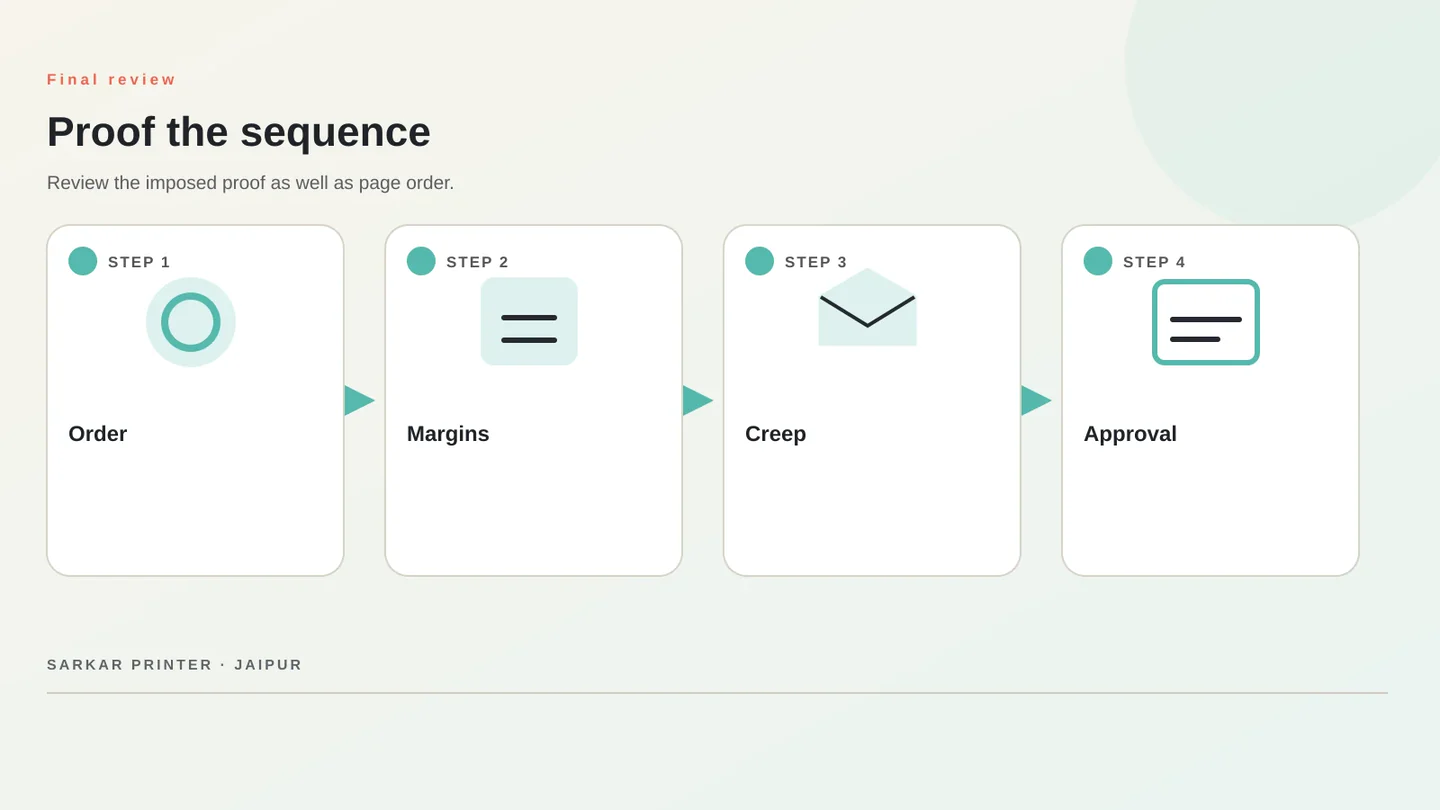
Design in reader-facing order unless the printer requests imposed spreads. Keep text and folios away from the binding edge and follow the bleed template. When folded sections nest, outer sheets can project farther than inner ones; a printer may adjust this movement, often called creep. Its effect depends on construction and stock.
Review a proof page by page, then check the assembled reading order. Compare our booklet binding options guide and book and booklet printing service.
Booklet page planning table
| Question | Record | Why it matters |
|---|---|---|
| Finished count | Total page sides in reading order | Defines publication length |
| Cover treatment | Included or specified separately | Aligns quote and artwork |
| Binding | Saddle, perfect, spiral or other | Changes assembly and planning |
| Paper and finish | Inside stock and cover stock | Affects thickness and handling |
| Proof | Reader order and approval | Catches sequence issues |
For longer jobs, see the publication planning guide.
PLAN YOUR PRINT
Share the format, use and quantity.
Include material, artwork status and delivery needs so the print team can review the specification.
Start an enquiry ↗Frequently asked questions
How many pages should a booklet have?
Choose the length that fits the information and binding. Saddle-stitched plans commonly use page groups of four; confirm the count with the printer before layout.
Is one sheet the same as one page?
No. A leaf has two sides, and each side is a page. Folding and binding can create more page surfaces.
Does the page count include the cover?
It depends on the quote and specification. State whether the total includes the cover or lists it separately.
Can saddle-stitched booklets have any page count?
The plan commonly groups in fours, but production limits depend on paper and construction. Ask the printer to check your count.