
Book Printing works best when print requirements are clear before artwork is released. Use this guide to compare choices, brief a printer and check the final proof. Materials, tolerances and compliance requirements depend on the product and supplier, so confirm them against the final specification. Register publication metadata via the International ISBN Agency, and specify durable document stocks compliant with ISO 9706 archival permanence.
Define the book before choosing specifications
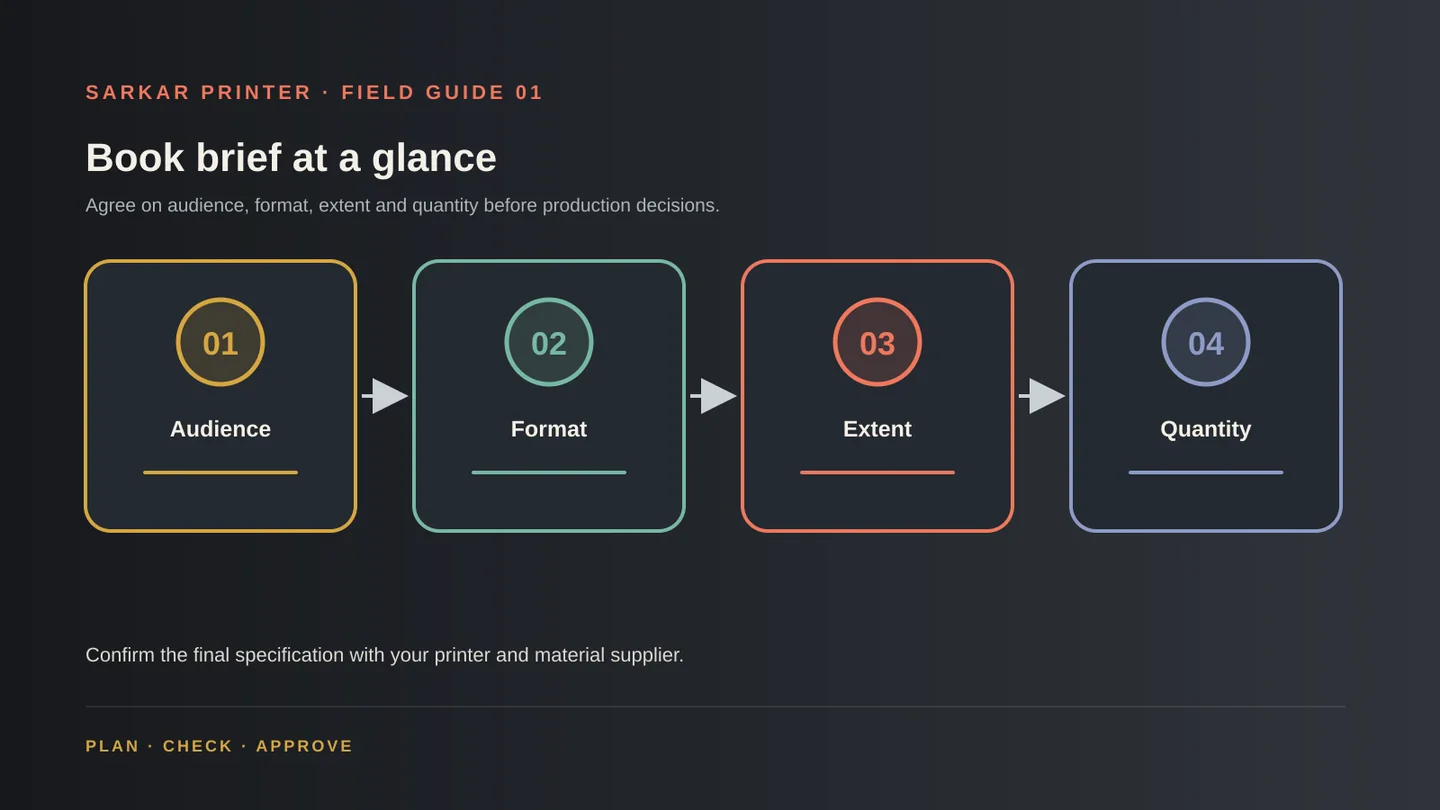
Start with how the book will be used. A training manual that stays open on a desk has different needs from a photo-led catalogue or event publication. Note the audience, reading environment, page count, trim size, quantity, colour requirements and delivery date before requesting estimates.
Separate the interior from the cover because they may use different paper and production choices. List colour pages, intentional blanks, inserts, tabs or foldouts. A clear specification lets the printer compare like with like.
If the page count is not final, label it as an estimate. Binding and imposition depend on the finished extent, so confirm them after the manuscript and page plan are stable.
Choose paper for reading and handling
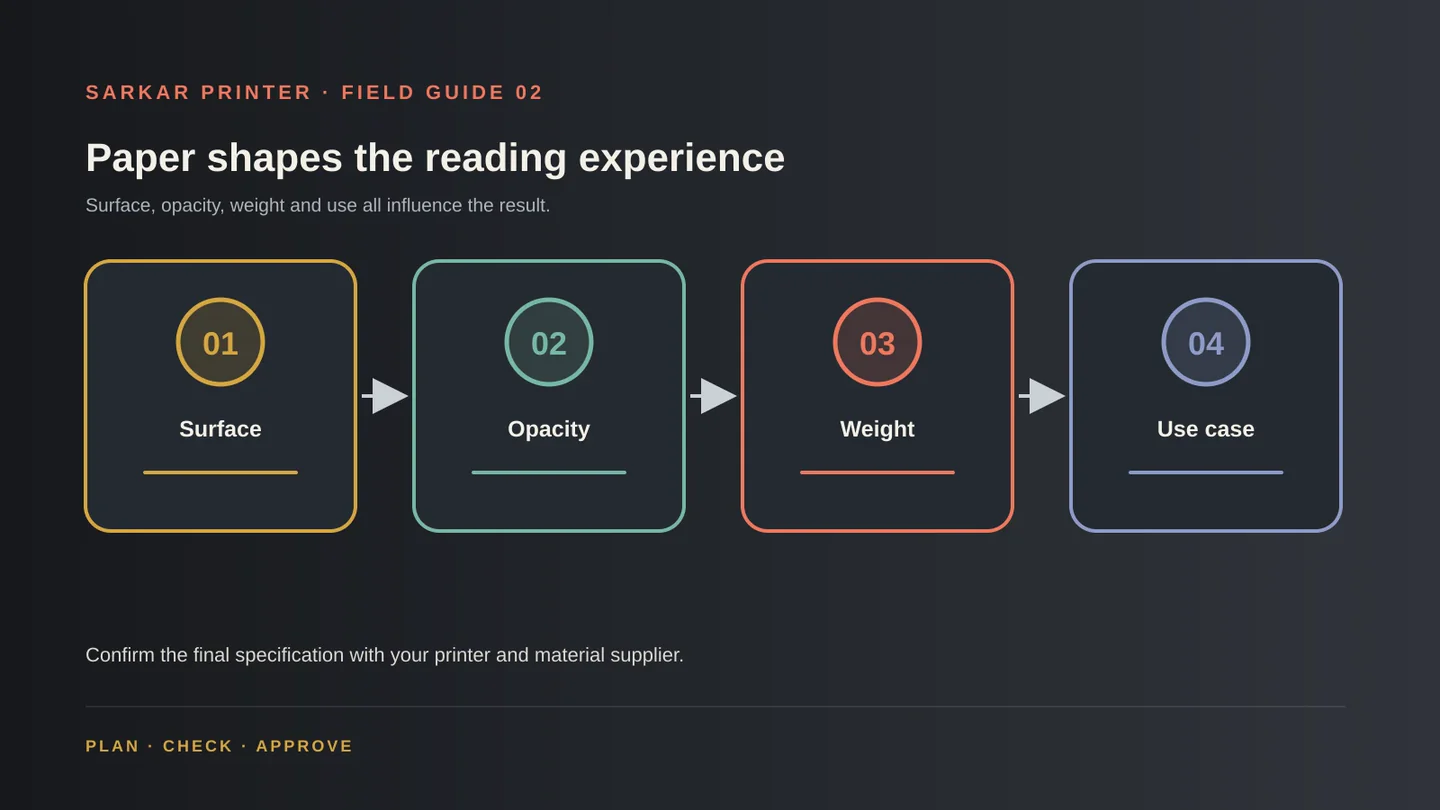
Paper affects opacity, weight, colour reproduction and how a book feels. Uncoated stocks can suit text-led reading, while coated papers can show photographs differently. Treat these as starting points because availability and press performance vary by supplier.
Consider the complete book. Thicker stock can increase spine width and finished weight. Request samples to judge shade, surface and hand feel, and confirm the available grade, grain direction and constraints for the format.
For a manual used often, durability and opening behaviour may matter more than a premium surface. For a photo-led book, ask for a proof on the intended stock so tone and contrast can be reviewed at actual scale.
Match binding to page count and use
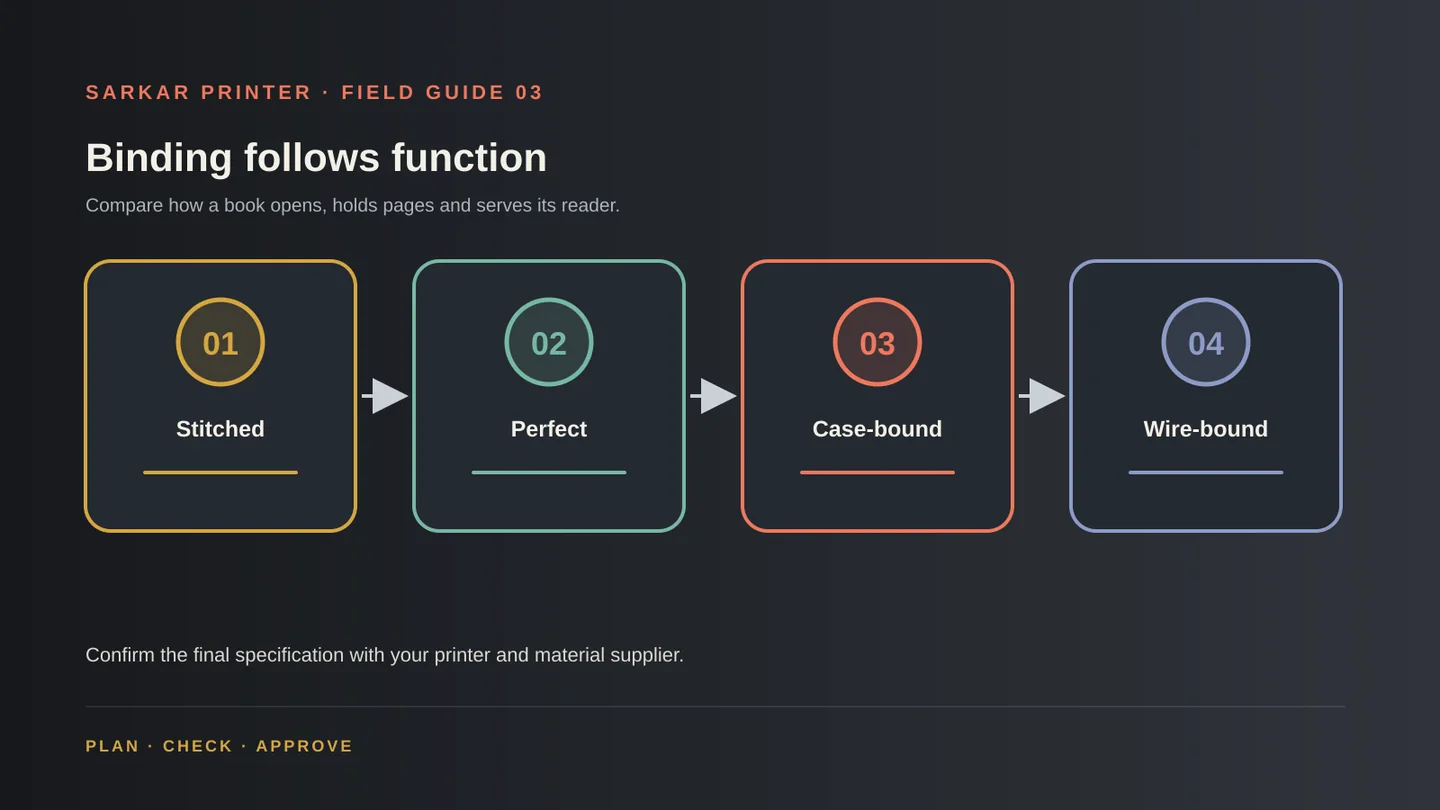
Common options include saddle stitching, perfect binding, case binding and wire-o or spiral binding. The right choice depends on dimensions, page count, material and how readers use the book. Ask for advice using the finished specification.
Saddle stitching uses folded sections secured through the spine and is commonly considered for thinner publications. Perfect binding makes a squared spine from a gathered text block. Case binding uses a rigid cover; wire-o or spiral binding allows pages to open flat. The printer should confirm suitability for the final extent and setup.
Ask how the book should open and hold up: does it need to lie flat, withstand frequent reference or present a formal shelf appearance? Review a binding sample if usability matters.
Prepare interior, cover and proof files
Set the document to the agreed trim size. Build the cover using the printer’s spine calculation for the confirmed paper and page count. Embed or supply fonts as agreed, check image resolution at final size and follow the requested bleed and colour settings.
Export the interior and cover as separate print-ready PDFs if requested. Check page order, folios, image placement, binding margins and any intentionally blank pages. Ask whether the printer needs single pages or spreads; the required handoff varies by workflow.
Review the proof and keep corrections in one list. Confirm page count, cover text, spine title, binding direction and delivery before approval. See our training manual print guide or send requirements through the contact page.
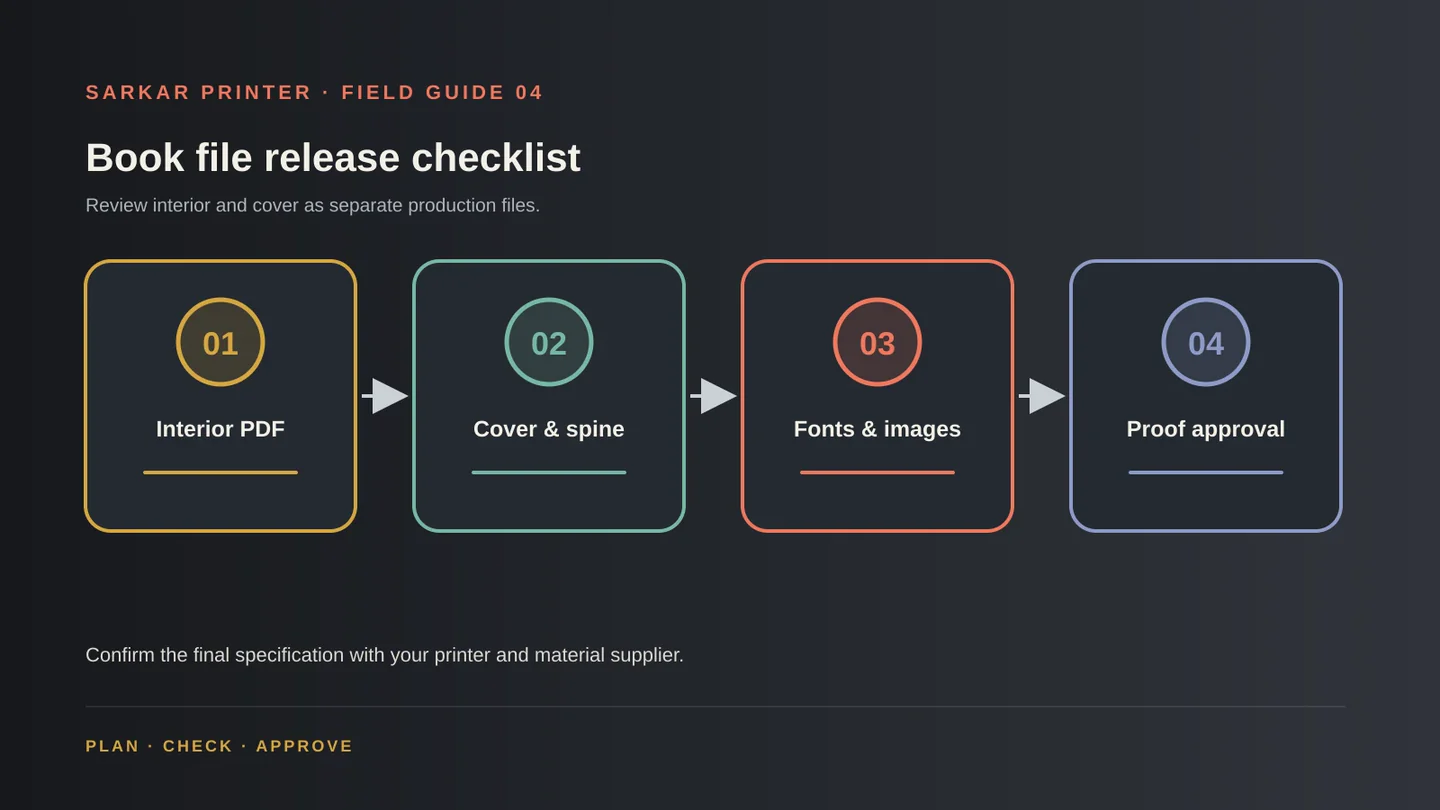
Book printing planning checklist
| Specification | Decide | Before release |
|---|---|---|
| Format | Trim size and orientation | Confirm with binding choice |
| Interior | Page count and colour pages | Check order, margins and blanks |
| Cover | Stock, finish and spine width | Wait for final extent and paper |
| Release | Proof and delivery plan | Keep one approved PDF version |
CONTINUE THE PRINT PLAN
Turn the guide into a clear print brief.
Compare service details or send the team your requirements for a print estimate.
Frequently asked questions
What should I share for a book printing quote?
Share finished size, page count, quantity, colour requirements, paper preference, binding, finish, delivery location and required date.
How do I choose paper for a book?
Consider content, images, opacity, weight, surface and reading environment. Request samples and confirm the stock with the printer.
How is book spine width calculated?
Spine width depends on confirmed page count, paper caliper and binding method. Ask the printer to calculate it from the final specification.
Should I supply book files as spreads?
Follow the printer’s handoff instructions. Many workflows use single-page PDFs, but confirm the exact requirement before export.