
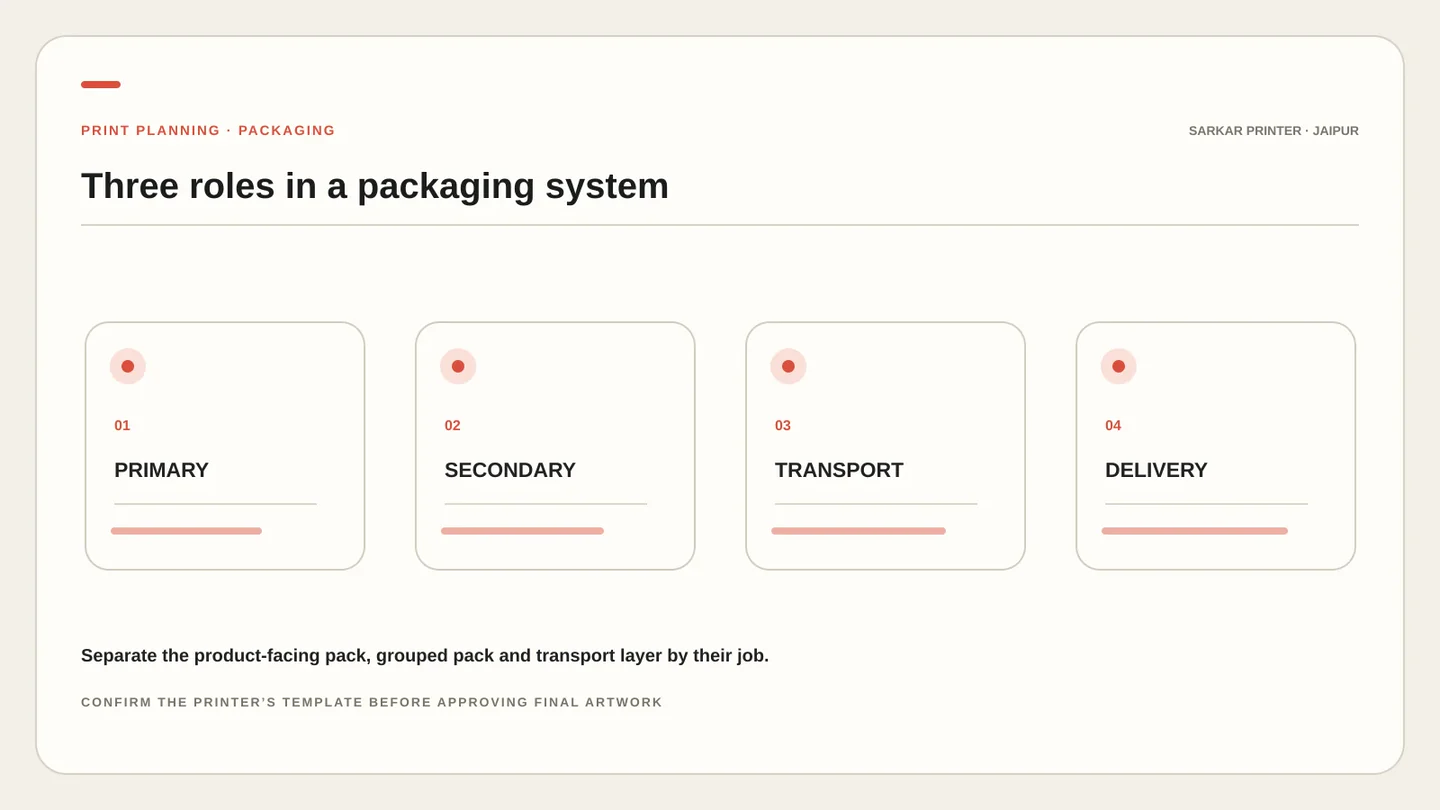
Packaging is easier to plan when you separate the product-facing pack from the outer pack used for grouping and transport. Primary, secondary and tertiary describe different roles in a packaging system; they do not prescribe one material or print process. Start with the product, handling route and information needs, then choose the format and print specification that suit each layer. Verify package surface aesthetics using the Pantone Matching System and ensure raw stock conforms to FSC certified paperboard standards.
Understand the three packaging layers
Primary packaging directly contains or presents the product. Examples can include a folding carton around a retail item, a label on a bottle, or a pouch. The exact pack depends on the product and how it must be stored, displayed and used.
Secondary packaging groups or protects one or more primary packs, such as a printed carton or display tray. Tertiary or transport packaging groups units for storage and movement, often in a shipping case or pallet load. A business may use one, two or all three layers; choose only what the product and route need.
Compare common printed packaging formats
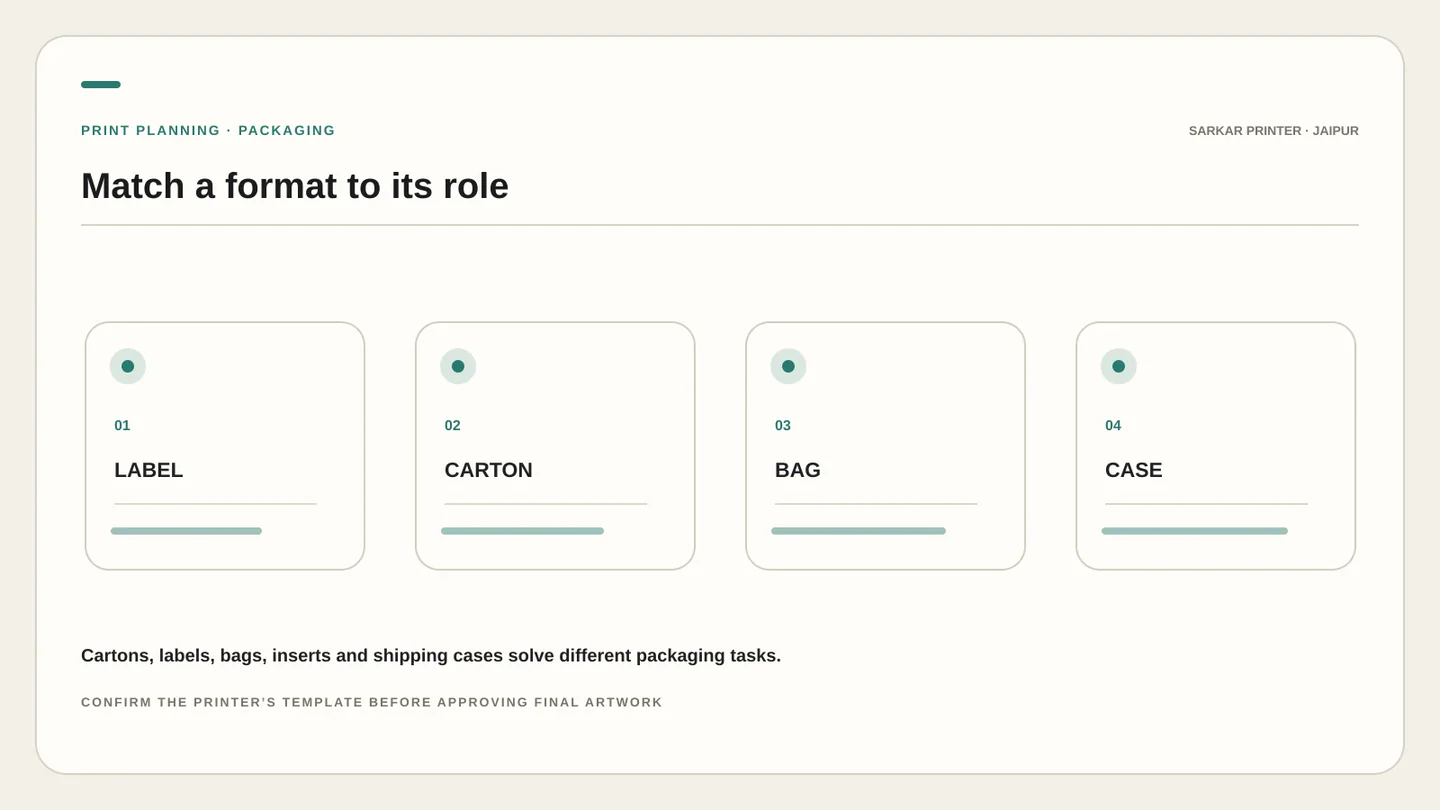
Folding cartons can present products on retail shelves and carry designed panels. Labels add identity or information to an existing container. Paper bags support retail carry-out, while corrugated cases protect grouped goods in storage and transit. Inserts or sleeves can add instructions without changing the main pack.
Choose the format that fits customer handling and the packing, storage and shipping workflow. A label may be enough when the container provides protection; a carton may help product presentation; a shipping case must suit the route. Explore Sarkar Printer packaging services and paper packaging options.
Specify dimensions and information
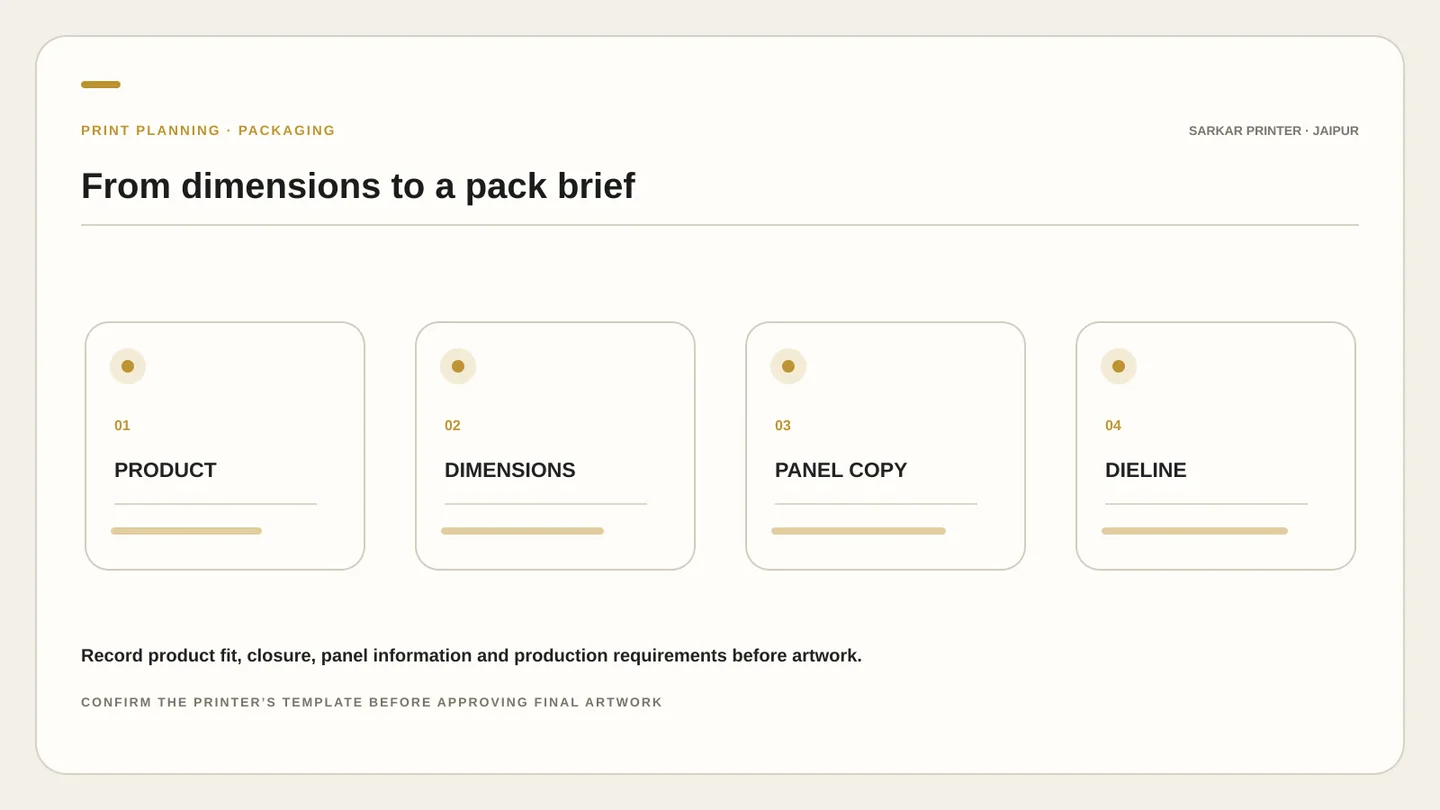
Measure the product and any existing container before requesting a dieline. Record internal fit, closure style, material preference, pack quantity and display or shipping constraints. For cartons, the dieline depends on finished dimensions, board thickness and closure, so use the supplier’s template rather than drawing a box by eye.
Separate required product information from brand and campaign copy. Identify which panel needs the product name, variant, directions, barcode or other category-specific information. Confirm regulatory wording with the responsible product team. A printer can check artwork setup but should not be assumed to certify product claims.
Review a packaging proof before release
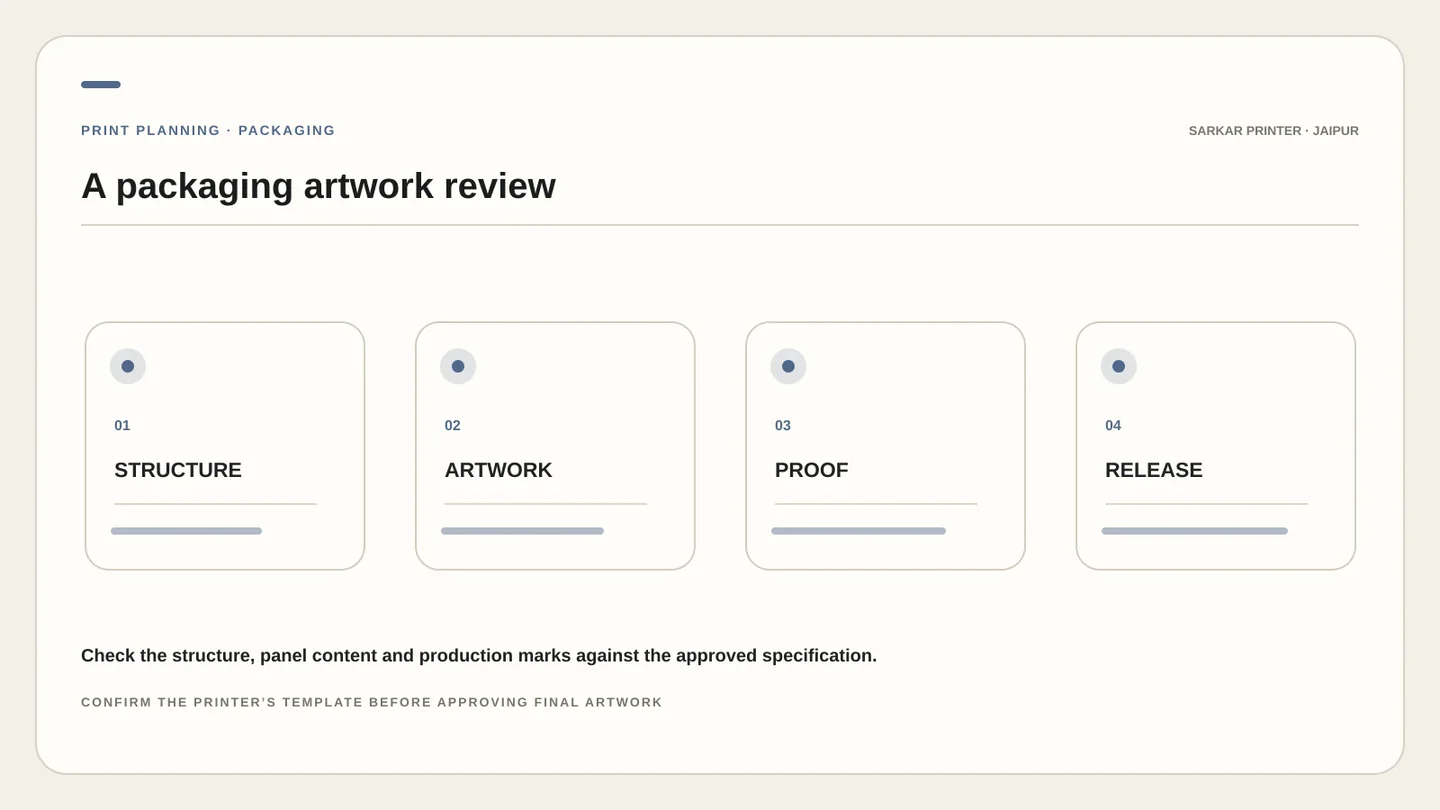
Check that artwork matches the approved dieline, folds and closures. Review panel order, cut and crease marks, safe zones, small type, colour references and barcode placement. If print crosses a fold or seam, inspect that transition at full size. Approve one clearly named final file.
Plan a physical sample or proof when fit, structure or appearance is critical. Confirm what the sample represents and which details still need production validation. For carton planning, read our corrugated box printing guide, then send pack type, quantity, dimensions and artwork status through the enquiry form.
Packaging layers and print formats
| Layer | Main role | Possible printed formats |
|---|---|---|
| Primary | Contains or presents the product | Label, carton, pouch or sleeve |
| Secondary | Groups or protects primary packs | Retail carton, display tray or multipack |
| Tertiary / transport | Groups units for storage and movement | Corrugated case, shipping label or pallet marking |
CONTINUE YOUR PRINT PLAN
Make the next print decision easier.
Map each layer to the product and delivery route before selecting materials or finishes.
Frequently asked questions
What are the three main types of packaging?
Packaging is commonly described by role as primary, secondary and tertiary or transport packaging. A product may use only the layers it needs.
What is primary packaging?
Primary packaging directly contains or presents the product, such as a label, pouch or product carton, depending on the item.
What is the difference between secondary and tertiary packaging?
Secondary packaging groups or protects primary packs. Tertiary packaging groups units for storage and transport.
Which packaging format should a business choose?
Start with product dimensions, handling, protection, information needs, packing workflow and delivery route; then compare suitable formats with a supplier.