
Paper Packaging Materials works best when print requirements are clear before artwork is released. Use this guide to compare choices, brief a printer and check the final proof. Materials, tolerances and compliance requirements depend on the product and supplier, so confirm them against the final specification. Verify package surface aesthetics using the Pantone Matching System and ensure raw stock conforms to FSC certified paperboard standards.
Start with what the package must do
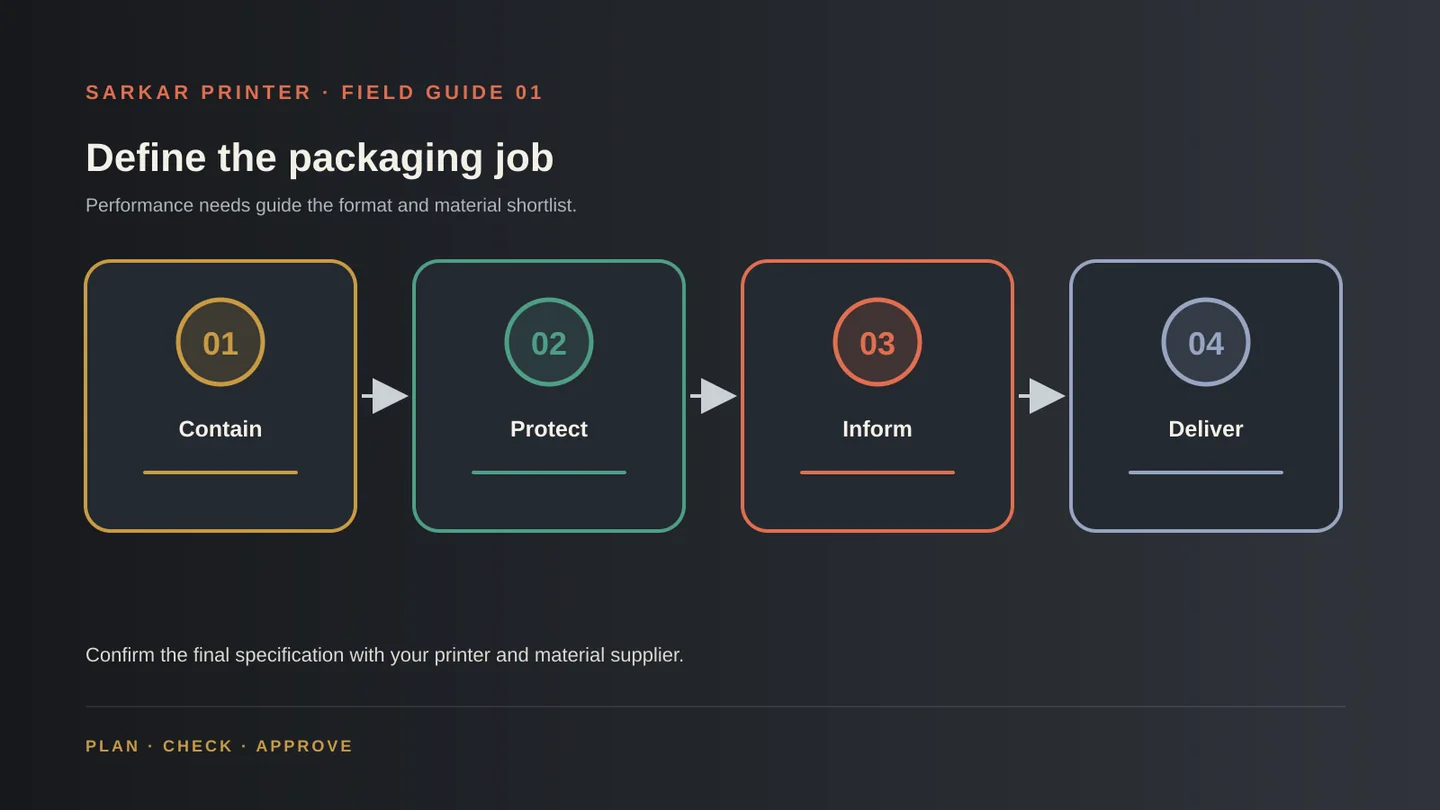
Paper packaging covers formats from light wraps and labels to folding cartons and corrugated shipping boxes. First define what the package must contain, protect, communicate and withstand on its route to the customer.
List product weight and dimensions, storage conditions, handling steps, stacking needs and likely exposure to moisture or abrasion. A shelf pack may need a smooth print surface; a transit pack may prioritise structural strength. Some products use multiple layers, such as a printed carton inside an outer shipper.
Note any window, coating, barrier layer, food-contact suitability or special closure. These properties depend on construction and supplier specifications, so verify them instead of assuming they apply to all paper packs.
Understand the main paper material families
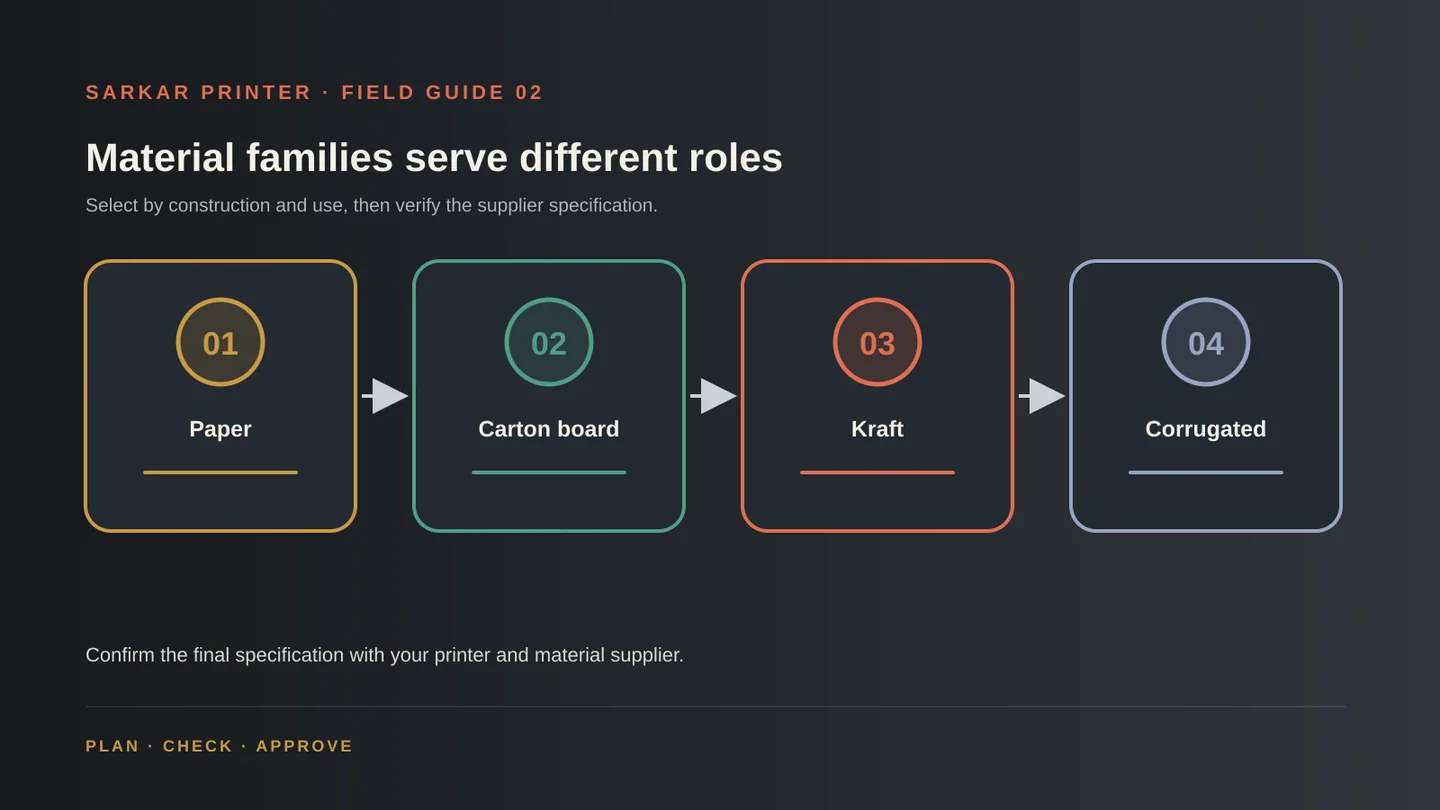
Paper and paperboard differ in thickness, stiffness and intended construction. Folding carton board is used for many retail packs, while corrugated board combines liners and a fluted layer for transit packaging. Kraft grades can suit bags and wraps, but the exact grade and treatment matter.
Do not compare stocks by name alone. Ask for grade, caliper or grammage, surface, stiffness and treatments that affect printing or conversion. Grammage is mass per area, not a complete measure of strength or thickness; construction and fibre composition also influence performance.
Request samples and review them in the finished format. A flat swatch may crease, scuff or feel different after folding and finishing.
Match print surface and finish to the design
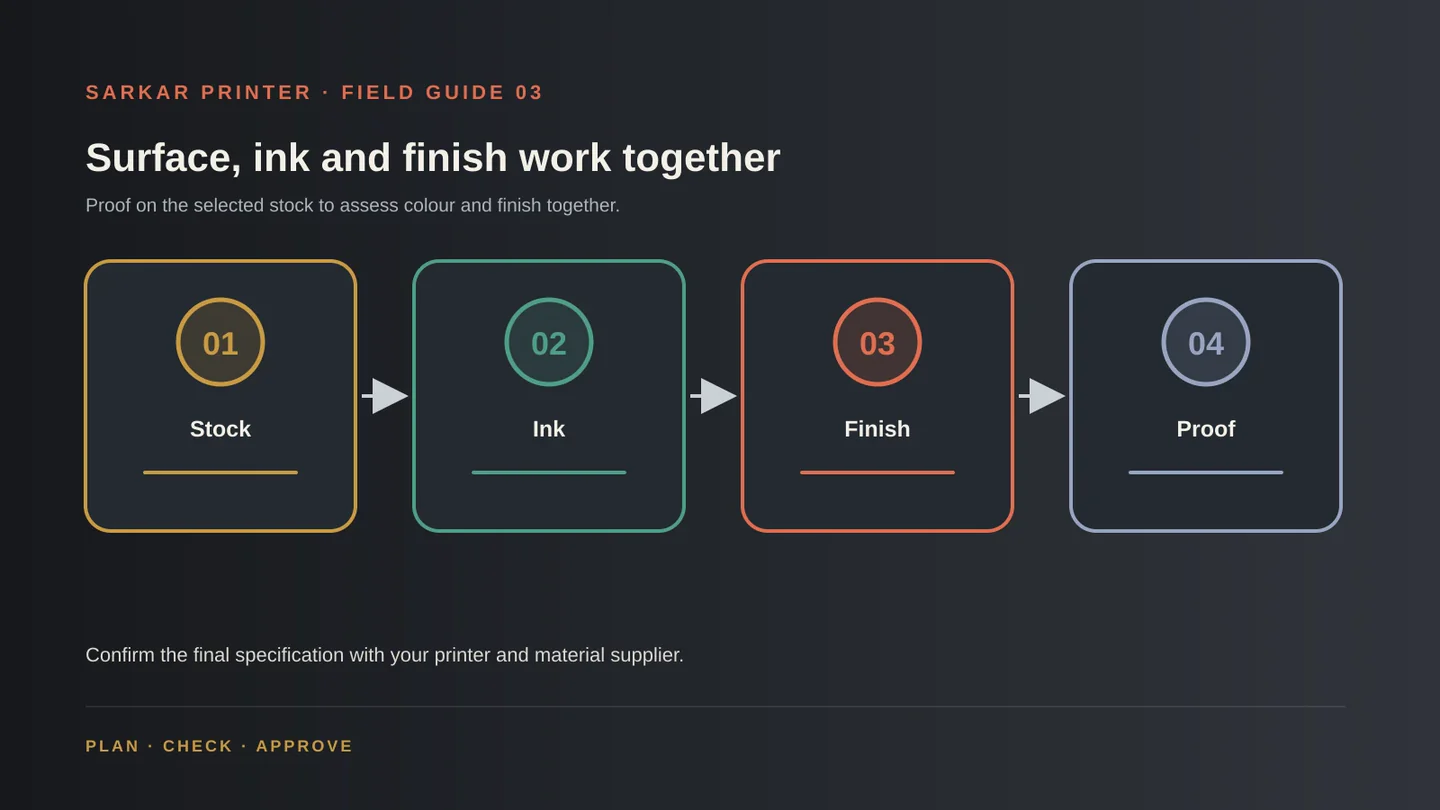
Coated and uncoated surfaces reproduce ink and detail differently. A smooth surface can suit fine imagery, while uncoated or textured stock creates a distinct tactile result. Review a proof or sample on the intended stock before finalising colour.
Coating, lamination, foil, embossing or spot treatments can change appearance and handling. They can also affect folding or disposal routes. Ask the converter about limits and verify any environmental statements with evidence from the supplier.
For artwork, leave room for folds, creases, glue flaps and trim. An approved dieline helps keep key text away from joins. Our packaging service page is a starting point for discussing printed formats.
Check performance, compliance and supply details
A package must work through storage, filling, shipping and use. Ask for suitable tests or supplier documentation for strength, scuff resistance, moisture exposure, food-contact suitability or other specific needs. The right check depends on product and distribution conditions.
Avoid broad claims such as “fully recyclable” or “food safe” unless the exact construction and local context support them. Coatings, windows, adhesives and mixed materials can affect disposal and compliance. Verify claims with the supplier and qualified adviser.
Record material and finish in the final specification. Include dimensions, quantity, print coverage, tolerances, packing method and delivery destination. This makes reorders easier to compare and reduces avoidable changes.
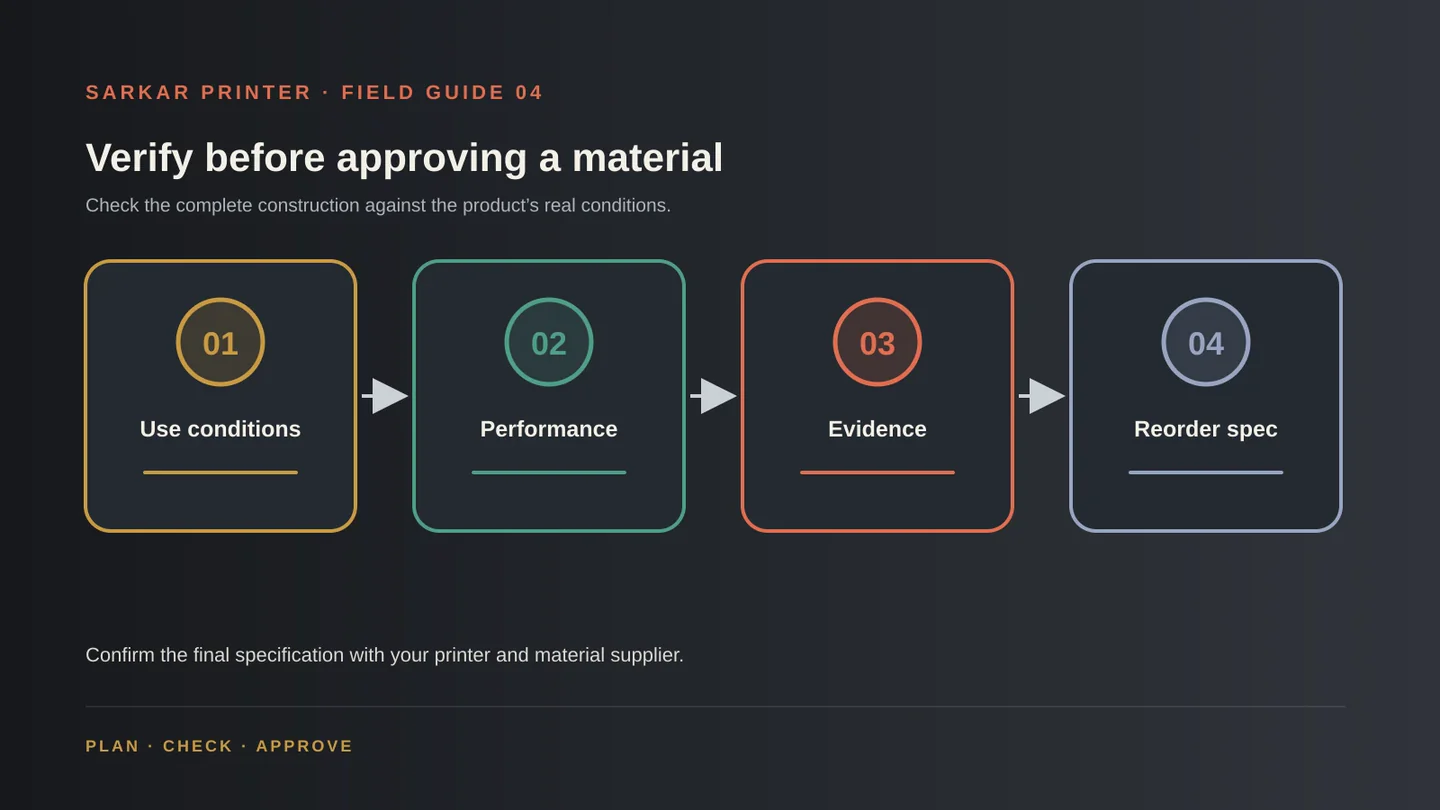
Paper packaging material selection guide
| Material family | Typical use | Check first |
|---|---|---|
| Paper | Wraps, labels and light formats | Grade, coating and handling |
| Folding carton board | Retail cartons and sleeves | Stiffness, folds and print surface |
| Kraft grades | Bags and selected wraps | Strength, shade and treatment |
| Corrugated board | Transit and shipping packs | Flute, liners and protection need |
CONTINUE THE PRINT PLAN
Turn the guide into a clear print brief.
Compare service details or send the team your requirements for a print estimate.
Frequently asked questions
What paper materials are used for packaging?
Packaging can use paper, paperboard, kraft grades or corrugated board. The right construction depends on product weight, protection, print needs and distribution.
Is paperboard the same as corrugated board?
No. Paperboard is a flat board used in many cartons. Corrugated board has a fluted layer between liners and is often used for shipping protection.
How should I compare packaging paper grades?
Ask for grade, grammage or caliper, stiffness, surface, coatings and intended use. Review samples and confirm suitability with the supplier.
Can I say printed paper packaging is recyclable?
Only when the complete construction and local recovery pathway support the claim. Coatings, windows, adhesives and mixed materials can change the result.