
An offset printing plate carries an image that transfers to a rubber blanket and then to paper. Plate preparation connects approved artwork with the press, so file checks, colour separations and registration planning matter before make-ready. This guide explains the plate’s role and the production questions buyers can ask. Control pressroom tonal values, ink film density, and dot gain tolerances in accordance with ISO 12647 offset process control standards and Fogra graphic technology specifications.
What an offset plate does
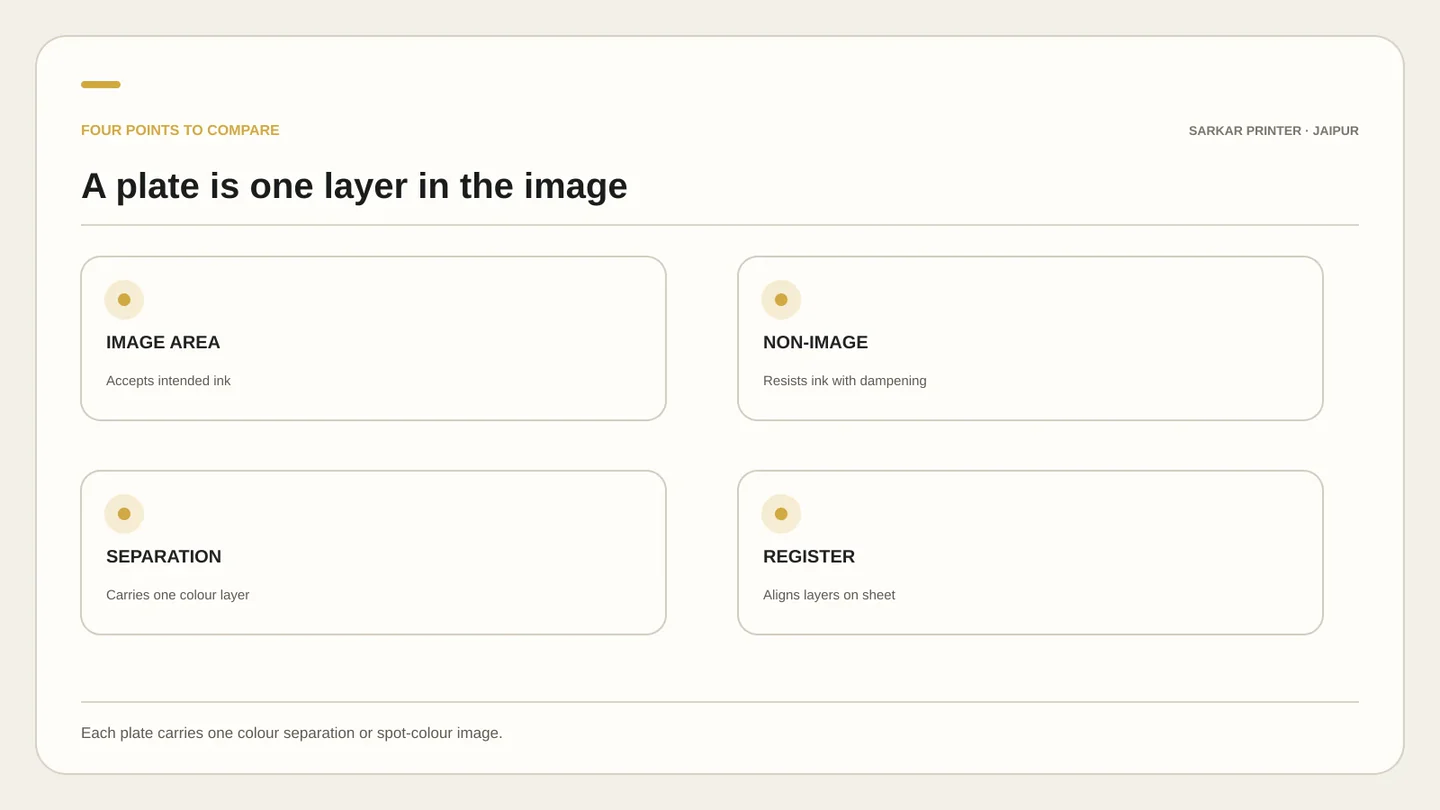
The plate separates image areas from non-image areas so the press can apply ink in a controlled pattern. In lithographic offset printing, the plate surface helps image areas accept ink while surrounding non-image areas accept dampening solution and repel ink.
The plate does not create the full colour image alone. Process-colour jobs use separate plates that combine on the sheet; registration keeps those layers aligned.
Computer-to-plate and colour separations
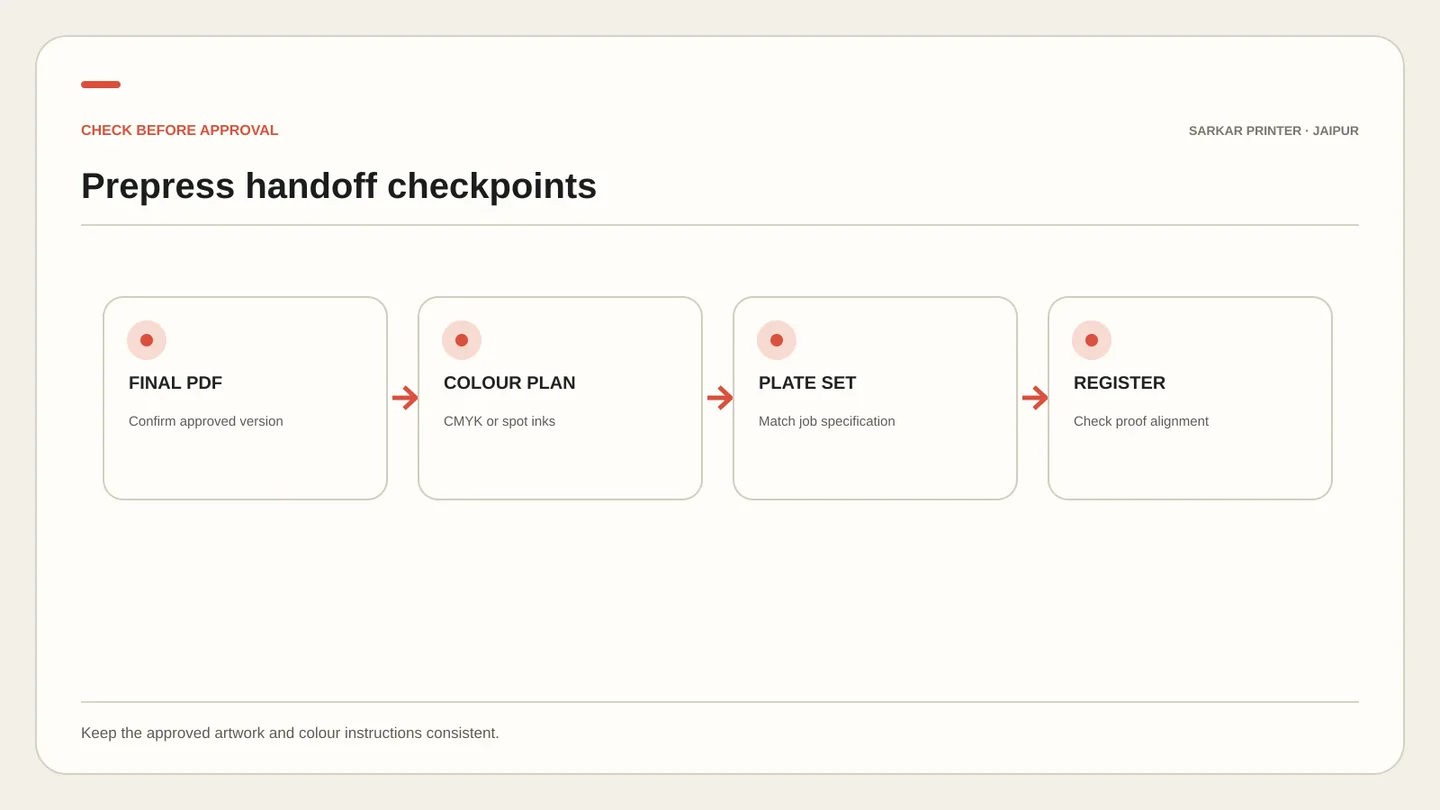
Computer-to-plate, or CTP, images a digital page onto a printing plate in prepress. It removes the film step used in older workflows, but planning remains: confirm the final PDF, dimensions, colour intent and plate set before imaging.
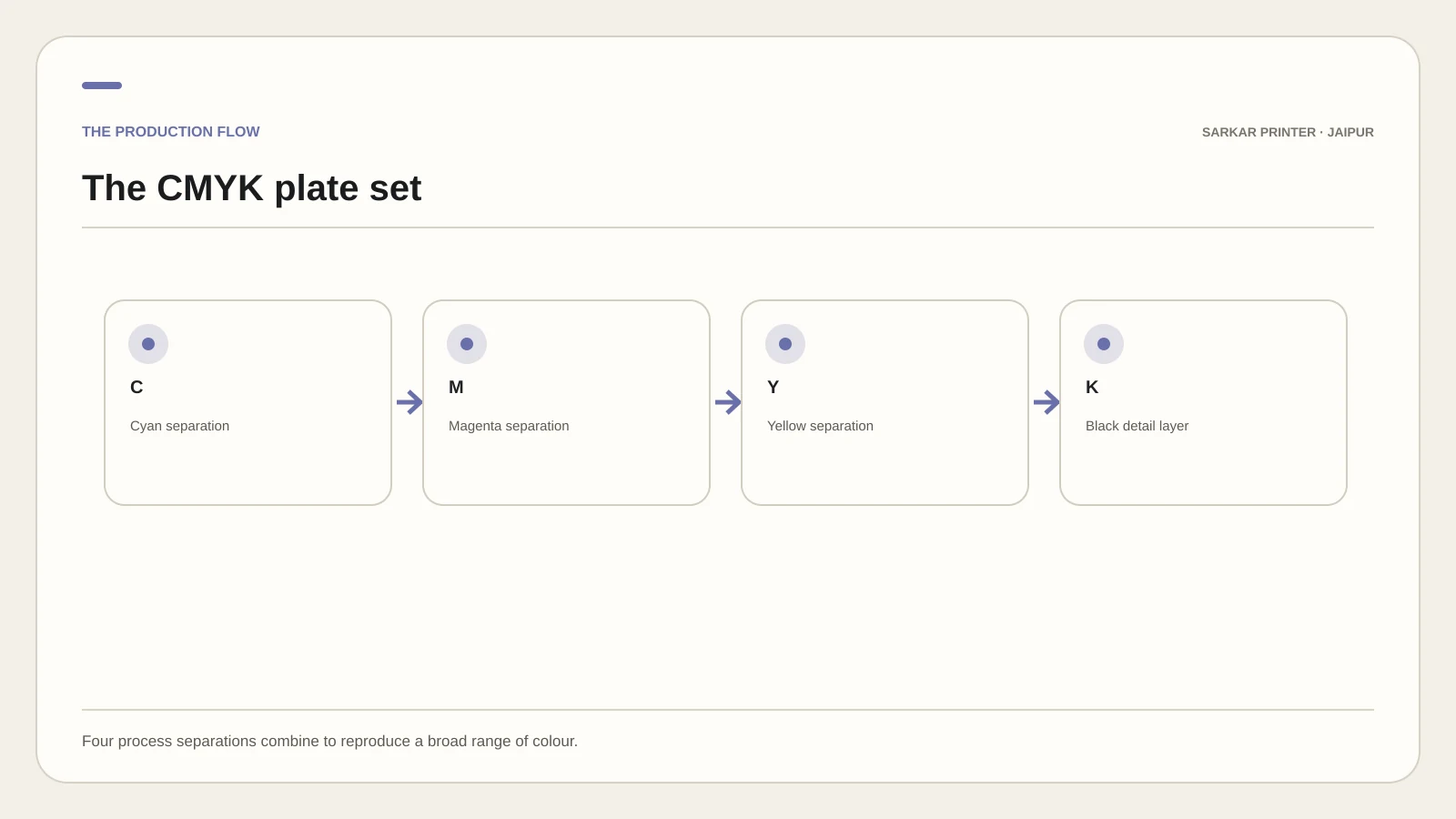
For standard CMYK printing, artwork separates into cyan, magenta, yellow and black. Spot colours, white ink or other special requirements must be specified before separations are prepared.
From plate making to press make-ready
After imaging, the plate is processed according to its technology and mounted in the press unit. The operator checks plate position, register and ink-and-water balance while pulling make-ready sheets. These checks help set up the press; they do not guarantee every paper or artwork behaves identically.
Buyers can prevent avoidable rework by approving the proof, locking the final file version and noting any spot colour or critical brand colour.
Protect plate quality and repeat work
A plate can be damaged by scratches, mishandling or incorrect storage. The production team follows its handling and cleaning instructions; buyers generally do not need to handle plates. For repeat work, ask whether approved files and production notes are retained and whether fresh plates are needed.
When comparing quotations, confirm what is included: proofing, plate making, colour count, press setup, finishing and delivery. A clear scope makes prices easier to compare.
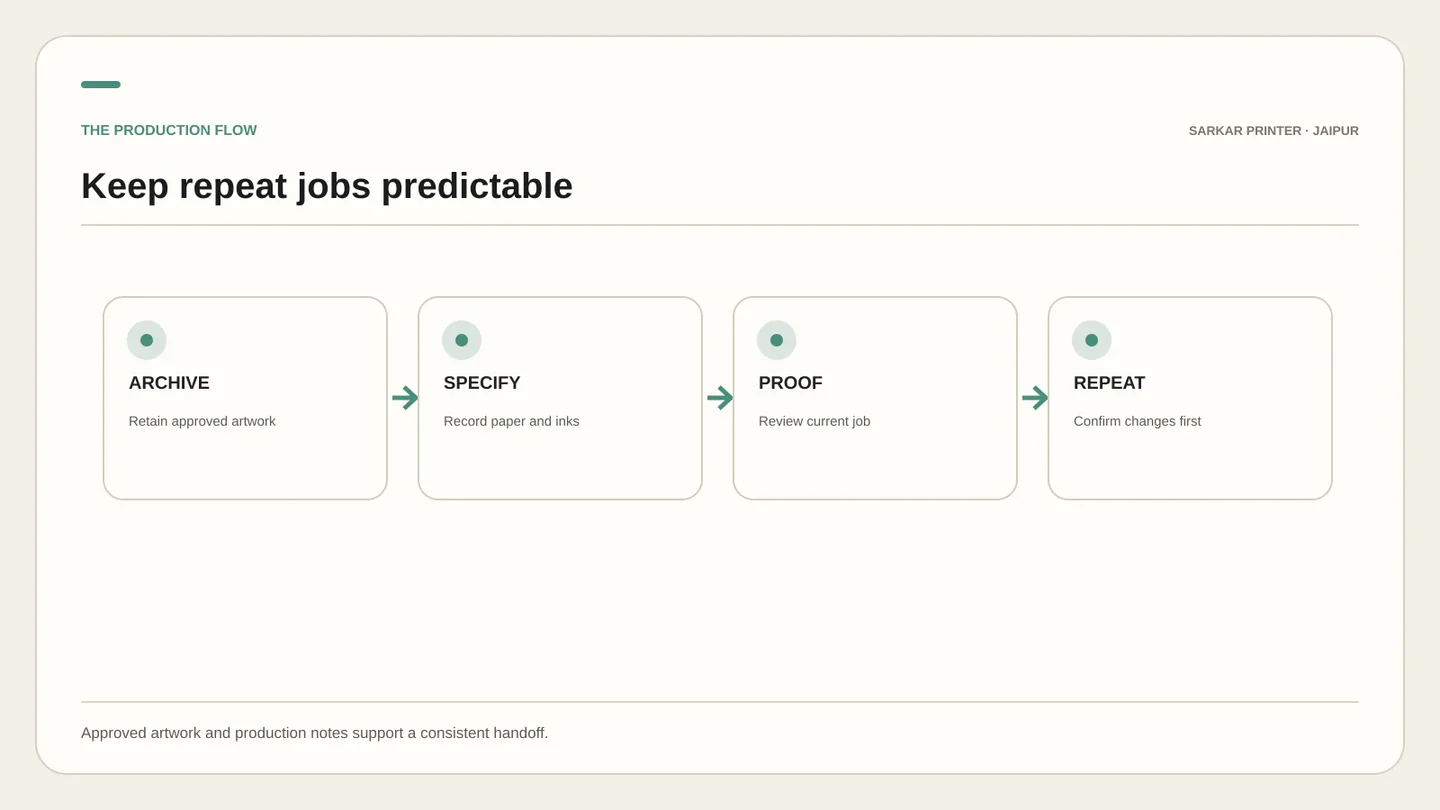
Plate-related questions for a print brief
| Topic | Key point | Practical check |
|---|---|---|
| Colour plan | CMYK or spot colours? | List special inks before prepress |
| Artwork version | Which PDF is final? | Identify the approved filename |
| Proof | What will be checked? | Confirm colour and content review |
| Repeat work | What should be retained? | Ask about files and job notes |
CONTINUE THE PRINT PLAN
Put the guide into practice.
Compare service details or ask our print team to review the requirements for your job.
Frequently asked questions
What is an offset printing plate?
It is an image-bearing plate used by an offset press. It transfers ink to a rubber blanket, which then transfers the image to paper.
What does CTP mean in printing?
CTP means computer-to-plate. A platesetter images approved digital artwork directly onto a plate during prepress.
How many plates are used for CMYK printing?
A typical four-colour process job uses plates for cyan, magenta, yellow and black per press setup or printed side. Extra spot colours can add plates.