
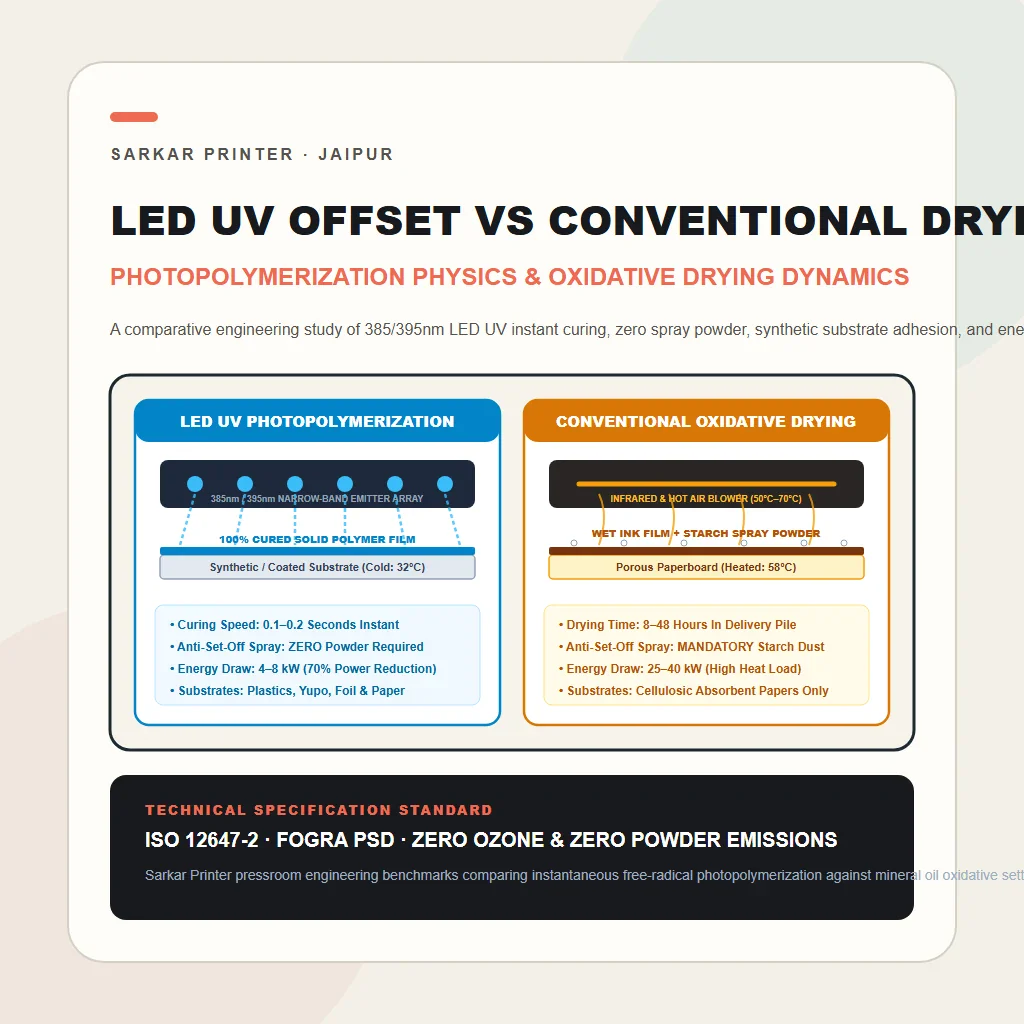
The Pressroom Drying Paradigm Shift
For more than a century, sheetfed offset lithographers accepted ink drying as an unavoidable multi-day bottleneck. Traditional lithographic inks require a complex two-phase drying process consisting of physical vehicle absorption followed by chemical atmospheric oxidation. While press operators can run modern multi-color offset presses at 15,000 to 18,000 sheets per hour, conventional inks leave the delivery pile wet, fragile, and prone to catastrophic set-off defects unless pressmen dust the freshly printed sheets with microscopic starch spray powders.
The introduction of Light Emitting Diode Ultraviolet (LED UV) curing technology fundamentally transforms sheetfed pressroom economics. By replacing broad-spectrum mercury arc lamps and sluggish oxidative drying with targeted narrow-band ultraviolet light emitting diodes (typically operating at 385 nm or 395 nm), modern printing facilities cure ink films instantly across paper, cardboard, and impervious synthetic substrates. At Sarkar Printer in Jaipur, our press crews run high-precision lithographic workflows that adhere to rigorous international standards such as ISO 12647-2 and Fogra PSD. Understanding the chemical thermodynamics, optical physics, and mechanical trade-offs between LED UV curing and conventional oxidative drying enables print buyers and production engineers to select the optimal process for their packaging, publishing, and commercial print projects.
Pressroom Workflow Route: LED UV vs Conventional Chains
To evaluate how these technologies influence factory turnaround times, press engineers analyze each phase of the pressroom lifecycle, from ink duct chemistry to downstream conversion.
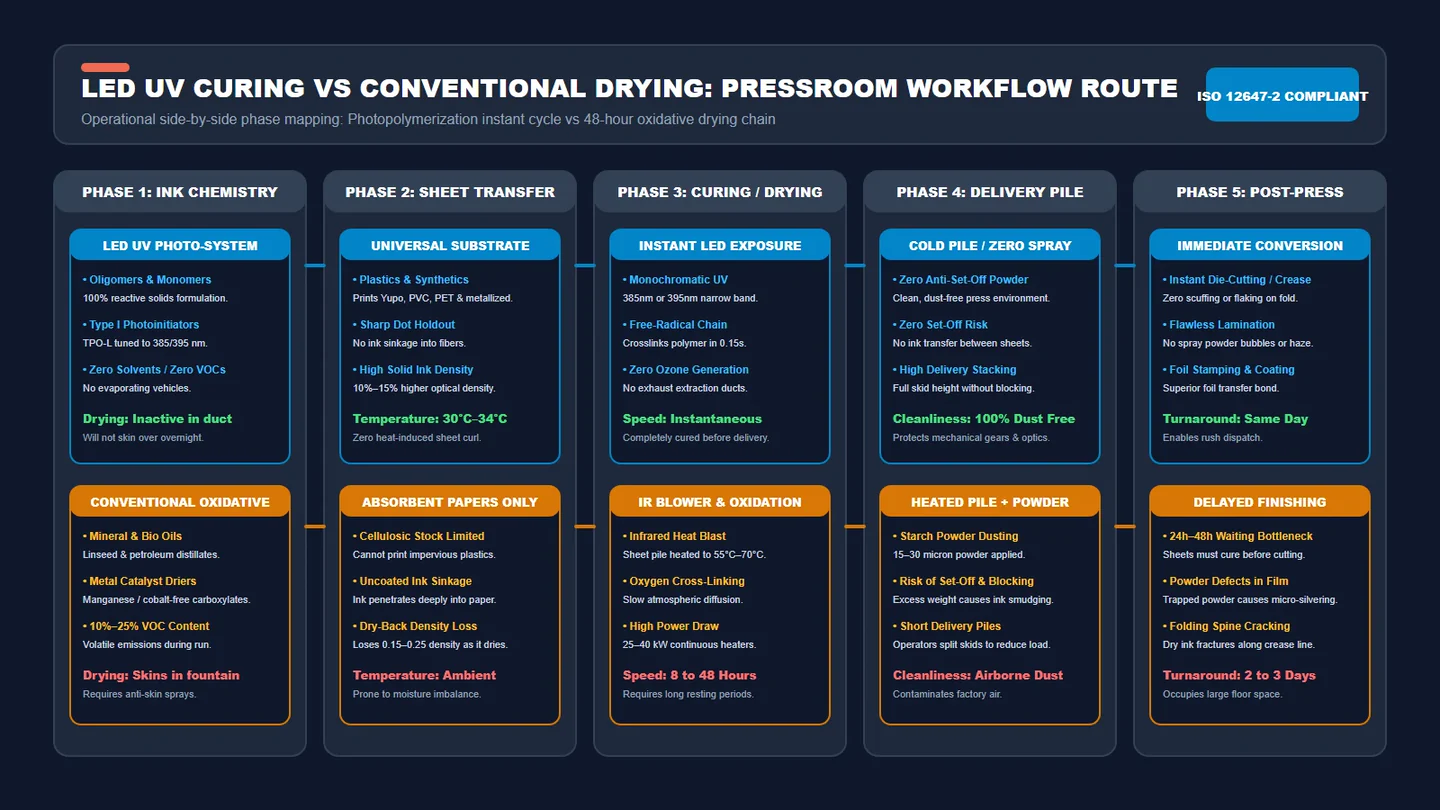
In a standard conventional workflow, press crews mix mineral-oil inks containing metallic drying catalysts. When the press prints these inks onto paper, low-viscosity mineral oils immediately penetrate porous cellulose fibers, leaving behind high-viscosity resins and pigments on the surface. Although this initial vehicle absorption produces a temporary "set" within 15 to 30 minutes, true film cross-linking requires 24 to 48 hours of continuous exposure to atmospheric oxygen. Consequently, delivery pallets occupy valuable pressroom floor space while waiting for chemical curing, stalling urgent jobs before finishing operators can begin die-cutting, folding, or foil stamping.
In contrast, the LED UV route collapses the entire drying cycle into 0.15 seconds. High-reactivity liquid monomers and acrylate oligomers remain completely inert and stable in the ink fountain, eliminating the risk of overnight skinning. As the paper passes beneath the compact LED UV lamp array at full press speed, concentrated photons initiate instant free-radical polymerization. The sheets arrive in the delivery stack 100% solid, fully cured, and cold, allowing operators to transport pallets immediately to automated guillotine cutters, folder-gluers, or high-speed foil stamping presses.
Photopolymerization Physics vs Oxidative Cross-Linking
The core difference between these two technologies lies in the molecular physics of film formation. Conventional offset printing inks contain vegetable drying oils (such as linseed or tung oil), hard alkyd resins, petroleum distillate solvents, and organometallic drying catalysts (such as manganese or cobalt octoates). When exposed to air, the polyunsaturated fatty acid chains in the vegetable oils absorb atmospheric oxygen molecules through autoxidation. Oxygen reacts with methylene groups adjacent to double bonds, creating unstable hydroperoxides that decompose into free radicals and form cross-linked carbon-oxygen-carbon polymer bridges. Because oxygen diffusion through dense sheet stacks proceeds slowly, conventional ink piles require active air aeration and restricted stack heights to prevent ink smothering.
LED UV inks contain no volatile solvents or mineral oils. Formulators build these inks using 100% active, reactive liquid components: low-molecular-weight prepolymers (acrylate oligomers), reactive diluents (monofunctional and polyfunctional acrylate monomers), organic pigments compliant with ISO 2846-1, and photoinitiators specifically tuned to the narrow spectral output of gallium nitride (GaN) semiconductor diodes. Press engineers typically select Type I cleavage photoinitiators, such as diphenyl(2,4,6-trimethylbenzoyl)phosphine oxide (TPO) or bis(2,4,6-trimethylbenzoyl)phenylphosphine oxide (BAPO), which absorb peak radiation between 380 nm and 400 nm.
When UV photons strike these photoinitiator molecules, the compounds undergo homolytic alpha-cleavage, splitting into highly reactive free radicals within nanoseconds. These radicals attack the carbon-carbon double bonds (C=C) of the adjacent acrylate monomers and oligomers, opening the bonds and linking individual molecules into rigid, continuous three-dimensional polymer networks. Because this chain reaction proceeds without solvent evaporation, 100% of the ink film deposited by the offset blanket remains on the substrate surface, yielding unparalleled optical density and razor-sharp halftone dot edges.
Technical Specification Matrix: Comparative Pressroom Physics
Production engineers must measure quantifiable performance metrics when configuring lithographic presses for commercial printing and luxury packaging. The matrix below contrasts the operational parameters of both systems.
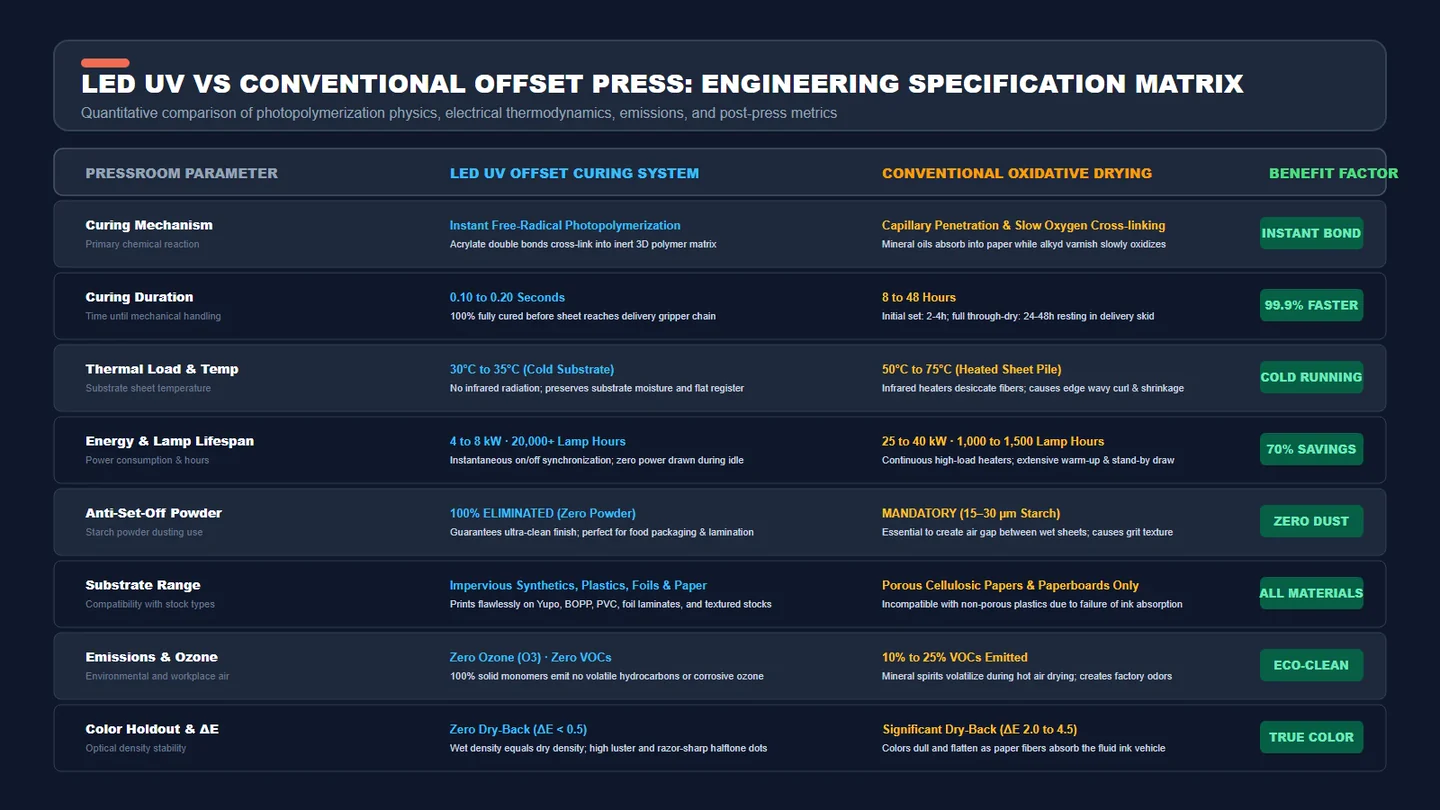
Notice the drastic difference in electrical power requirements. Conventional presses equipped with infrared (IR) quartz radiators and high-velocity heated-air knives consume between 25 kW and 40 kW of electrical power continuously. These thermal dryers heat the substrate sheets to temperatures between 50°C and 75°C, driving moisture out of the cellulose fibers and inducing severe dimensional instability, sheet curl, and registration drift during subsequent press passes. Conversely, LED UV arrays draw only 4 kW to 8 kW per unit—representing an immediate 70% reduction in power consumption. Because semiconductor diodes emit zero infrared heat, the printed sheet remains between 30°C and 35°C, preserving paper moisture equilibrium and dimensional stability across complex multi-pass print runs.
The Elimination of Anti-Set-Off Spray Powder
One of the greatest operational triumphs of LED UV printing is the complete elimination of anti-set-off spray powder. In conventional offset lithography, press crews must continually blast the delivery sheet with micronized starch or calcium carbonate powders (typically 15 µm to 30 µm in particle diameter). These particles act as microscopic ball bearings, holding adjacent sheets apart so air can circulate and prevent wet ink on the top sheet from transferring or "setting off" onto the unprinted underside of the sheet above it.
However, spray powder introduces severe mechanical and quality complications throughout the printing plant:
- Post-Press Lamination Failures: Starch particles trapped beneath thermal polypropylene (BOPP) laminating films create microscopic air bubbles, resulting in unsightly silvering and premature film de-lamination on luxury cartons.
- Foil Stamping Rejection: Heavy powder deposits create microscopic physical barriers that prevent hot stamping foils from adhering smoothly to solid ink backgrounds.
- Rough Surface Tactility: Spray powder gives coated art paper a coarse, sandpaper-like grit, dulling the natural tactile elegance of premium brochures and art books.
- Mechanical Contamination: Airborne starch dust settles into mechanical delivery chains, gripper cams, electrical switches, and sensitive optical sensors, accelerating press wear and requiring intensive weekend wash-downs.
Because LED UV inks undergo complete molecular cure fractions of 98% or higher before entering the delivery pile, the sheets stack together perfectly dry. Pressrooms operate with zero spray powder, maintaining clean ambient air, pristine mechanical equipment, and flawless, glass-smooth finishes that accept subsequent embellishments with zero resistance.
Substrate Versatility: Conquering Impervious Synthetics
Commercial printers operating conventional offset presses remain fundamentally restricted to porous cellulosic stocks. Because conventional ink vehicles must soak into the paper surface to initiate drying, printing on non-absorbent materials—such as Yupo synthetic paper, polypropylene films, rigid polyvinyl chloride (PVC), and metallized polyester board—is virtually impossible. If an operator attempts to run synthetic film with conventional ink, the wet ink film remains wet indefinitely, wiping off with minimal friction even after days in storage.
LED UV printing eliminates substrate porosity as a drying requirement. Because the 385/395 nm light cures the acrylate polymers through surface photochemical cross-linking, the ink film bonds securely to any material that possesses adequate surface energy. Packaging printers utilizing LED UV technology produce stunning visual graphics on metallized silver paperboard, holographic transfer films, clear static-cling vinyl, and water-resistant synthetic menus. Furthermore, when printing on high-bulk uncoated papers certified by the Forest Stewardship Council (FSC), LED UV inks prevent the notorious "dry-back" phenomenon. In conventional offset printing, uncoated paper fibers suck ink pigments deep into the sheet, causing vibrant solid colors to lose 15% to 25% of their optical density as they dry. LED UV cures the ink instantly at the paper boundary, preserving rich color saturation, deep blacks, and sharp halftone dots that rival coated stocks.
Pressroom Troubleshooting: LED UV Fault Tree & Diagnostics
While LED UV printing provides transformative benefits, press technicians must master unique diagnostic protocols to maintain peak performance and prevent defect propagation.
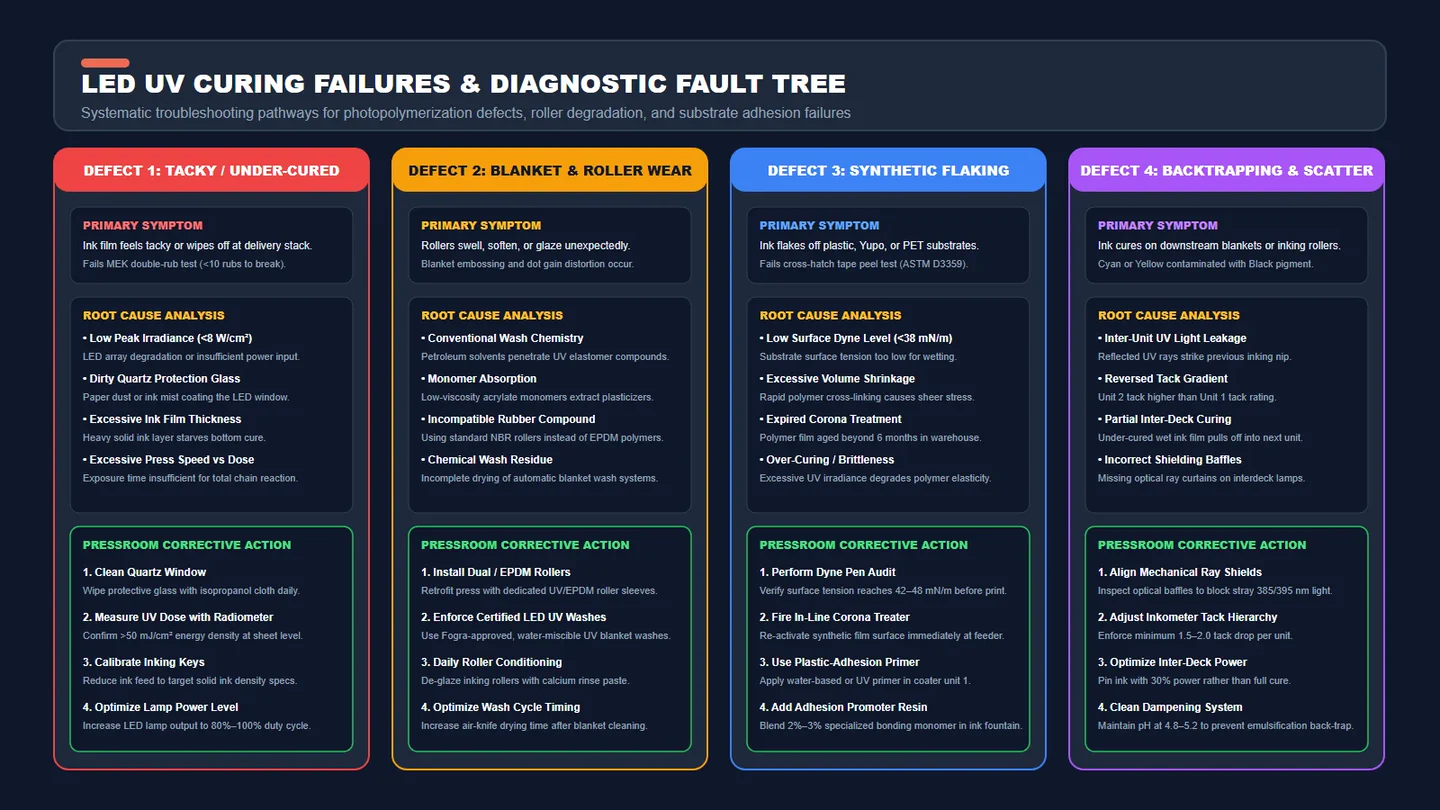
When ink films exhibit tackiness or smudge during rub testing, pressmen must inspect the LED lamp face. Over thousands of impressions, ink mist and airborne paper dust accumulate on the protective quartz window, attenuating UV photon transmission by 20% to 40%. Cleaning the quartz glass daily with laboratory-grade isopropanol restores full radiant flux. Additionally, operators must verify that ink film thickness matches calibrated density targets. Excessively thick solid ink films block deep UV photon penetration, leaving lower ink layers unpolymerized and causing the surface to peel away under shear stress.
Another critical press engineering consideration involves roller and blanket chemistry. Standard nitrile butadiene rubber (NBR) rollers designed for conventional oil inks swell rapidly when exposed to aggressive acrylate monomers in UV inks. Conversely, running petroleum-based conventional roller washes on UV rollers extracts vital plasticizers, causing rubber compounds to shrink, harden, and glaze. Modern printing presses solve this challenge by installing dedicated ethylene propylene diene monomer (EPDM) or hybrid elastomer roller compounds, supported by Fogra-certified wash chemistry that protects roller geometry and ink transfer fidelity.
Standard Operating Procedures: Pressroom Quality Control
To ensure flawless production quality, Sarkar Printer enforces a rigorous six-point standard operating procedure (SOP) across every production shift.
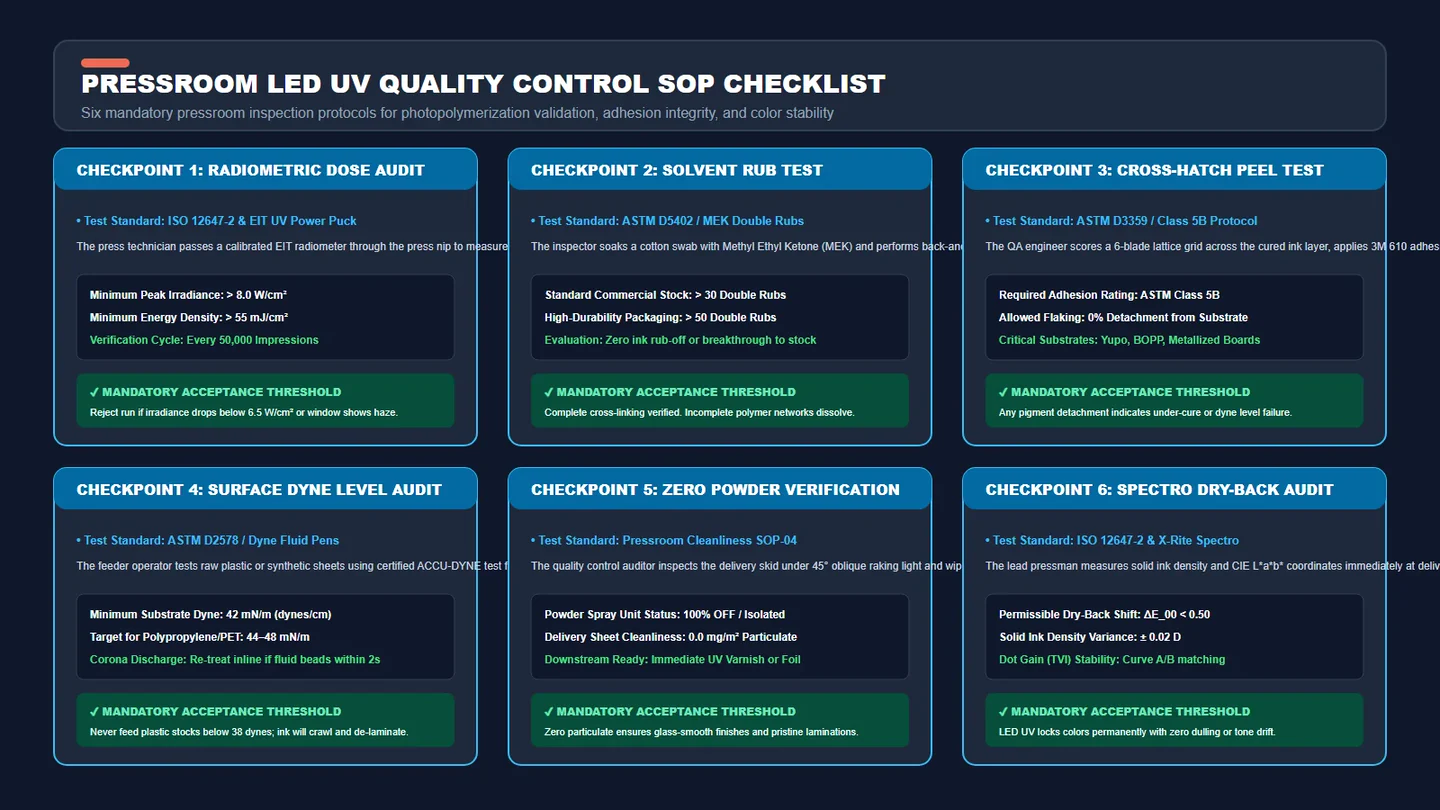
Our quality assurance technicians verify the following inspection checkpoints before approving production runs:
- Radiometric Irradiance Audit: Operators pass an EIT UV Power Puck through the print zone to measure peak irradiance (minimum >8.0 W/cm²) and accumulated energy density (minimum >55 mJ/cm²) across 385 nm and 395 nm bands.
- Solvent Rub Chemical Resistance (ASTM D5402): Press crews perform 50 double-rubs using a cotton cloth saturated with Methyl Ethyl Ketone (MEK). A properly polymerized ink film exhibits zero pigment transfer or substrate breakthrough.
- Cross-Hatch Adhesion Tape Peel Test (ASTM D3359): Technicians score a 10x10 lattice grid into solid ink patches on synthetic substrates, apply certified 3M 610 adhesive tape, and peel at a 90° angle. The test requires an ASTM Class 5B rating (zero square detachment).
- Substrate Surface Energy Audit: Before feeding plastic sheets, operators verify that surface tension exceeds 42 mN/m using dyne testing pens, activating inline corona discharge treaters when necessary.
- Anti-Set-Off Powder Elimination Verification: QA inspectors examine the delivery pile under high-intensity oblique raking lamps to confirm that the powder spray unit remains fully disabled and delivery surfaces show zero particulate deposit.
- Spectrodensitometric Dry-Back Stability: Technicians audit solid ink densities and Pantone Matching System (PMS) spot colors using polarized spectrophotometers immediately at delivery and two hours later, verifying that color drift remains below ΔE 0.50.
Economic Analysis: Total Cost of Ownership & Production Velocity
When purchasing commercial print, procurement directors frequently ask whether LED UV printing increases overall production costs. Although raw LED UV inks command a price premium per kilogram compared to standard oil-based offset inks, the total manufacturing economics heavily favor LED UV production for high-value commercial and packaging print jobs.
First, LED UV inks contain 100% active solids, whereas conventional inks lose 15% to 25% of their volume as volatile solvents evaporate or soak into the sheet. Consequently, press operators achieve equivalent optical densities with substantially thinner ink films, reducing actual volumetric ink consumption by 15% to 20%. Second, LED UV pressrooms virtually eliminate makeready paper waste. In conventional printing, pressmen run dozens of sheets through the press to establish ink-water balance, but cannot accurately evaluate dry color density until the sheet rests and dries. With LED UV, what the operator sees at the delivery console is exactly what the customer receives, cutting makeready waste from 150 sheets down to fewer than 40 sheets per form.
Finally, the elimination of drying lag frees up factory throughput. By eliminating the traditional 24-to-48-hour cure time, our production facility in Jaipur ships rush brochures, annual reports, rigid packaging boxes, and point-of-sale displays in a single day. For businesses seeking unmatched print quality, instant turnaround, and pristine post-press finishing, LED UV lithography represents the modern gold standard. Explore our specialized offset printing capabilities, browse our custom packaging engineering solutions, or consult directly with our production specialists through our print consultation desk.
Frequently Asked Questions
How does LED UV photopolymerization differ fundamentally from conventional ink drying?
LED UV photopolymerization cures ink through an instant photochemical chain reaction triggered by 385nm or 395nm narrow-band ultraviolet light. Specialized photoinitiators absorb UV photons and release free radicals that cross-link liquid acrylate oligomers into a 100% solid, fully cured polymer network within 0.15 seconds. Conventional offset drying, conversely, relies on capillary penetration of mineral oils into paper fibers followed by slow, 24-to-48-hour oxidative polymerization catalyzed by atmospheric oxygen and metallic driers.
Why does LED UV printing completely eliminate the need for anti-set-off spray powder?
Because the LED UV array achieves 100% polymerization before the printed sheet reaches the delivery gripper, the ink film arrives completely solid and dry. Press operators stack thousands of sheets into tall skids without physical ink transfer, eliminating the need for starch spray powders that press crews traditionally apply to create physical air cushions between wet oxidative sheets.
Can commercial printers run synthetic plastic substrates on conventional offset presses?
No. Impervious synthetic substrates like Yupo, polypropylene (BOPP), rigid PVC, and metallized foil boards prevent fluid absorption. Conventional mineral-oil inks cannot penetrate these synthetic surfaces, leaving ink wet and prone to smudging for days. LED UV systems cure purely through photon-induced molecular cross-linking on top of the substrate surface, allowing flawless high-speed printing across plastics with zero absorption dependency.
What energy and environmental advantages does LED UV offer over legacy mercury arc lamps?
LED UV arrays operate at specific monochromatic wavelengths (385nm or 395nm) without emitting short-wave UV-C radiation, which completely prevents the formation of toxic ozone gas. Furthermore, LED diodes turn on and off instantaneously with sheet passage, consuming 70% less electrical energy than continuous mercury arc systems and reducing carbon emissions significantly.